San Quintín to Ensenada · October 10
Race Day 2 began beneath the eerie glow of a nearby wildfire and ended in Hurricane Rachel’s rain. Between those two scenes came saltwater deep enough to swallow a race car, a dead electrical system, roadside rewiring, a million more cycles for one unhappy valve, and mile after mile of achingly beautiful Baja. It was intense, improvised, and unforgettable.
Before Sunrise
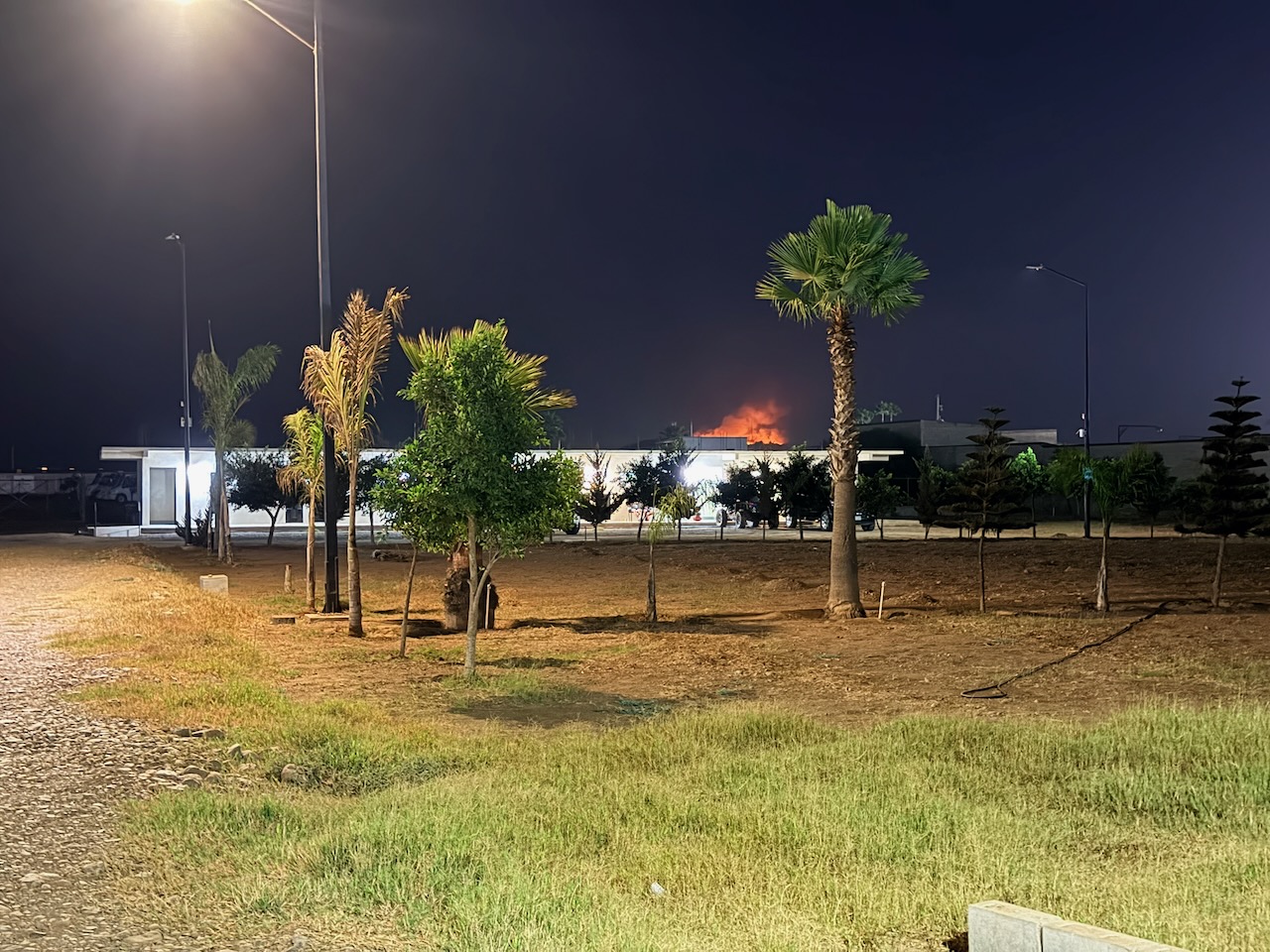
Sleep by firelight. Wake up ready.
The #355 crew slept surprisingly well beneath the eerie flicker and glow of a nearby wildfire. By morning, the car was checked, staged, and rocking—ready to point north from San Quintín toward Ensenada.
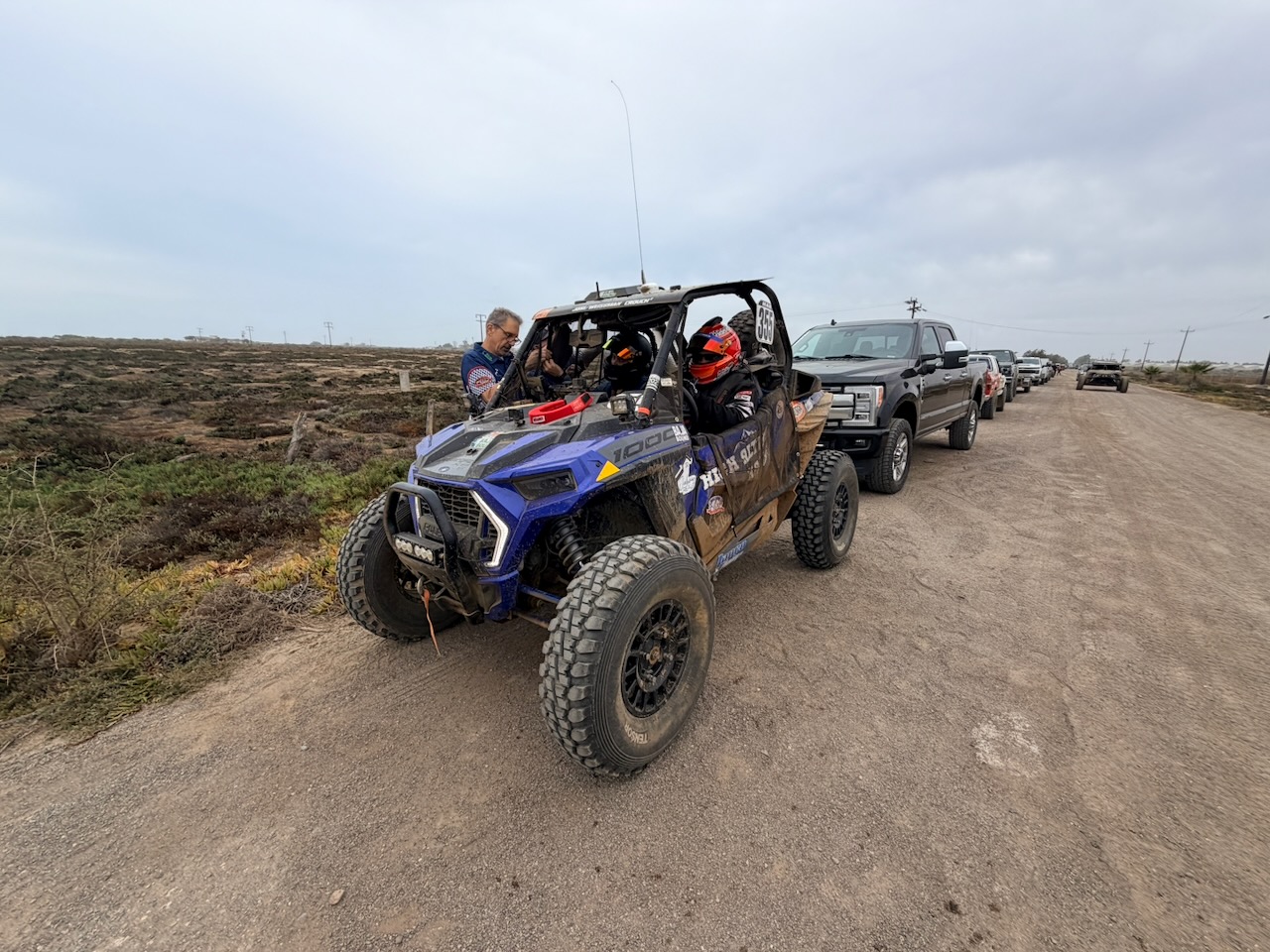
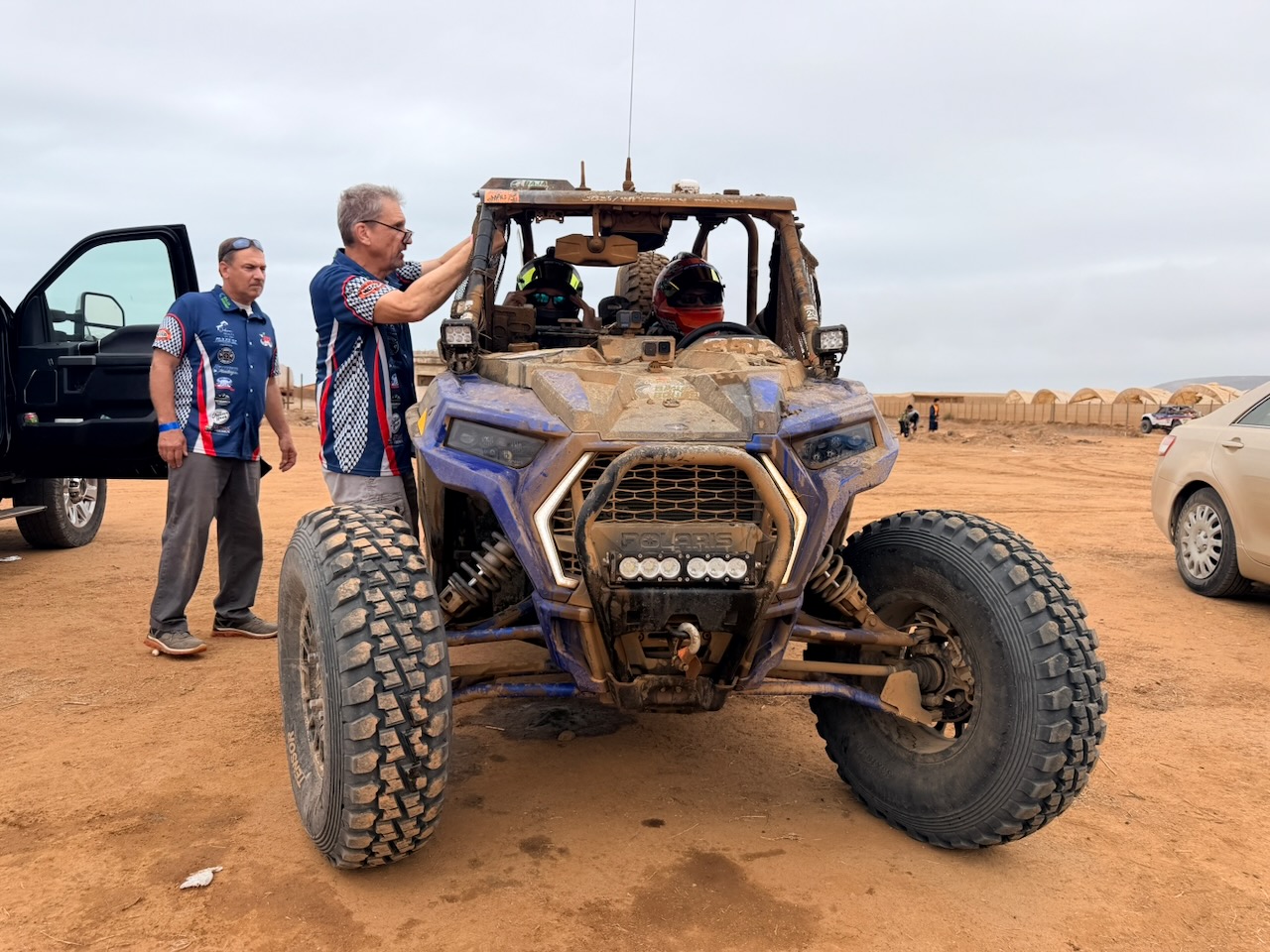
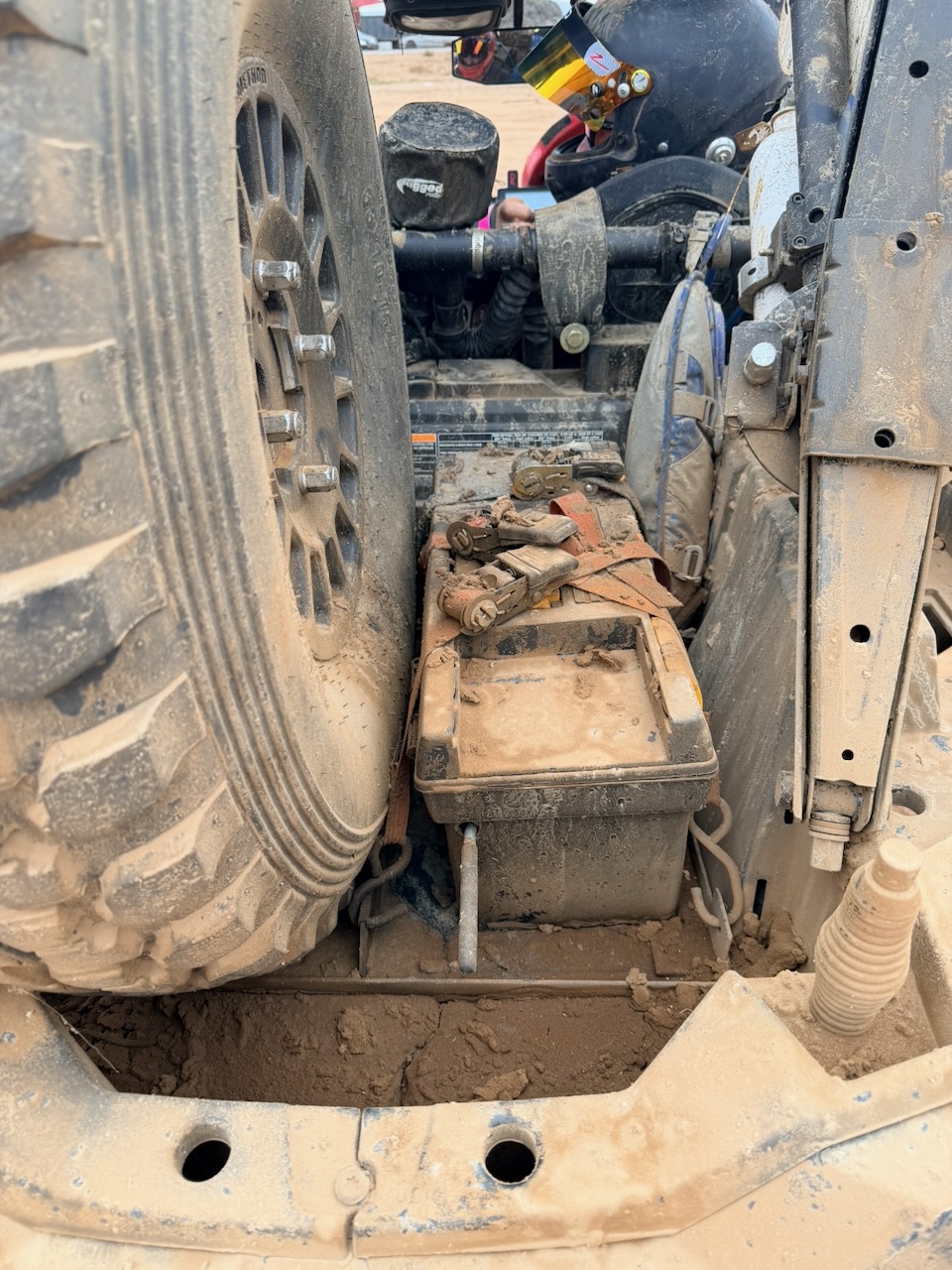
Then the battery played dead between timing check-in and the start. Borrowed jumper cables brought #355 back to life, and we rolled toward the first special assuming the drama was behind us. No one yet knew this was merely the opening act of the day’s electrical story.
The Route North
Three special stages. One hurricane-altered coastline.
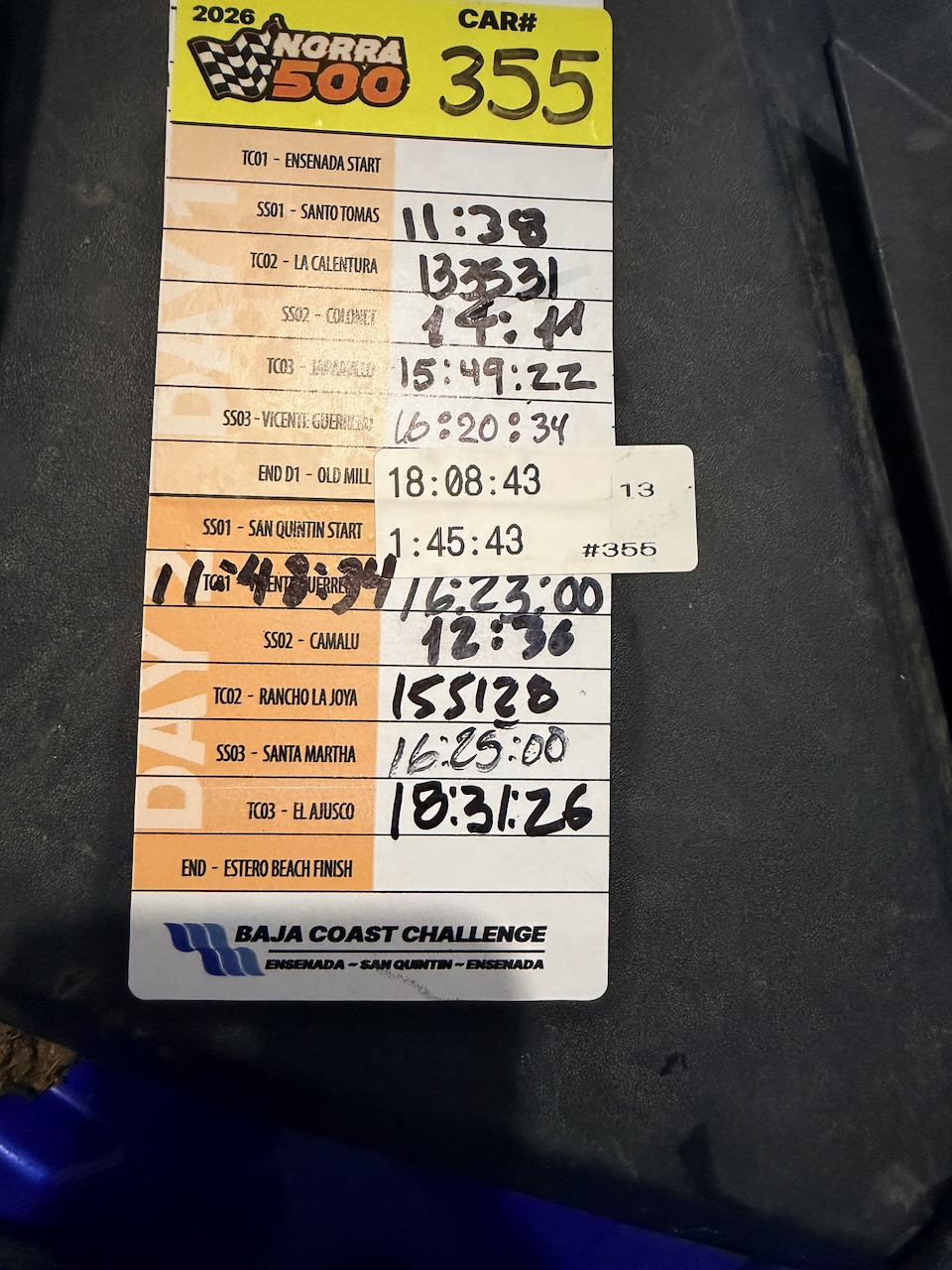
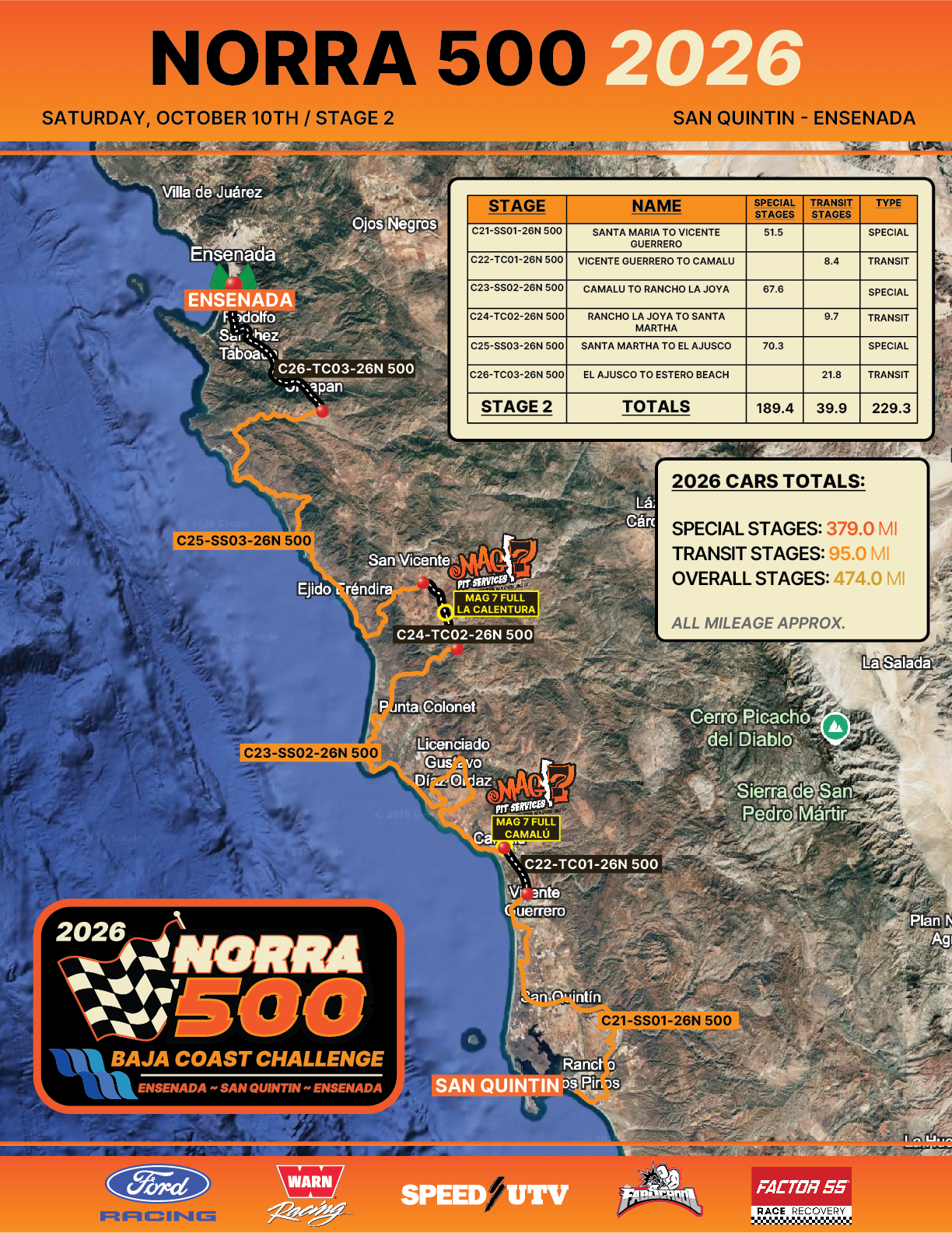
The second day ran north from San Quintín through Vicente Guerrero, Camalú, Rancho La Joya, Santa Martha, and El Ajusco before the final transit to Estero Beach. On paper it was 229.3 miles of special and transit stages. On the ground, Hurricane Rachel had rewritten portions of the route in saltwater.
Orange meant racing. Dashed lines meant transit. Neither color showed how much ocean was waiting for us.
Special Stage 1
Saltwater to the shoulders.
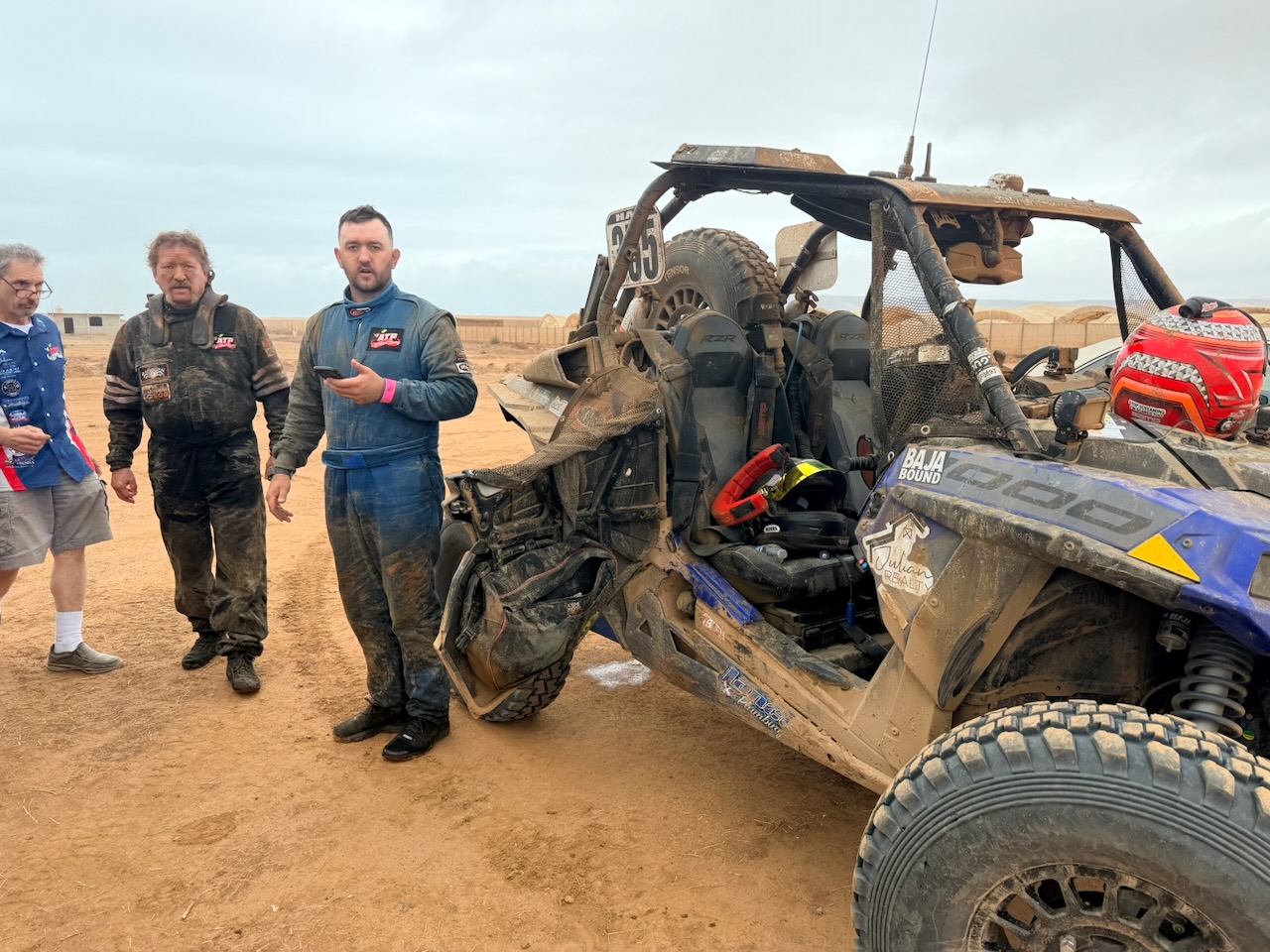
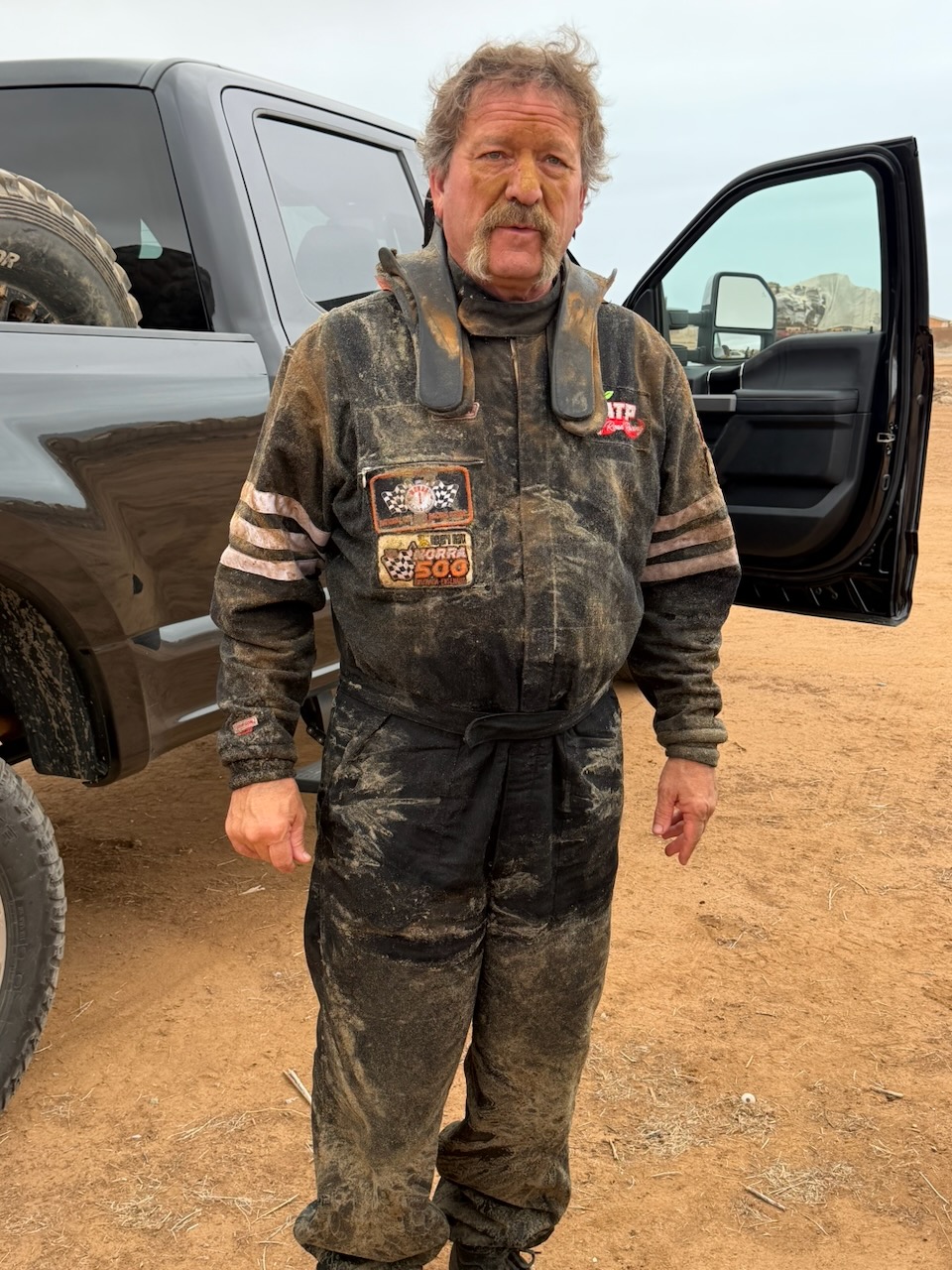
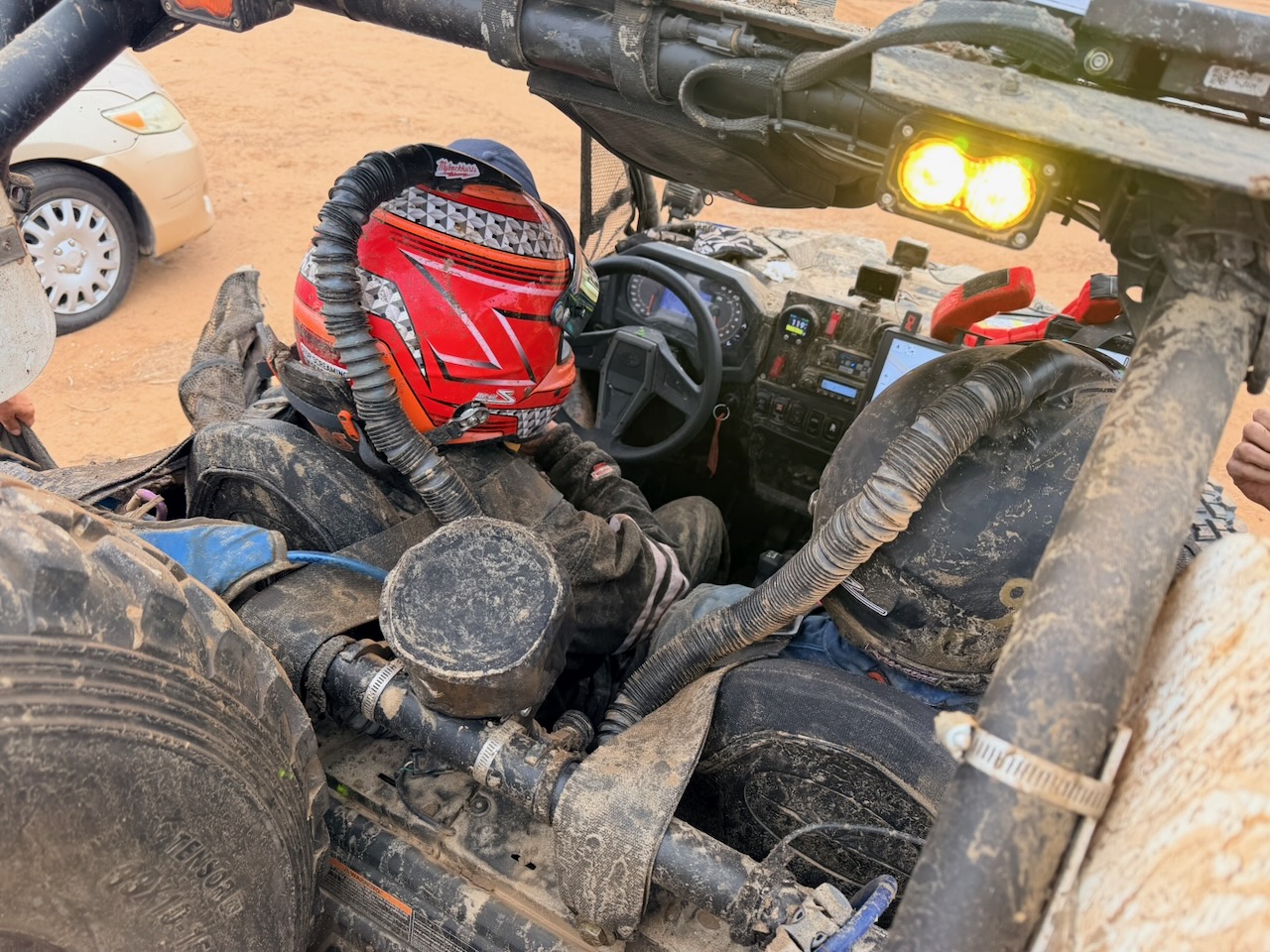
Hurricane Rachel had pushed the tide inland and flooded portions of the course. Within fifteen minutes of starting, Brian and Tyler were submerged up to their shoulders in saltwater. Sand from the surf poured into the cockpit at an alarming rate as Brian kept #355 moving and Tyler navigated a stage that leapt from beach to mountains and back again.
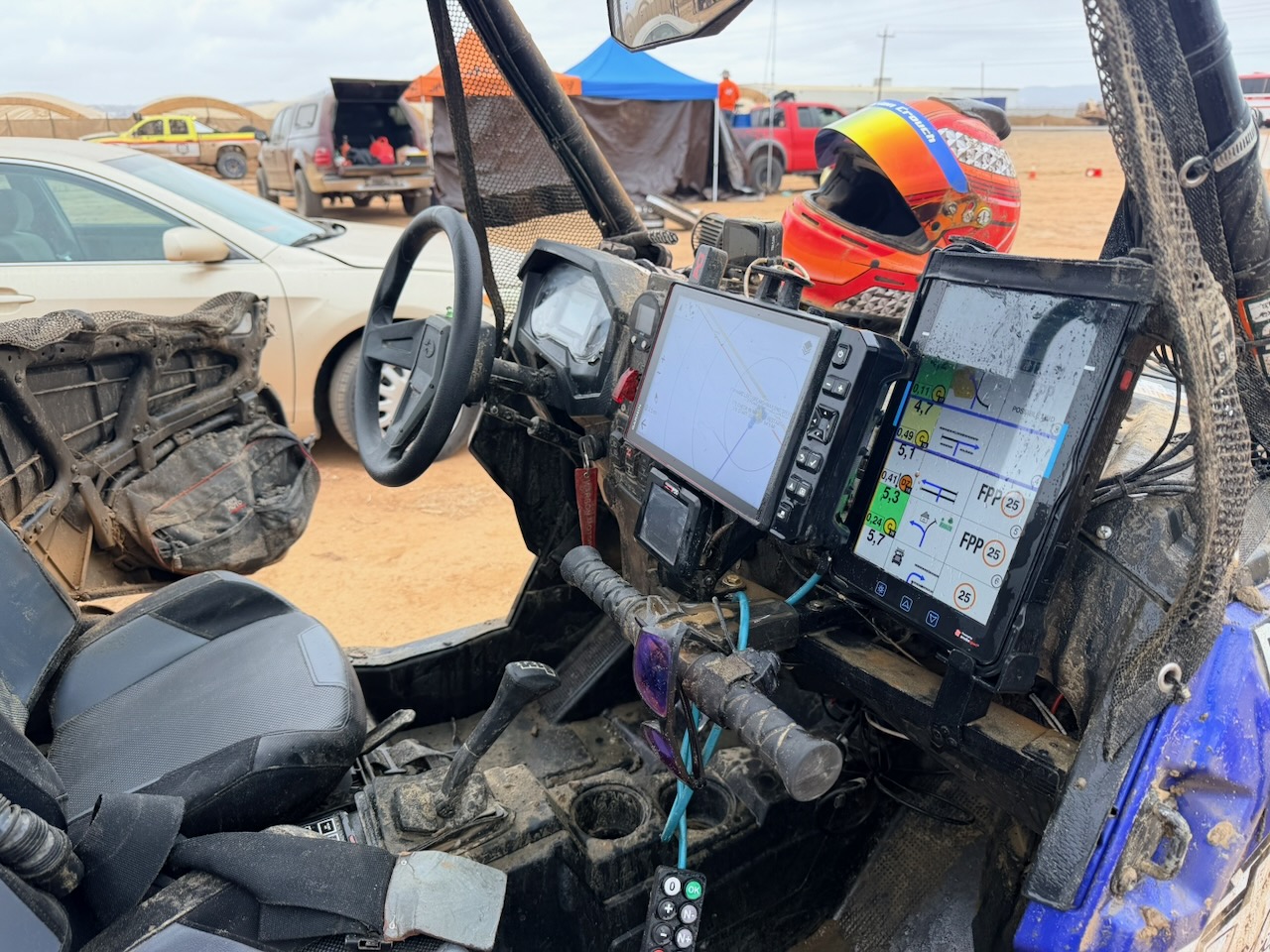
Saltwater and sand quickly made the GPS touchscreen unusable, and the Stella 6 fared little better in the corrosive bath. The car, however, kept pulling.
Fresh Water for the Electronics
Wash, dry, reboot, race.
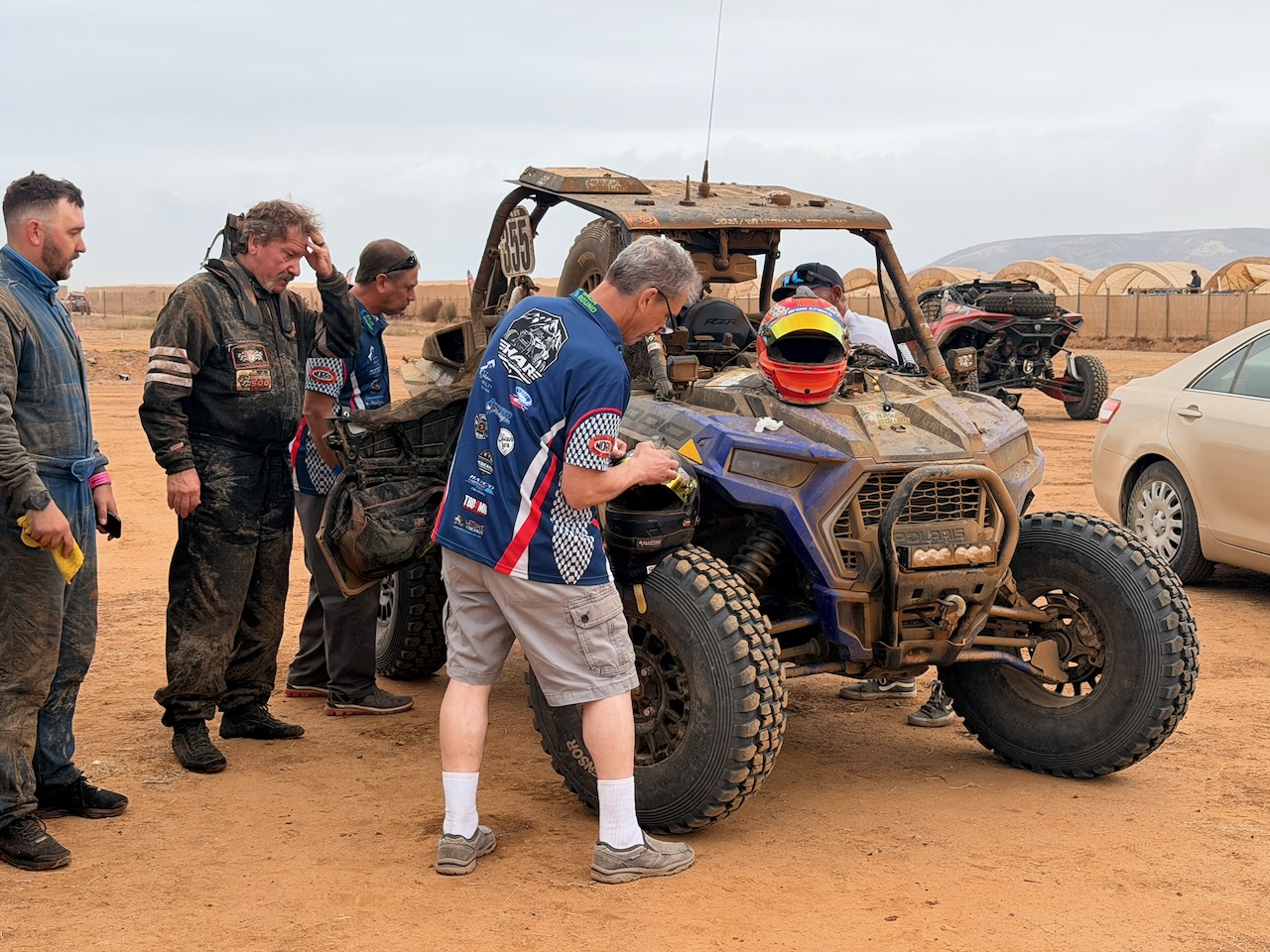
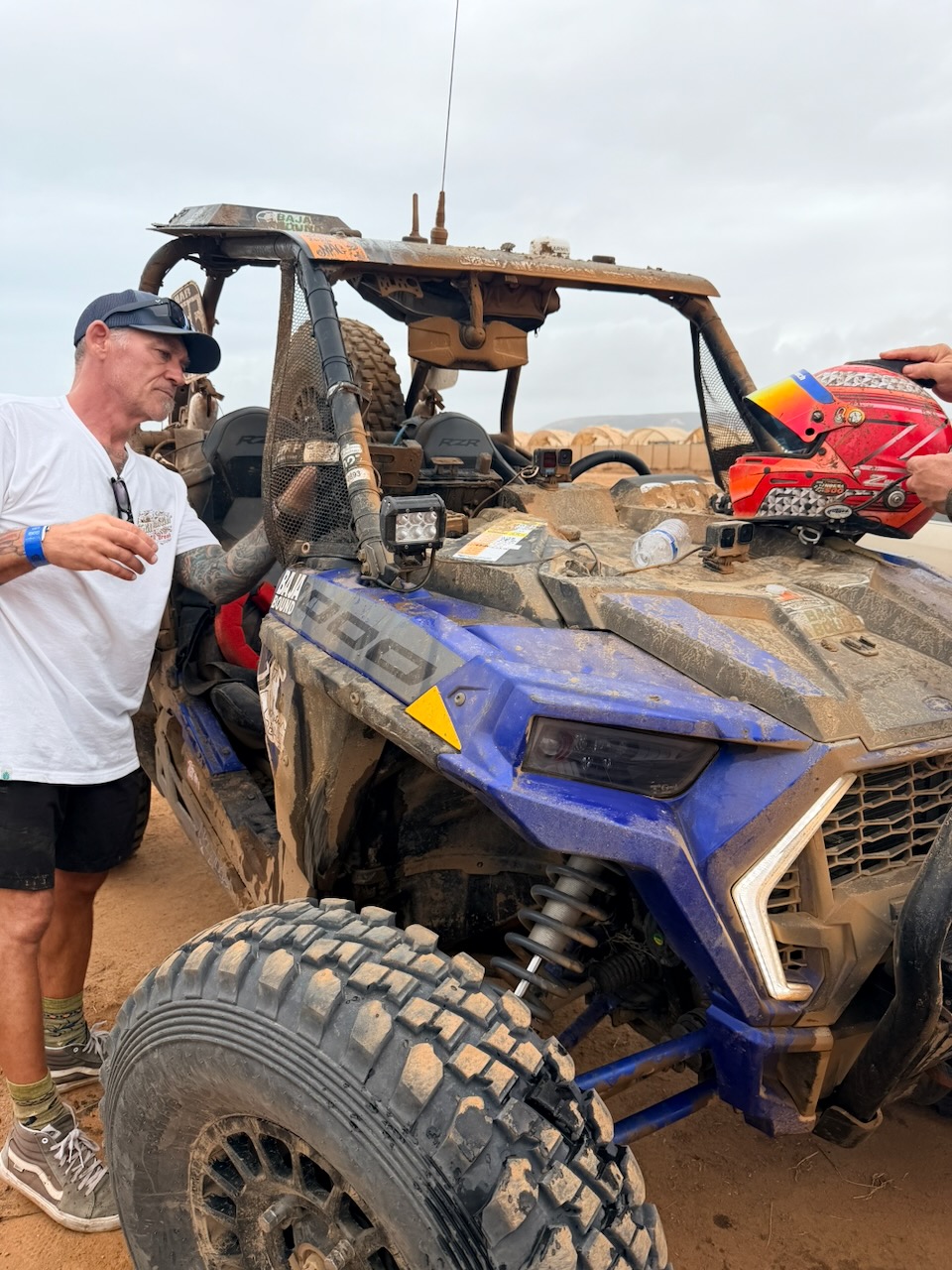
During the transfer between Specials 1 and 2, Brian caught the chase crew after taking on fuel at MAG 7 Desert Race Services. The crew flushed the GPS screen and Stella 6 with plenty of fresh water, washing away the salt and sand before carefully drying both units.
The GPS came back to life as Brian and Tyler headed into Special 2. Stella 6 never worked properly for the entire race, but its speed-zone display remained absolutely essential: even imperfect information mattered when a few seconds above the limit could turn into penalties.
The Submarine Section
No dry line. No penalty-free way around.
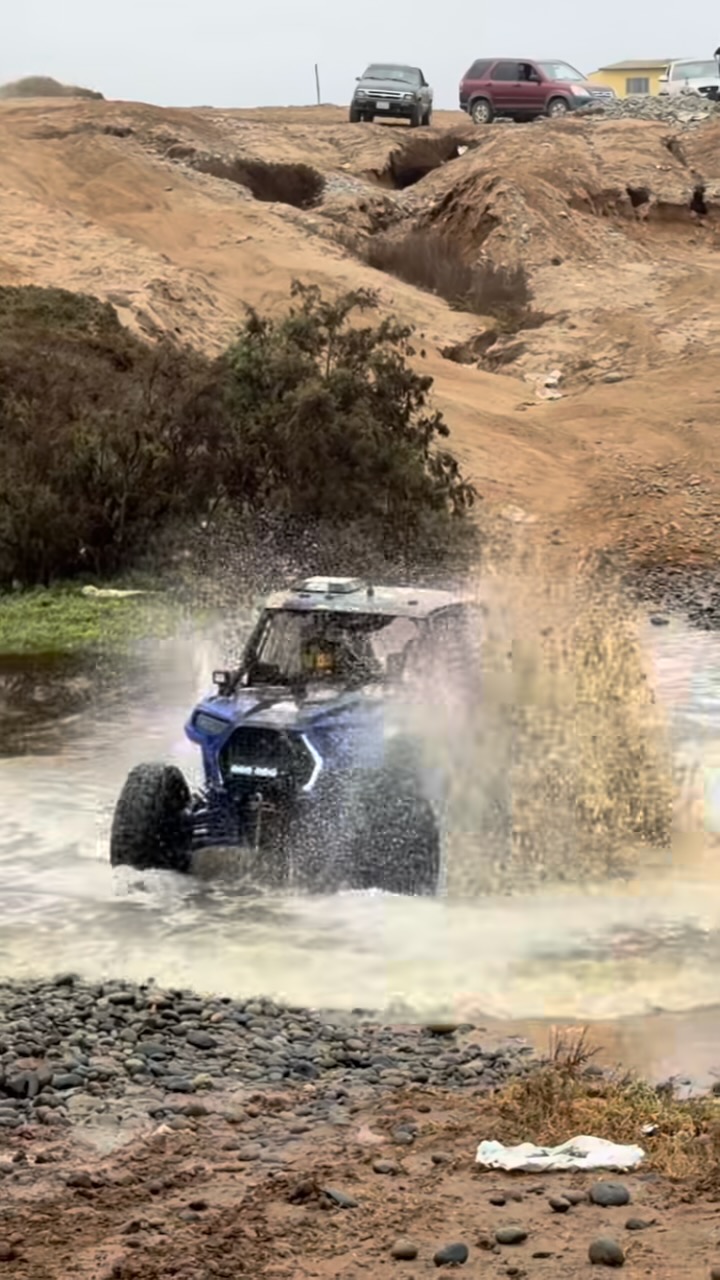
Special Stage 2 ran along the coast, bent inland, returned to the Pacific, and eventually climbed toward the mountains. On the beach waited Brian’s now-famous submarine section: a deep saltwater intrusion with no viable, penalty-free route around it.
The crossing had already claimed several vehicles—some lost to the water, others retired by drivers choosing to save their machines for another race. Brian committed, #355 disappeared into the spray, and then the car clawed its way out the far side.
Everything Goes Dark
Saltwater finishes the job.
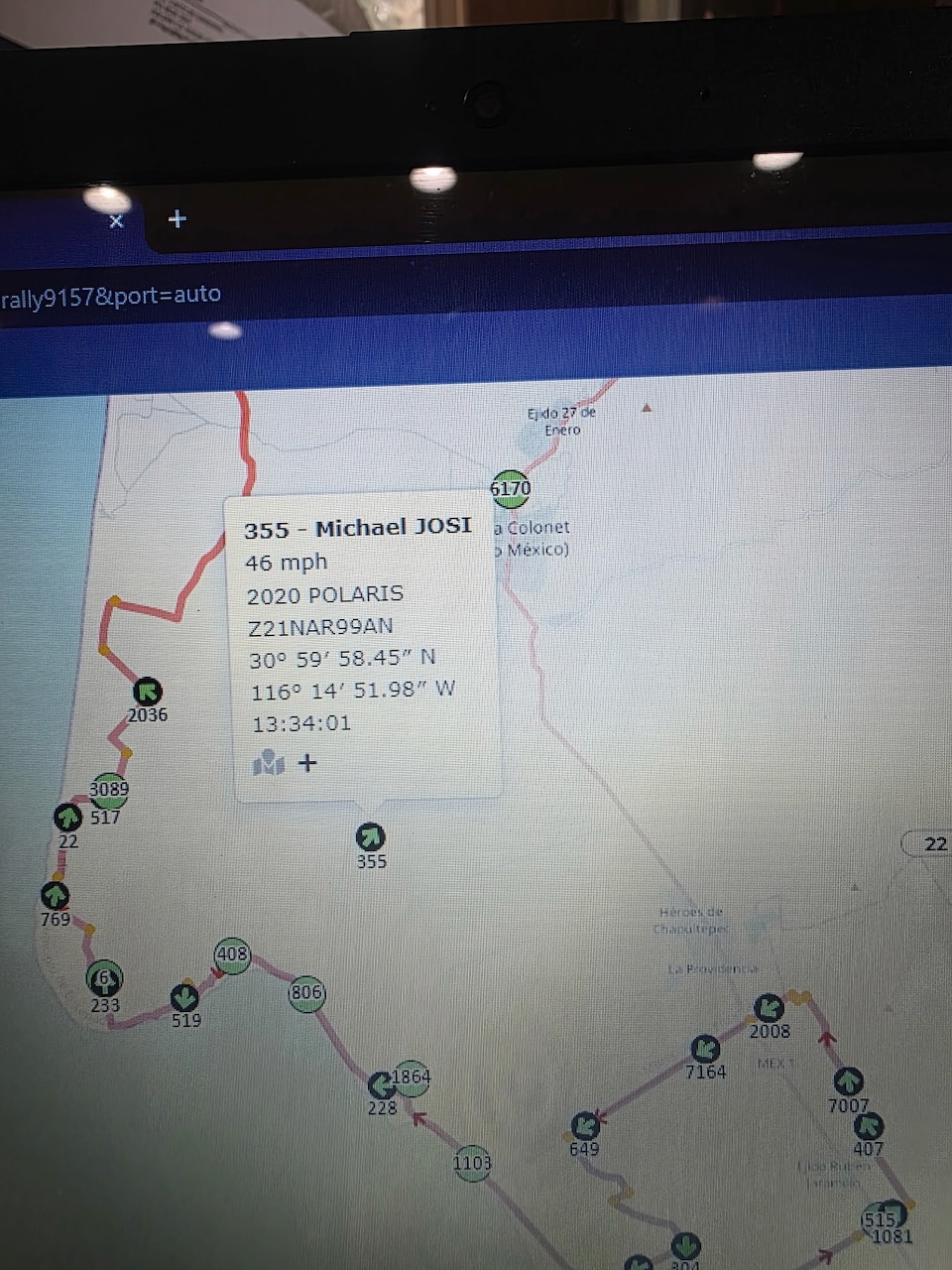
As Brian ran swiftly along the beach, the delayed effect of the saltwater finally shorted the car’s electrical system. Intercom, radio, GPS, helmet pumper, lights—everything went dark. Starlink was somehow still working just enough for Tyler to text the crew for help.
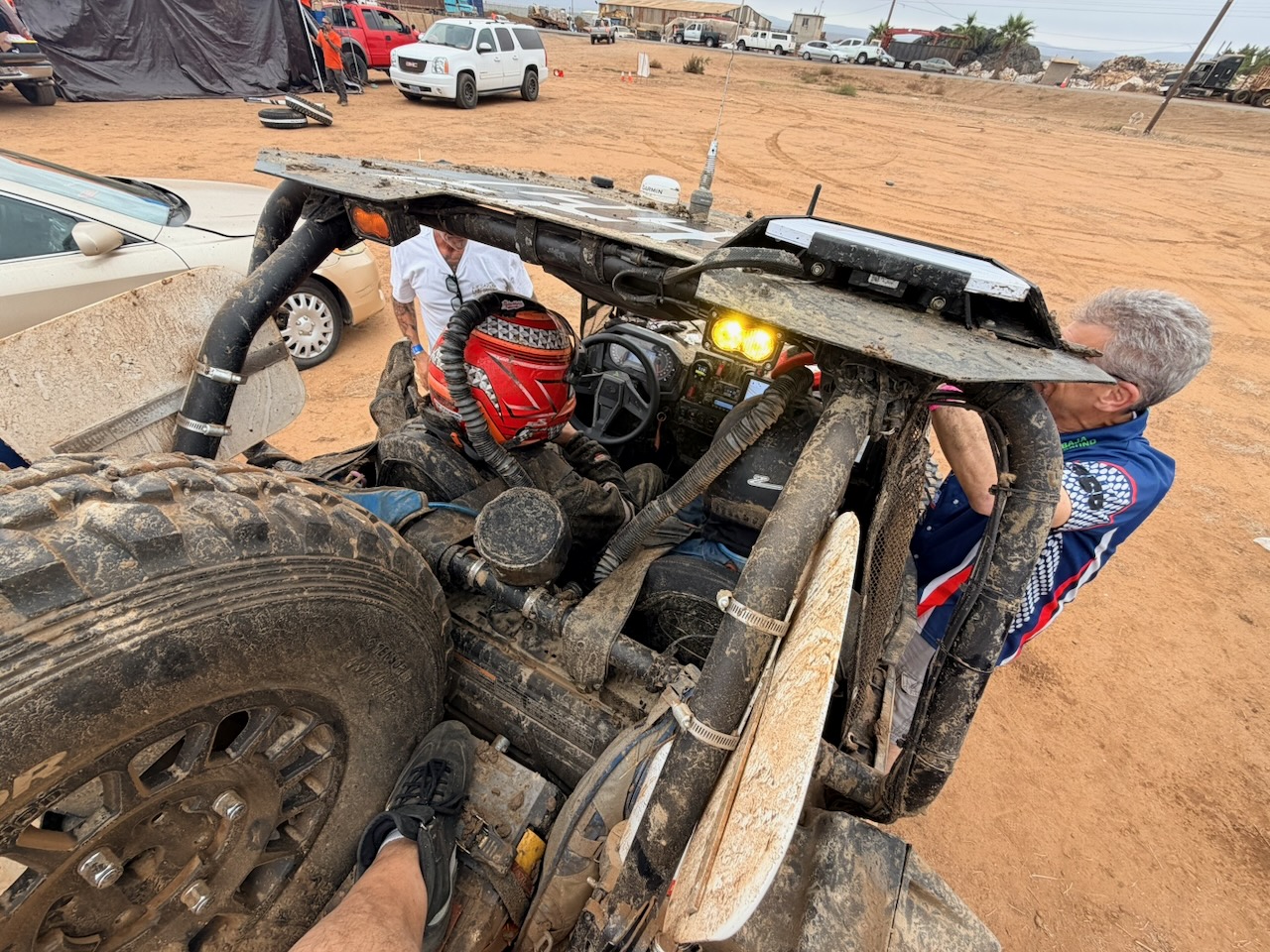
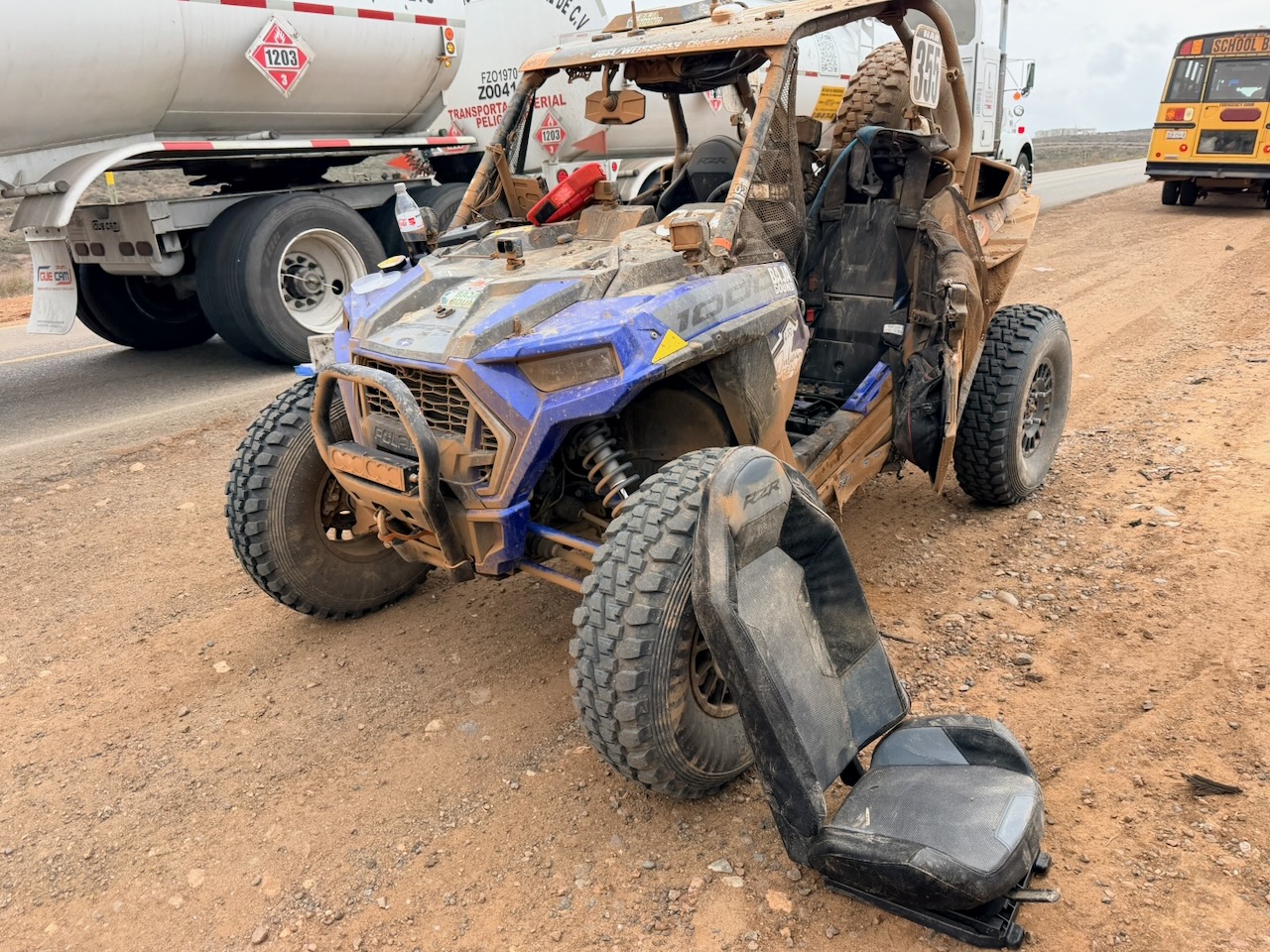
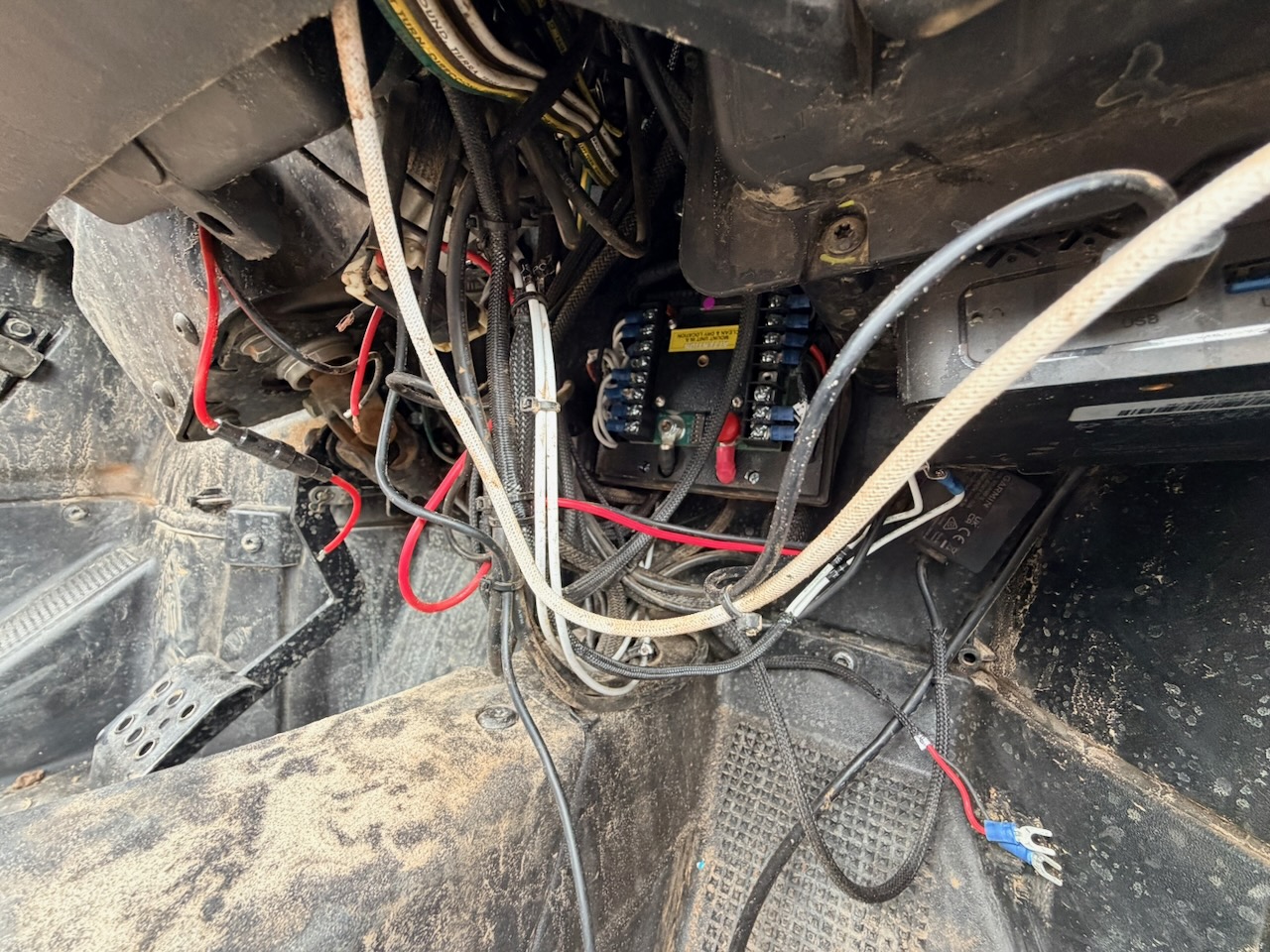
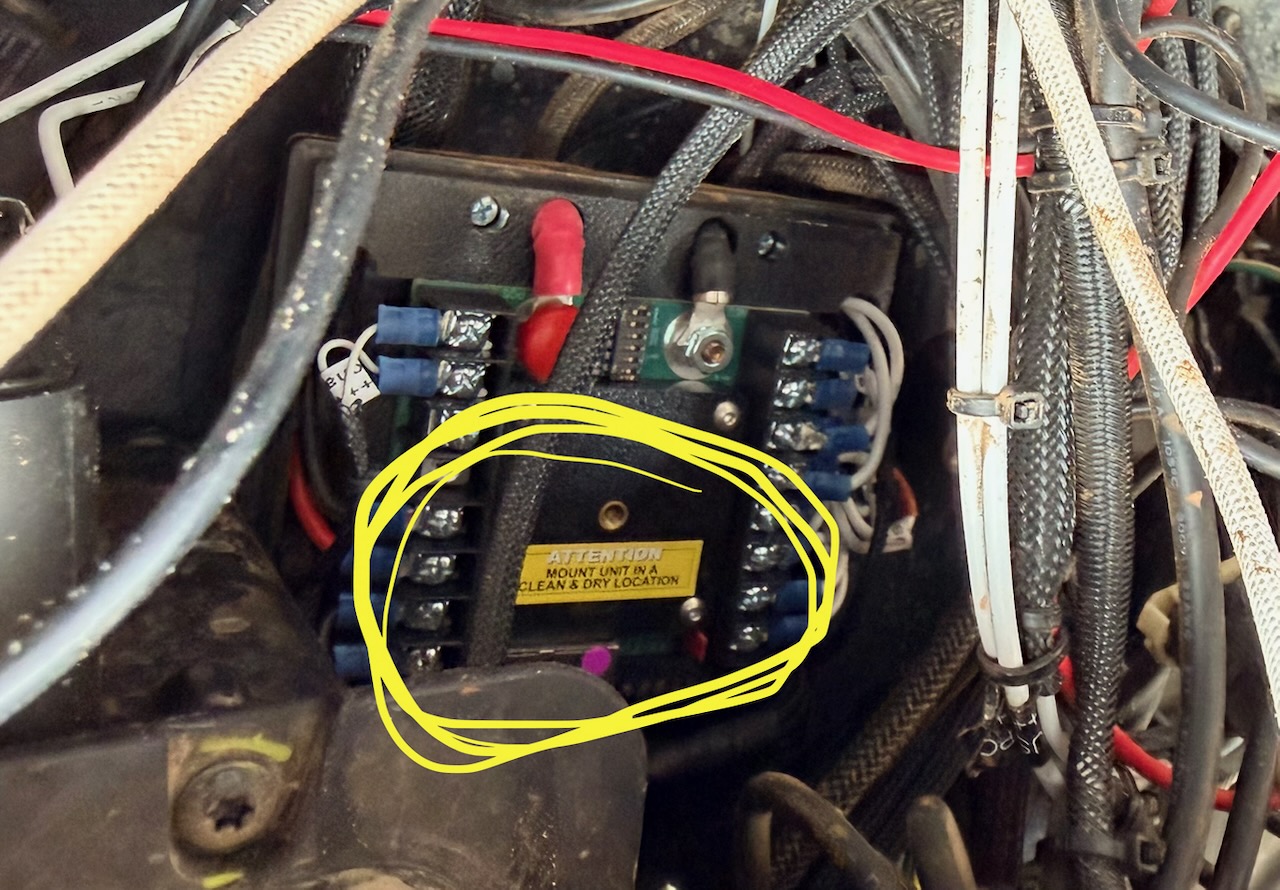
Brian left the course and brought #355 up to MEX-1 for an unscheduled pit stop. The S-Pod power distribution system was completely fried. Its display had died during the first deluge; then water entered the supposedly weather-resistant keypad through the Ethernet port. RIP.
Roadside Reengineering
Battery. GPS. Starlink. Go.
Mike dove into the wiring, pulled the electrical system apart, and separated absolutely essential consumers from everything the car could live without. He wired the GPS and Starlink directly to the battery. There would be no intercom and few comforts, but the essentials worked.
With the rescue complete, the team put Mike behind the wheel and Josh in the navigator’s seat. They headed out to finish Special Stage 2 and carry #355 into the final mountain stage.
One Million More Cycles
If you cannot hear it, is it still rattling?
The car ran beautifully along the beach, although every water crossing now demanded a careful choice between sinking the car and burying it in a flooded mud bog. On Pebble Beach we stayed too long behind a Class 6 Volkswagen. Steering on dry pebbles is problematic; when they are wet, direction becomes more of a suggestion.
At the next MAG 7 fuel stop, one valve tappet could be heard rattling, clicking, and complaining—likely the sound of a damaged valve spring. Quick math said that valve still needed to work roughly one million more times before the race was over.
There was nothing to repair in the field, and it was still working. At full throttle the exhaust was too loud to hear the rattle anyway. Problem solved. Baja logic prevailed.
The Final Special
Agave, switchbacks, and wide-open Baja.
The last special was everything that makes Baja racing irresistible: fast beach passages, technical off-camber climbs, and descents far from civilization. Going wide-open throttle in places that remote feels otherworldly. A rhythm settles over the cockpit while agave and cacti stream past.
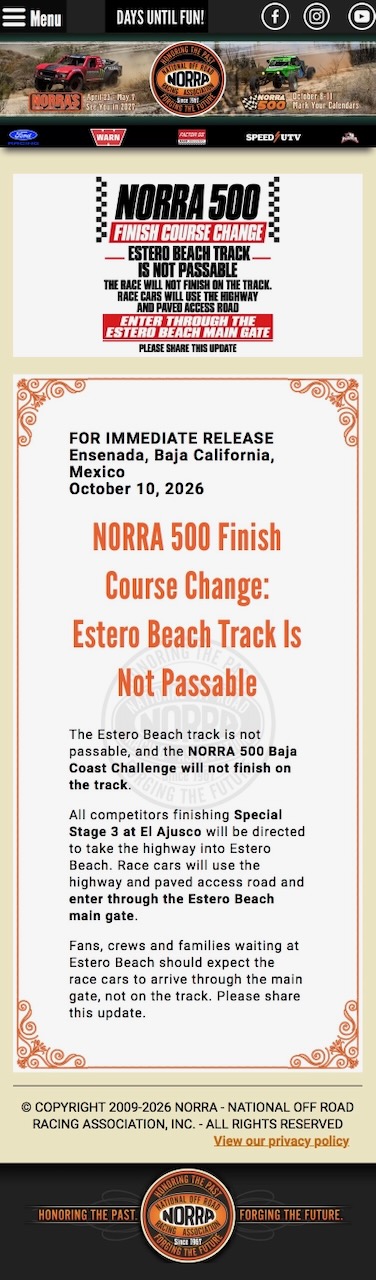
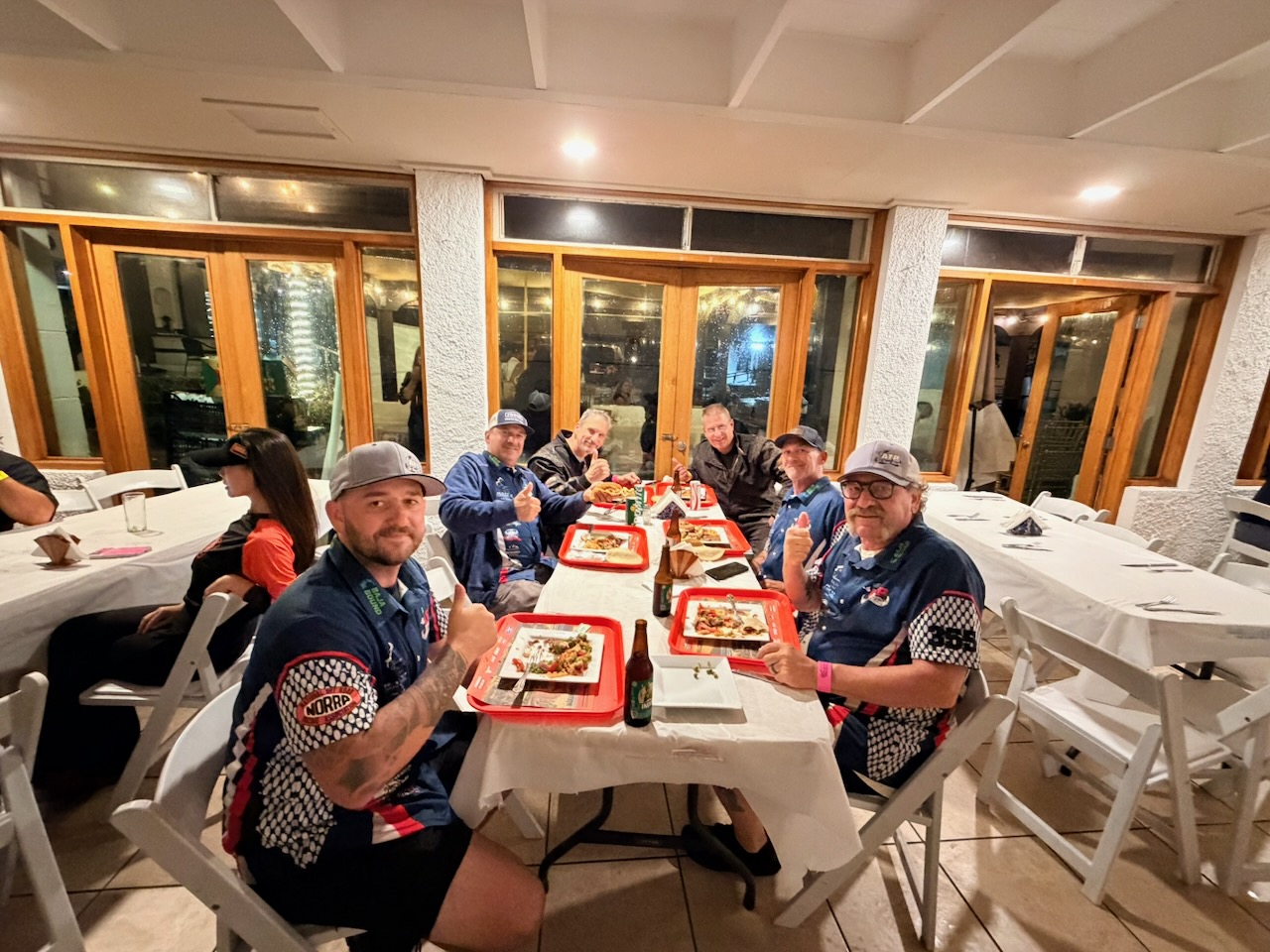
As night arrived, the steep descending switchbacks into the valley became Mike’s favorite part of the day. A long restricted-speed zone eventually returned the car to the road toward Ensenada. The planned final lap at the Estero Beach short course had been flooded out, so we parked #355 and got on with the party.
Rachel Arrives
No windows. Plenty of rain.
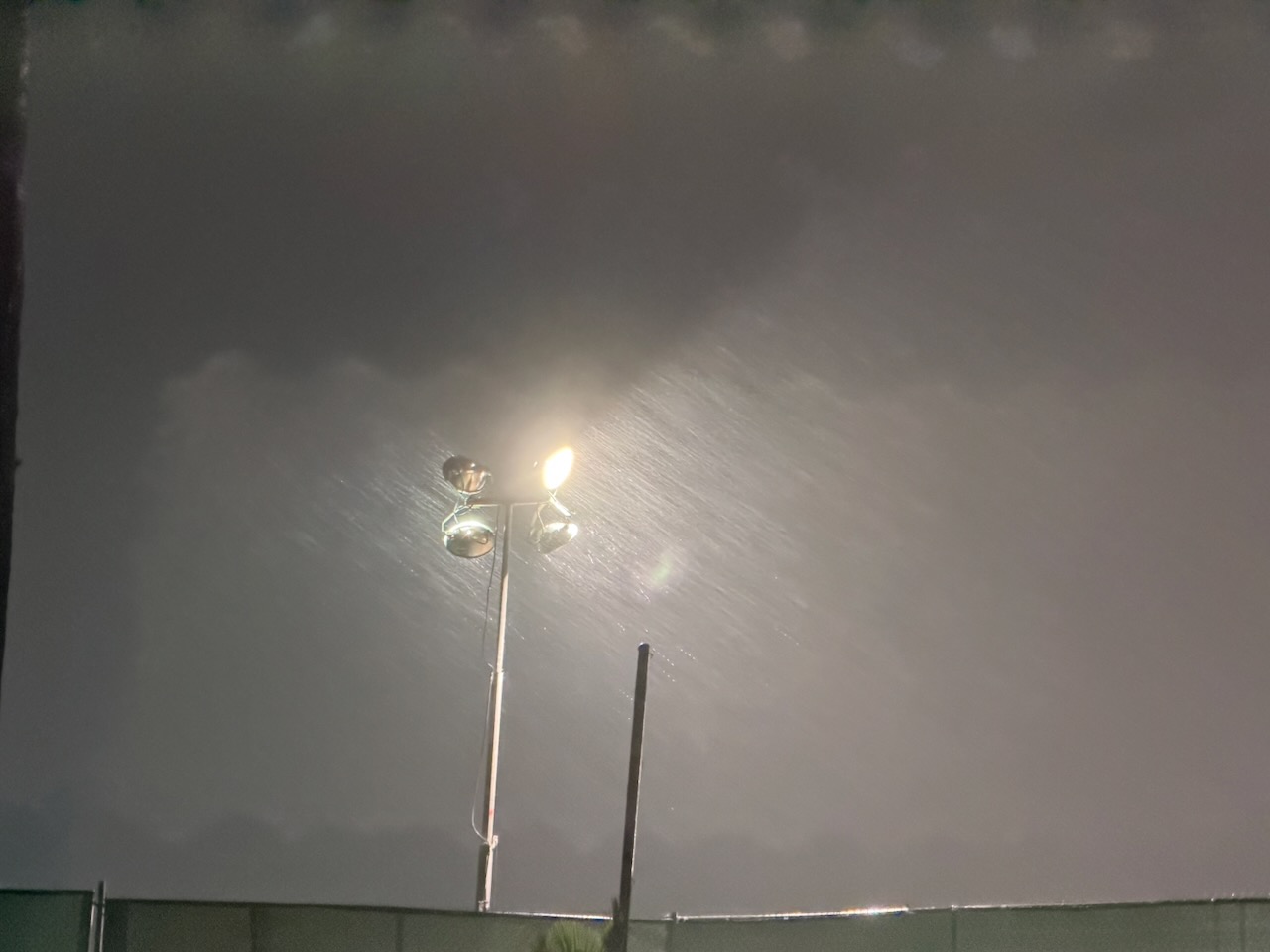
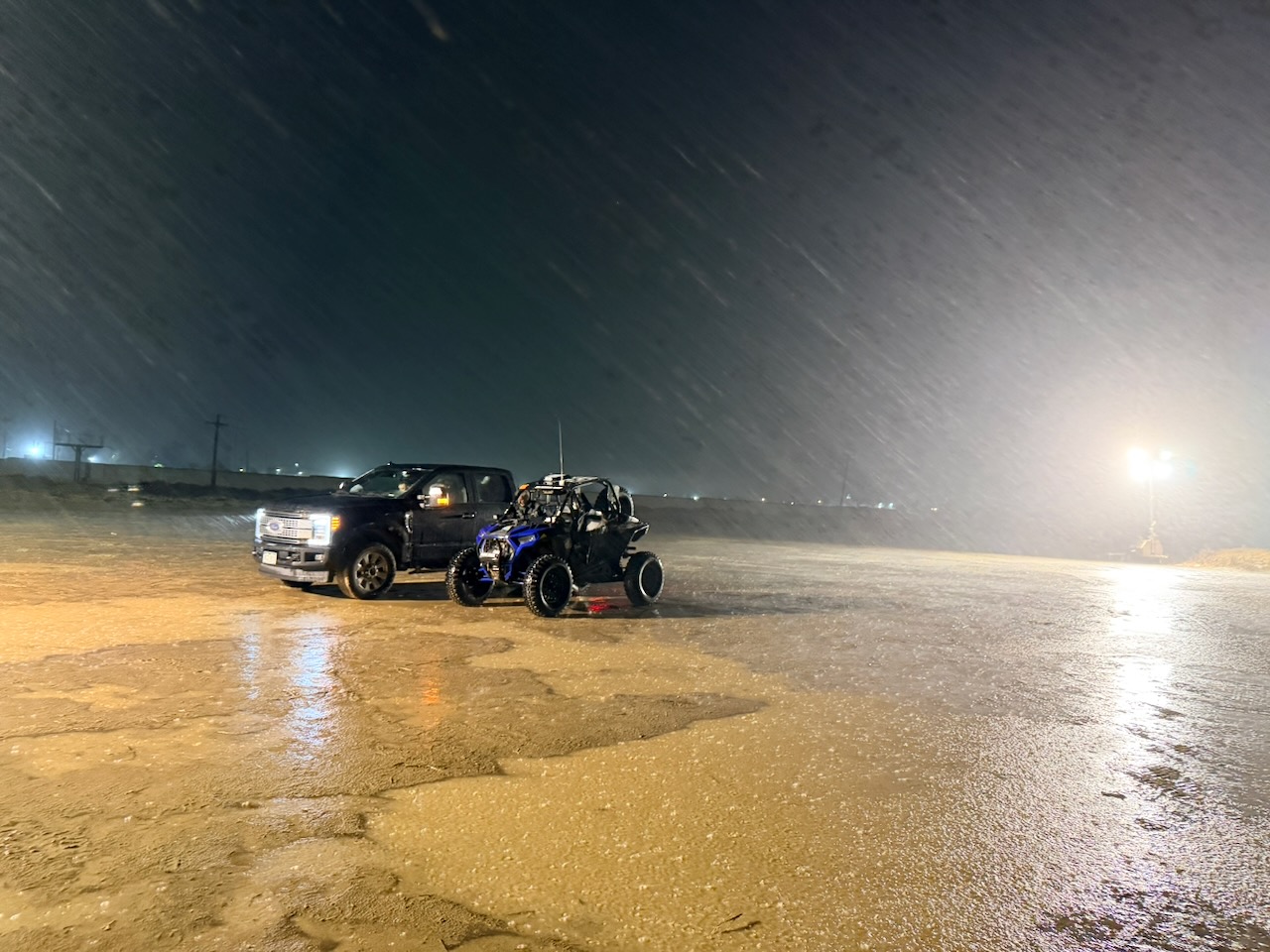
Every racing stage had somehow been “dry” for us despite the flooded course, but Rachel’s rainbands arrived while we were at Estero Beach. The drive back to our rented place in Ensenada—in a race car without windows—was very wet.
Our race suits absorbed the rain like sponges. On the bright side, it probably flushed out at least some of the salt and sand.
One Last Surprise
The house had been racing Rachel too.
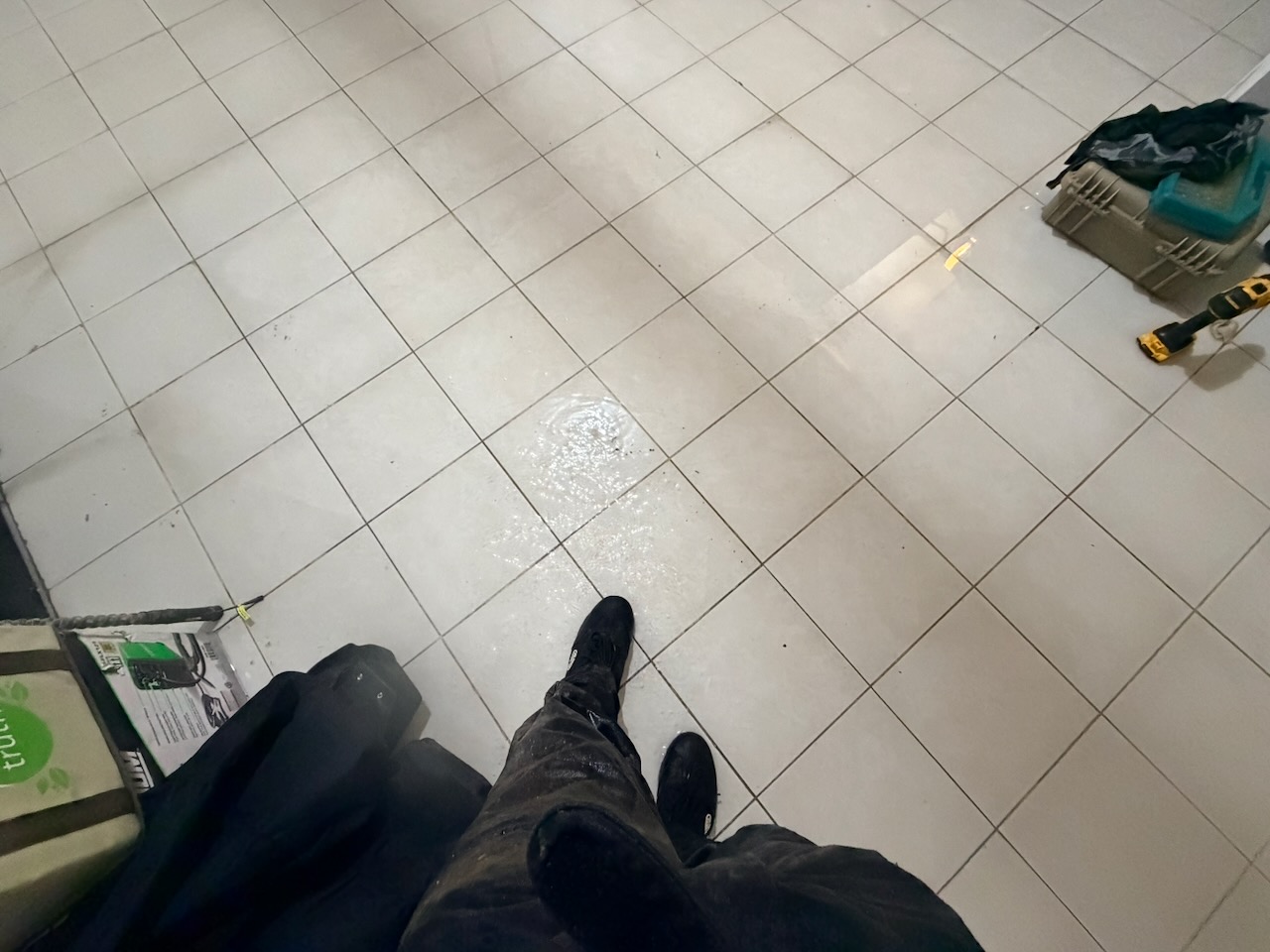
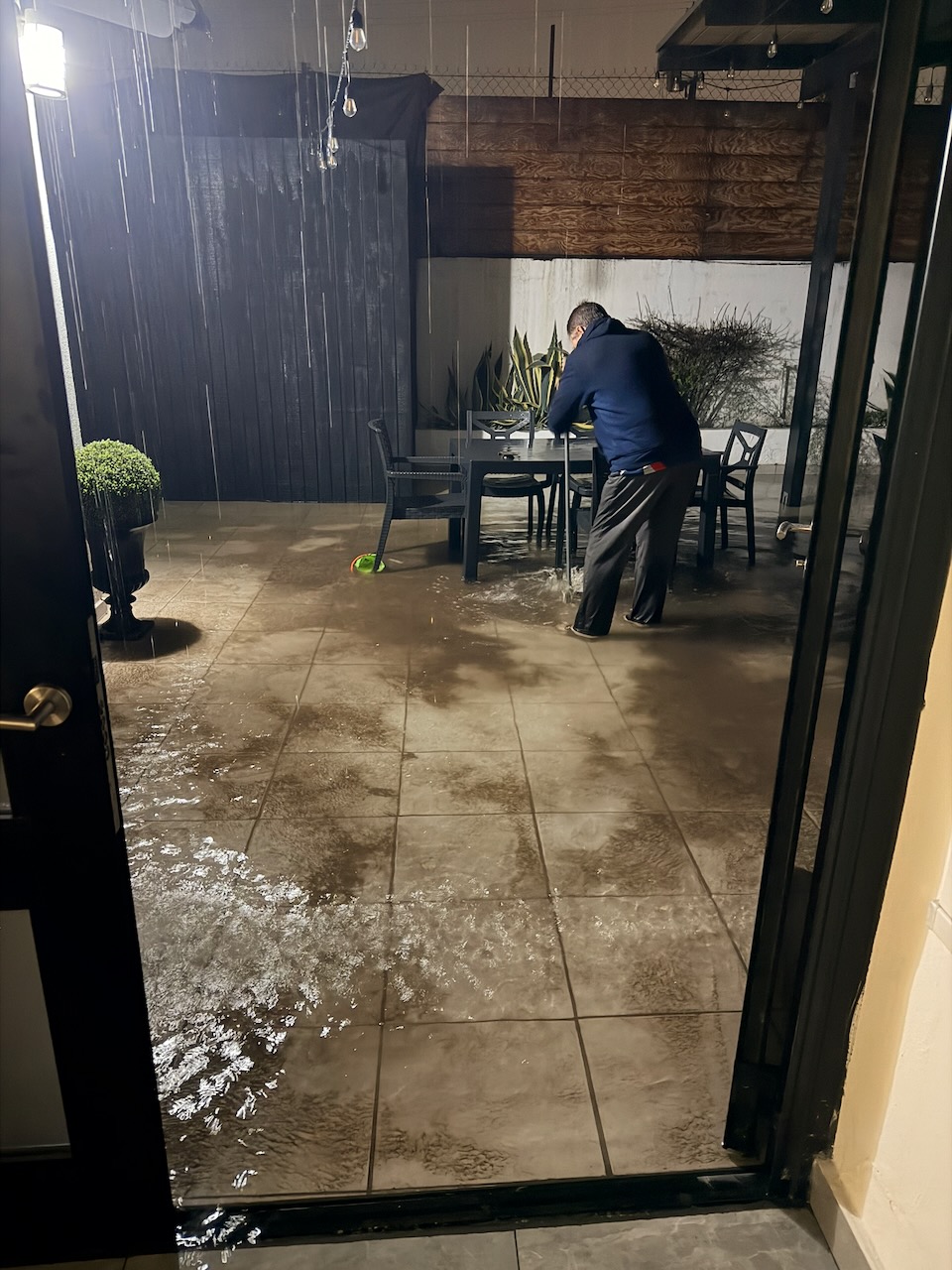
When the team reached the rental and opened the garage, water gushed out to greet us. Rachel’s rain had flooded the house, run through the rooms, and collected in the garage while we were still racing north.
After saltwater crossings, failed electronics, emergency wiring, a noisy valve, mountain switchbacks, and an open-cockpit drive through the storm, there was only one sensible response: deal with the water, laugh at the absurdity, and get some sleep.
Still Smiling
An intense and awesomely beautiful race day.
Race Day 2 asked for improvisation at every turn. The drivers committed when the dry line disappeared. The navigators kept working when the electronics did not. The chase crew turned a dead electrical system into a raceable car beside MEX-1. And #355 kept going when salt, sand, water, and one angry valve all offered reasons to stop.
No matter what, we slept well after an intense and awesomely beautiful day of racing. This is Baja. This is why we come back.
Continue the NORRA 500 Story