Heat, Slip & Desert Engineering
During qualifying for the 2025 NORRA 500, our CVT belt temperatures climbed so high that we had to back off the throttle to keep from destroying the belt. In racing, lifting is sometimes the smart move—but it is never the final answer.
The Problem
The gauge told us to lift.
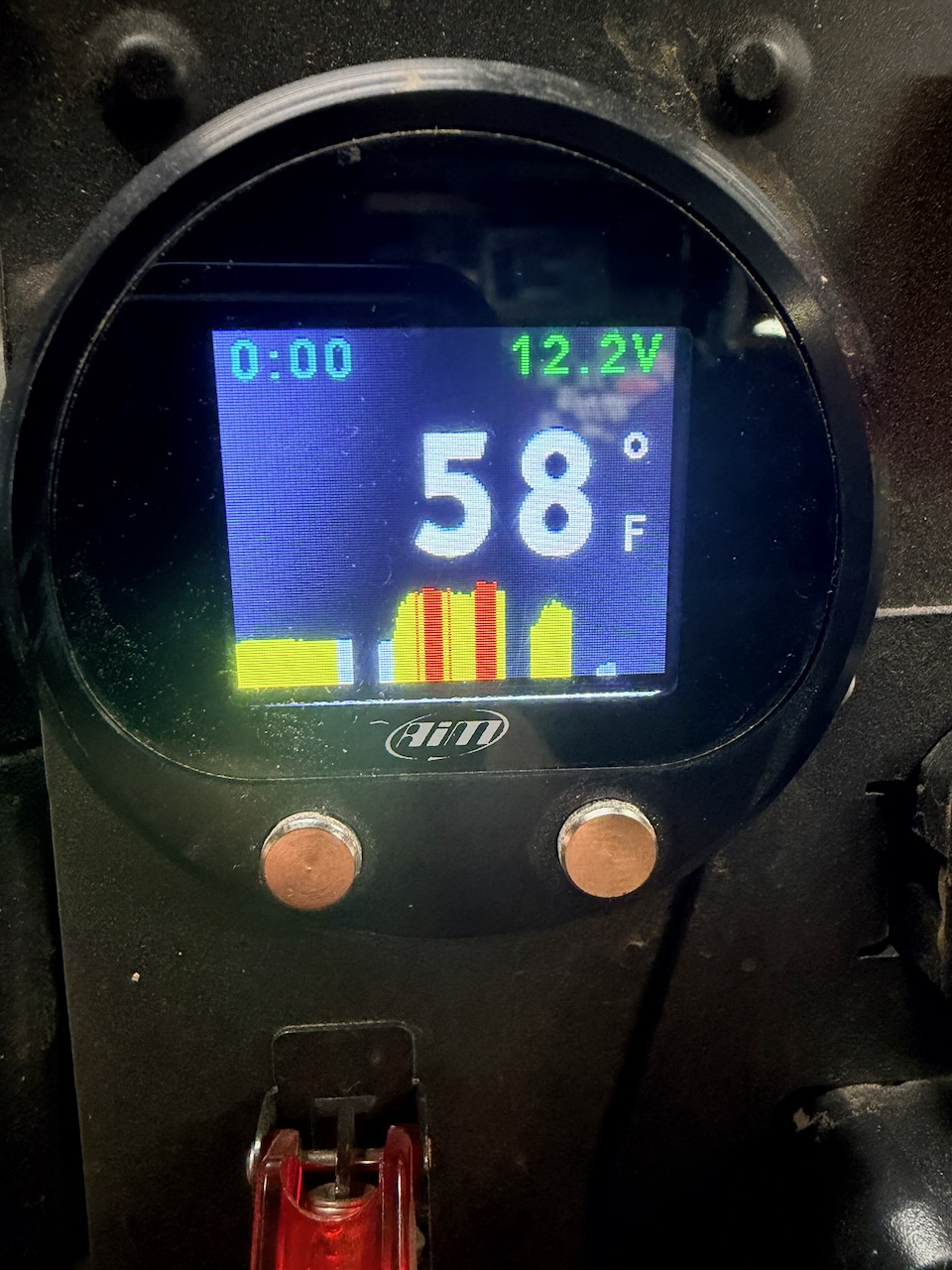
Our infrared belt-temperature monitor made the problem impossible to ignore. Sustained speed drove the numbers toward the danger zone, forcing the driver to trade pace for belt survival during qualifying.
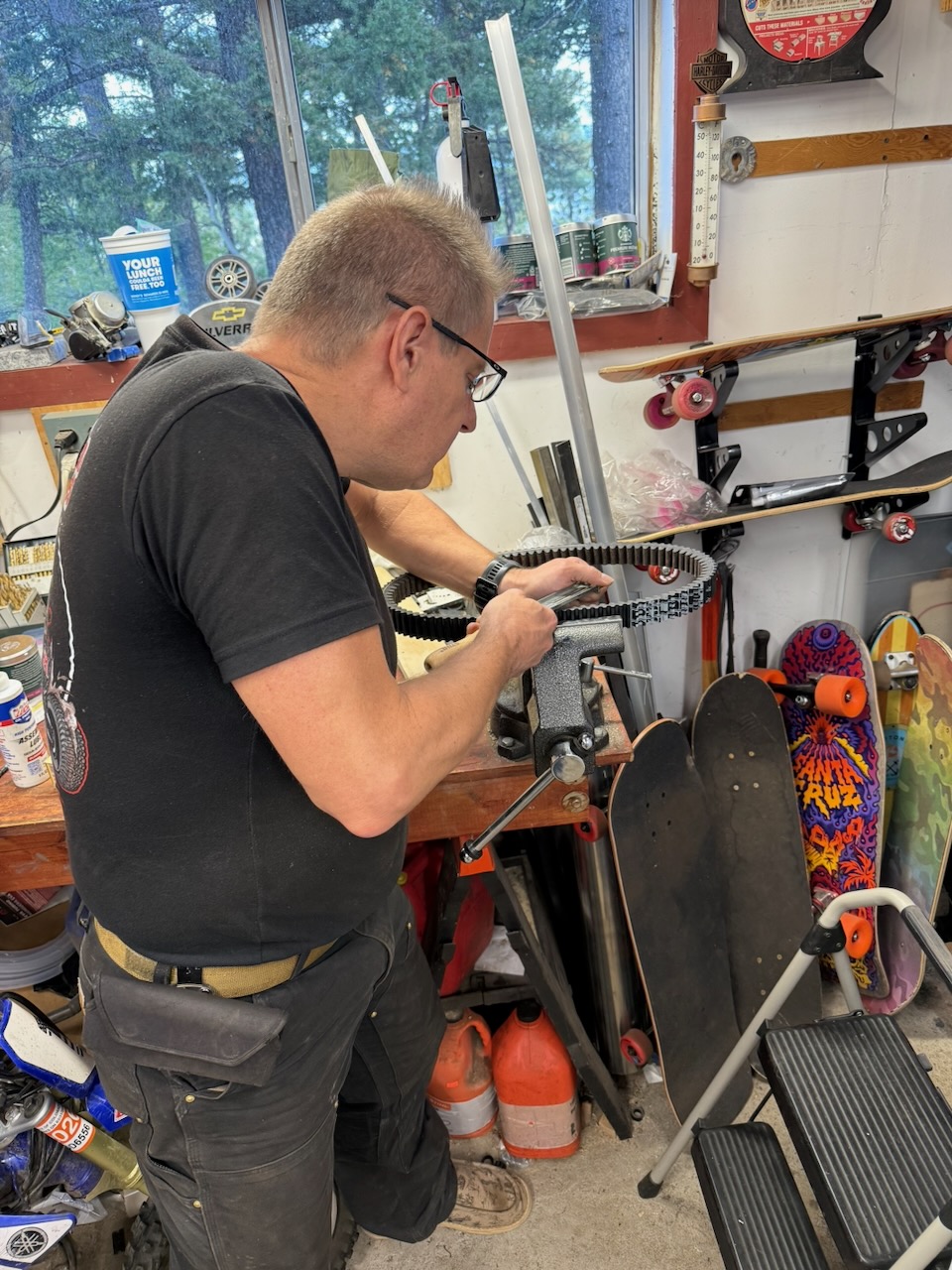
We had already filed the belt edge to exactly 23.44 degrees—because everybody knows the twenty-fourth hundredth is where the real cooling happens. Strangely, this precision aerodynamic breakthrough did not produce the desired effect.
Baja Field Engineering
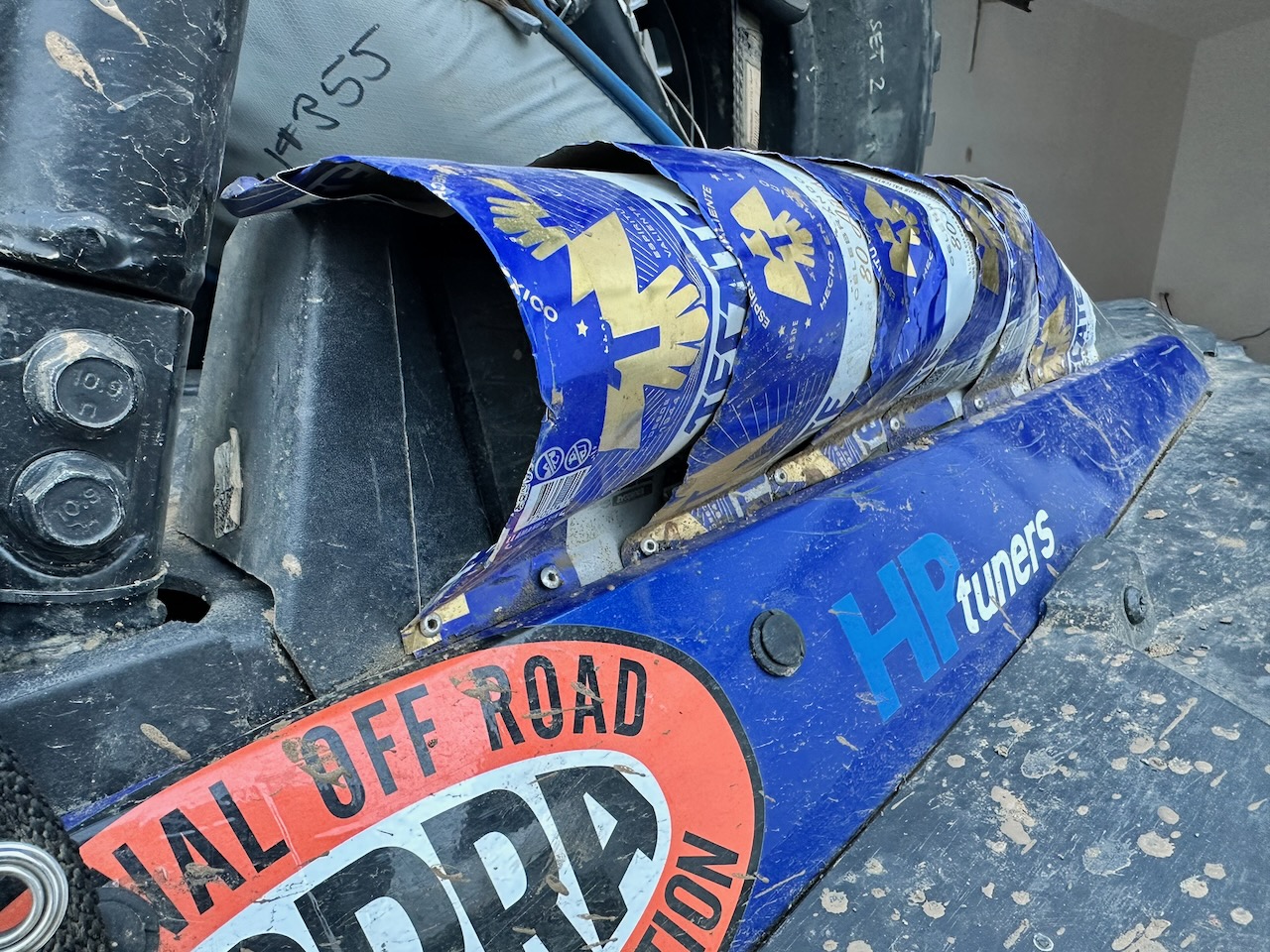
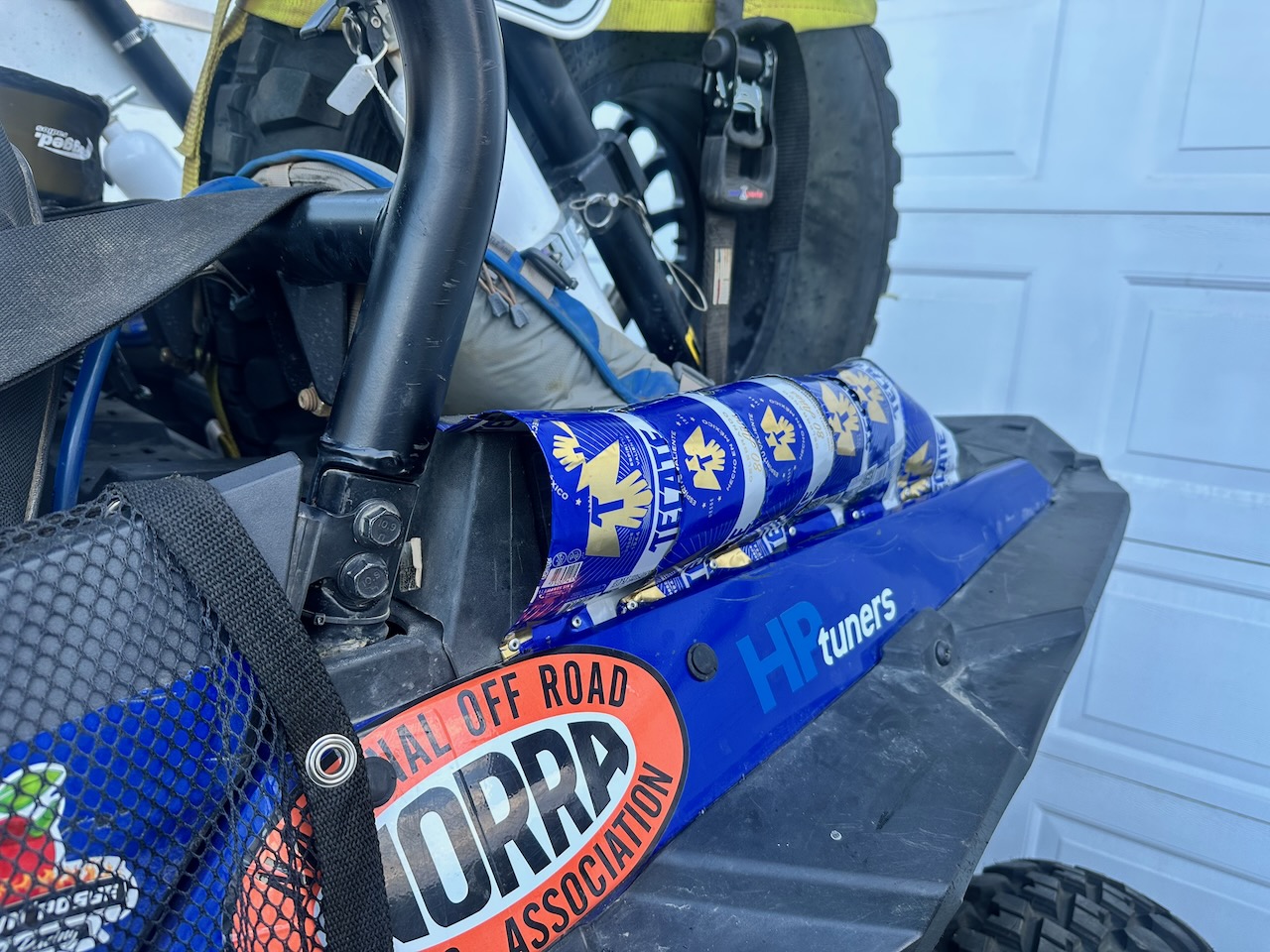
The fabled Tecate-Racer is born.
As is so often the case in Baja, an engineering solution had to be found using the material at hand. We took empty Tecate beer cans, shaped them into an air scoop, and riveted the assembly to the CVT intake. The leading edge was folded six times for strength. The result was functional, unmistakable, and beautifully Tecate-branded.
Over the course of the race, we saw belt temperatures as much as 40°F lower during sustained high-speed sections. The improvised scoop had earned its name: the Tecate-Racer.
A Better Mechanical Foundation
From stock to Stage 4.
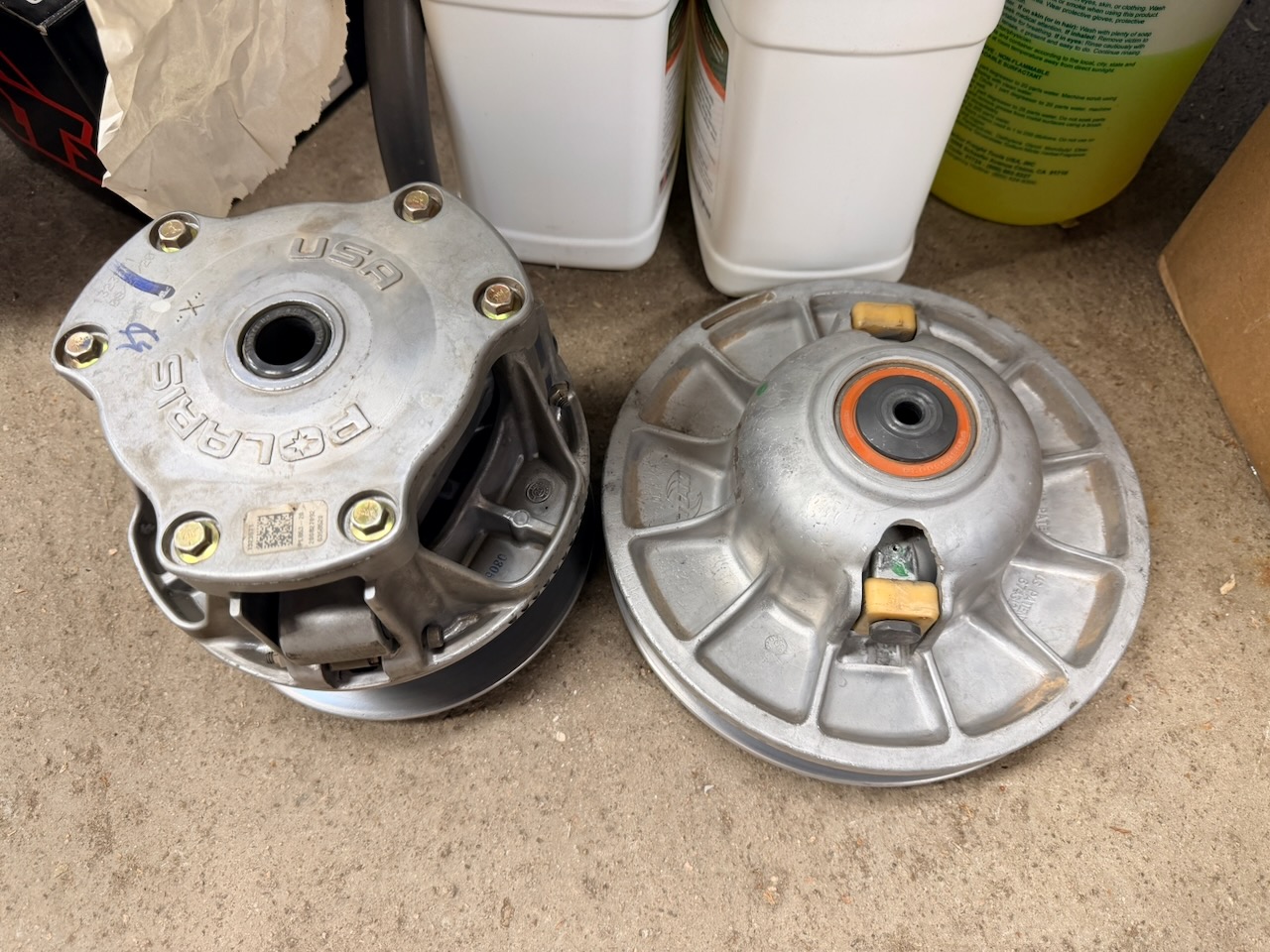
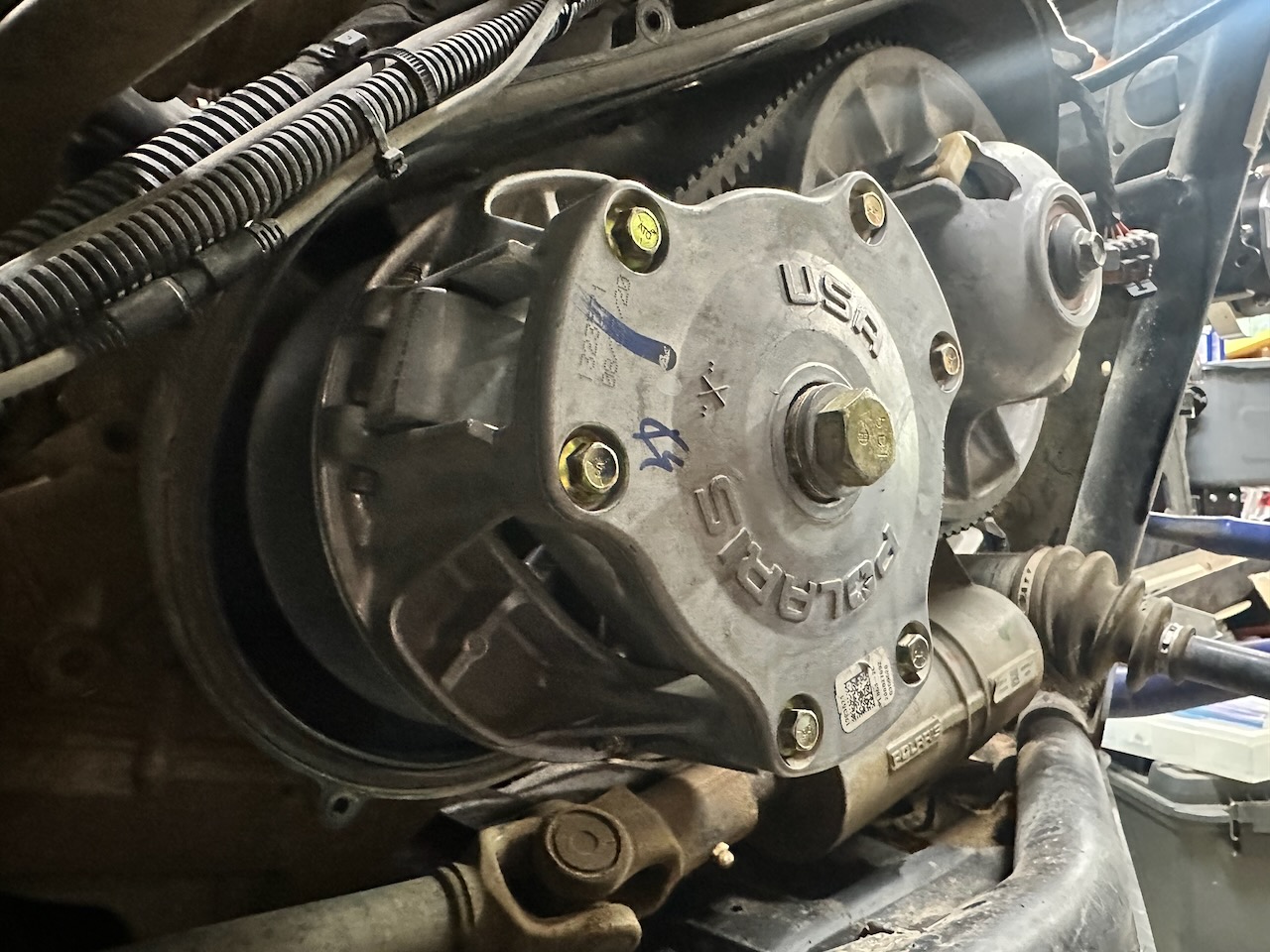
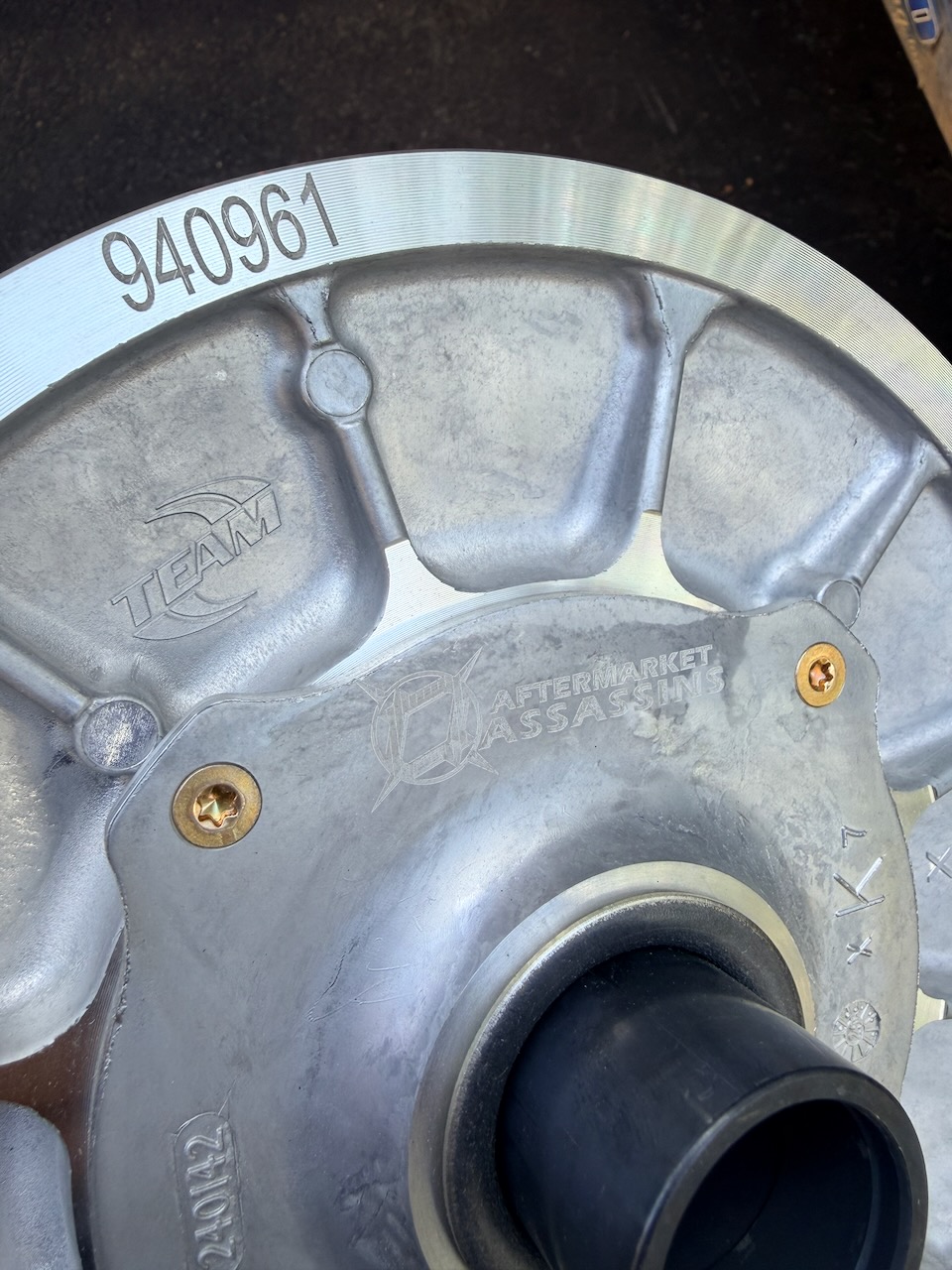
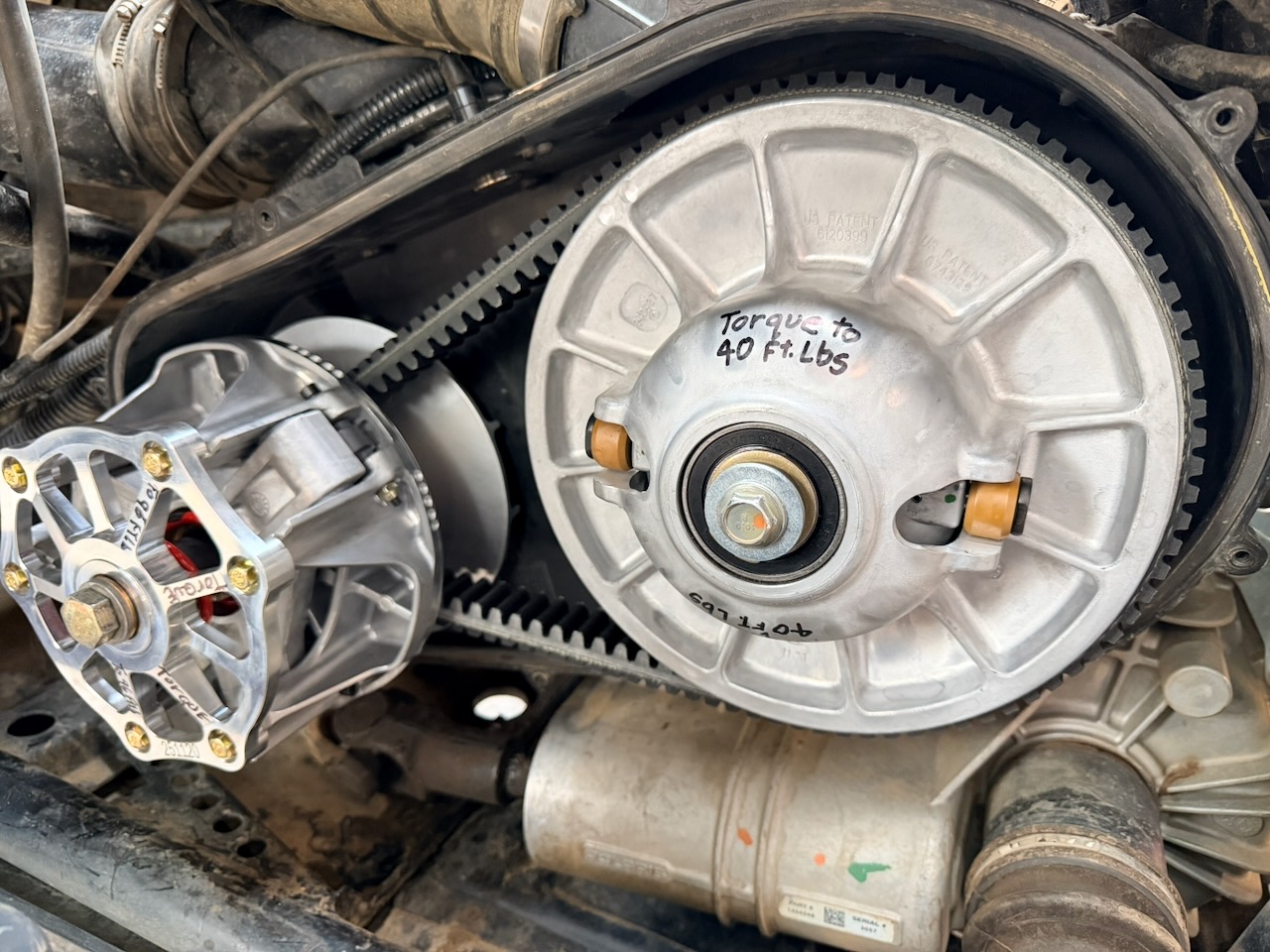
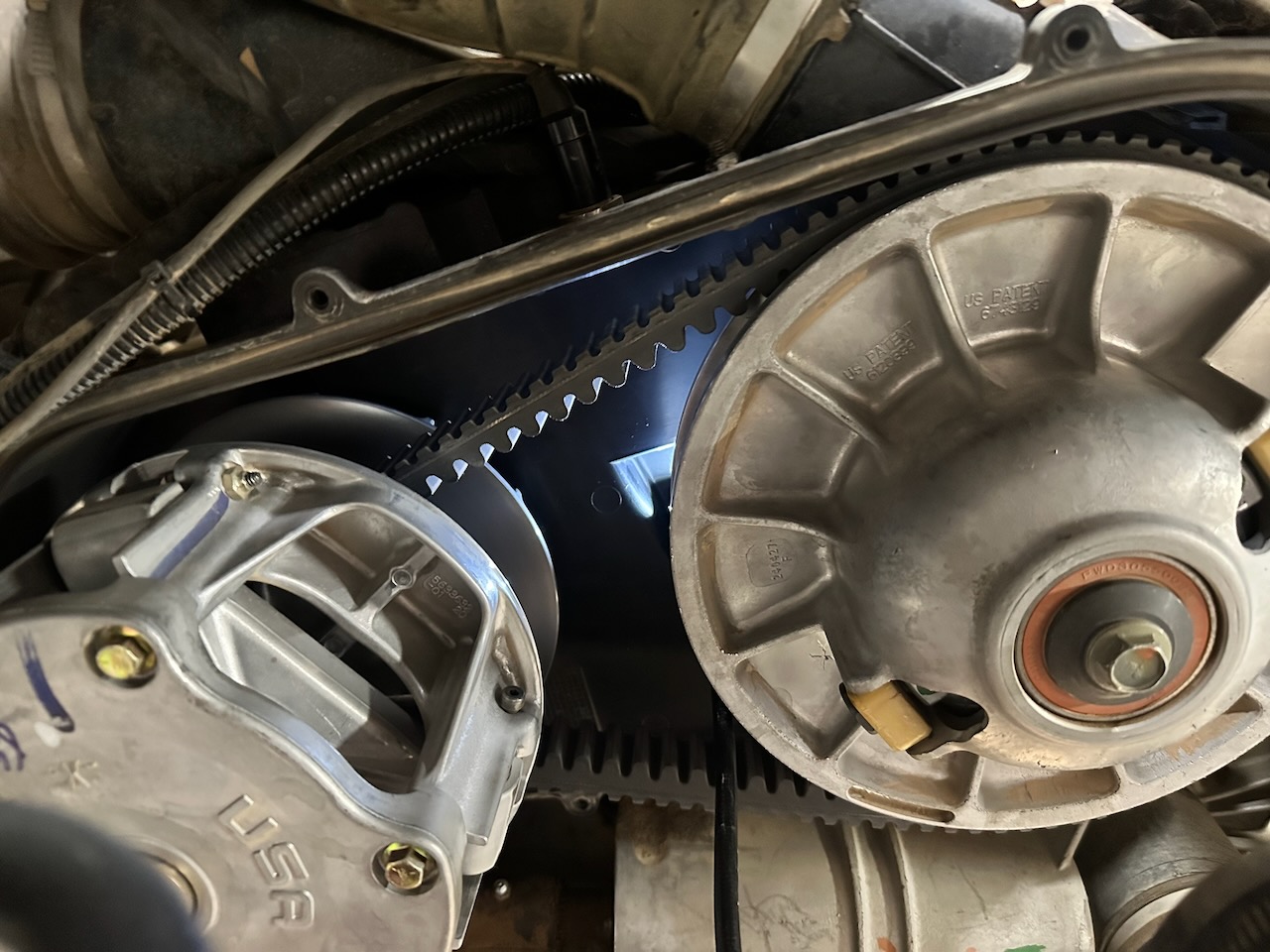
We had always made sure the two clutches were properly aligned, but temperature and belt slip called for a more comprehensive upgrade. We replaced the stock CVT clutches with an Aftermarket Assassins Stage 4 clutch system.
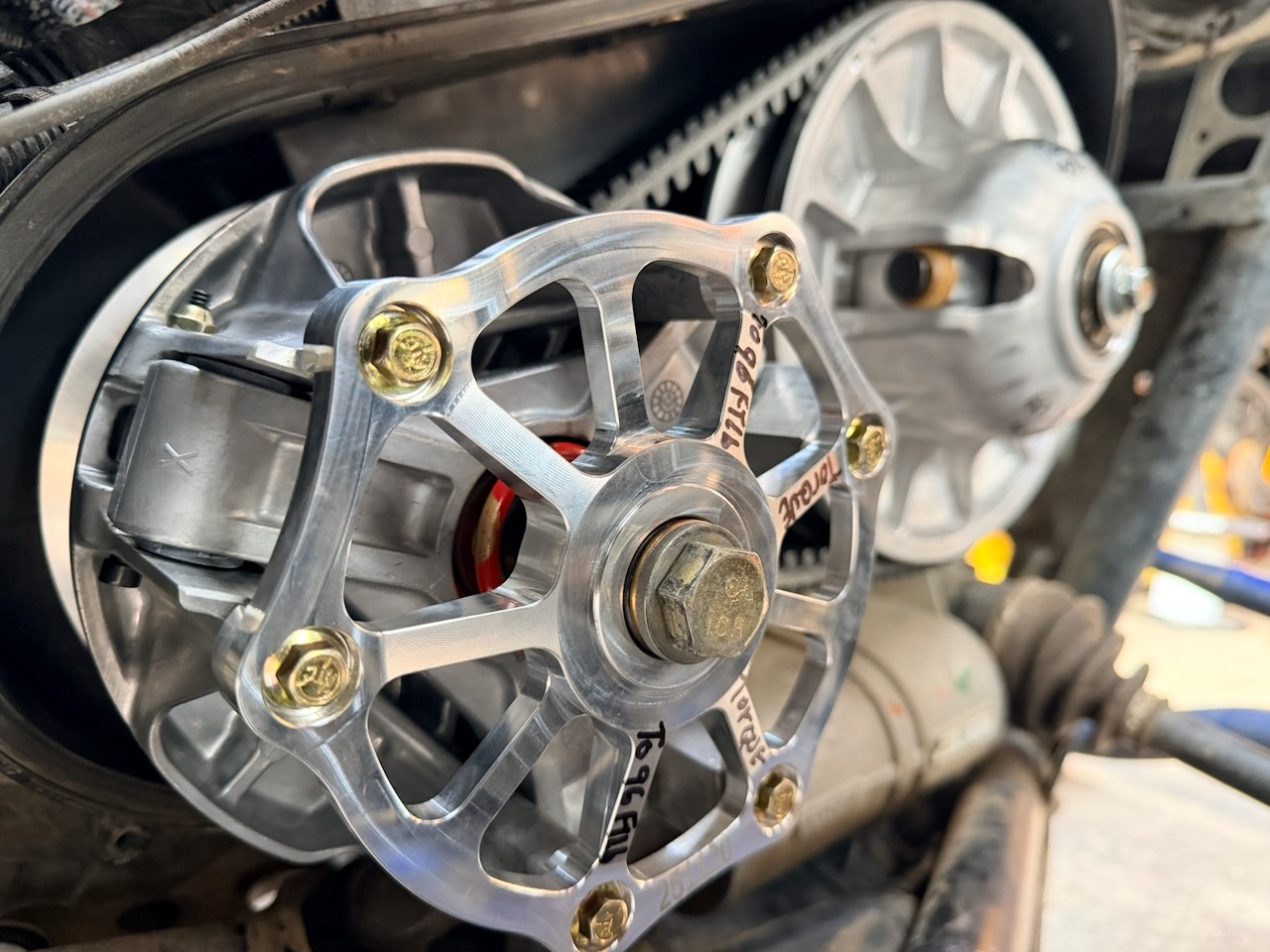
The new drive clutch uses upgraded springs for more clamping force, reducing belt slip, and it gives us a custom helix tailored to the way #355 puts power down. The driven clutch uses a floating mount, eliminating alignment issues if we ever had them in the first place.
The Hardware
More grip. More airflow. Self-alignment.
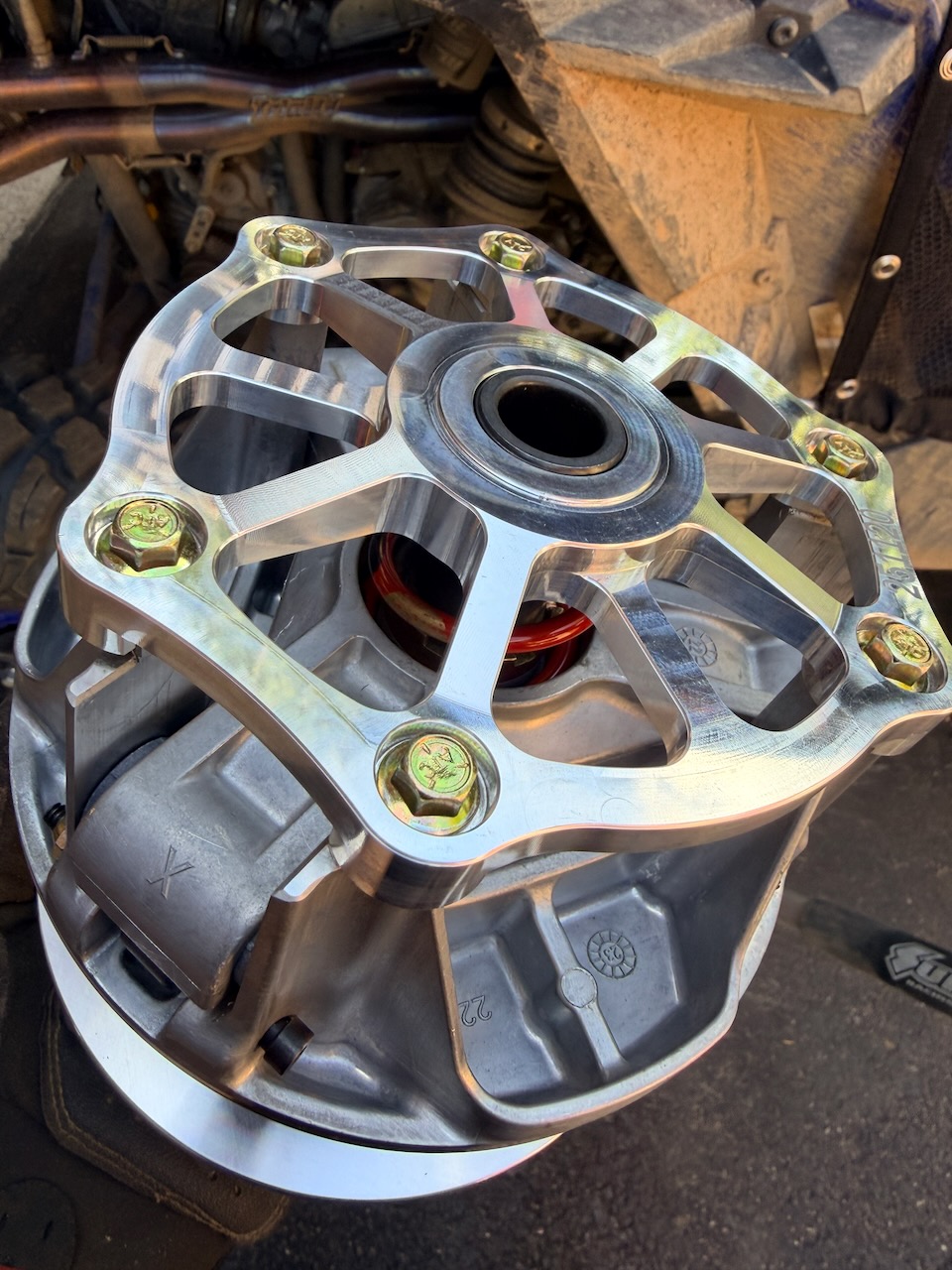
The open, spidered drive-clutch design pumps more air through the CVT enclosure. Paired with the higher spring force, it attacks heat from both sides: less energy lost to belt slip and more airflow available to carry heat away.
On the driven side, the floating mount allows the clutch to settle into its natural alignment under load. That removes one more variable from a system already dealing with huge speed, heat, dust.
The Next Test
Measure the air. Measure the heat.
Our testing in Jean, Nevada, took place on a very hot day, and belt temperatures were still higher than we want. That means the next step is instrumentation—not guessing.
We plan to measure airflow with a pitot tube and map heat flow with temperature probes at the sheaves and belt. With that baseline, we can document the effect of electric blowers in the intake ducts and determine how much cooling they actually deliver.
Stay tuned. The next blog post will have data.