Setup & Testing
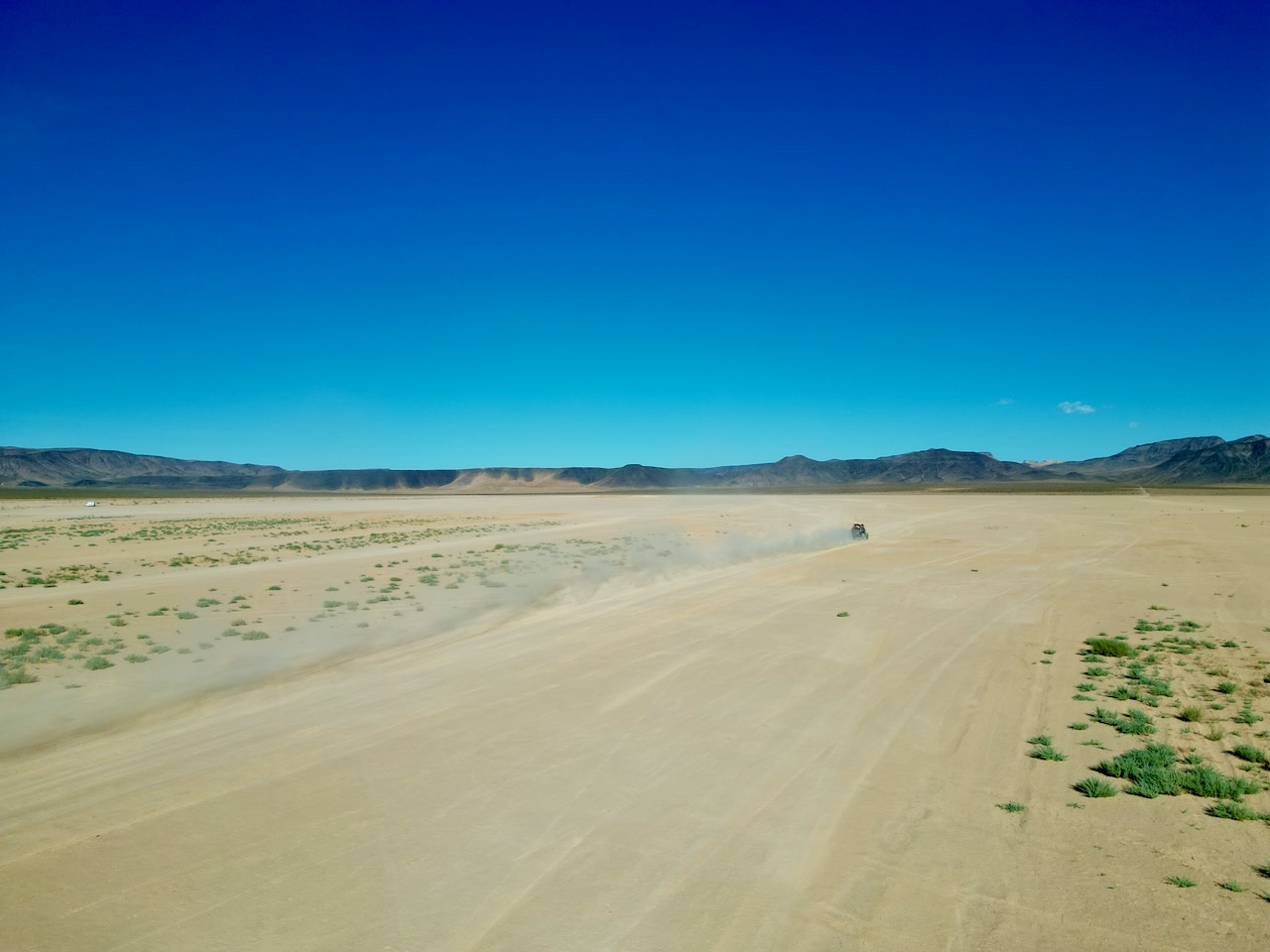
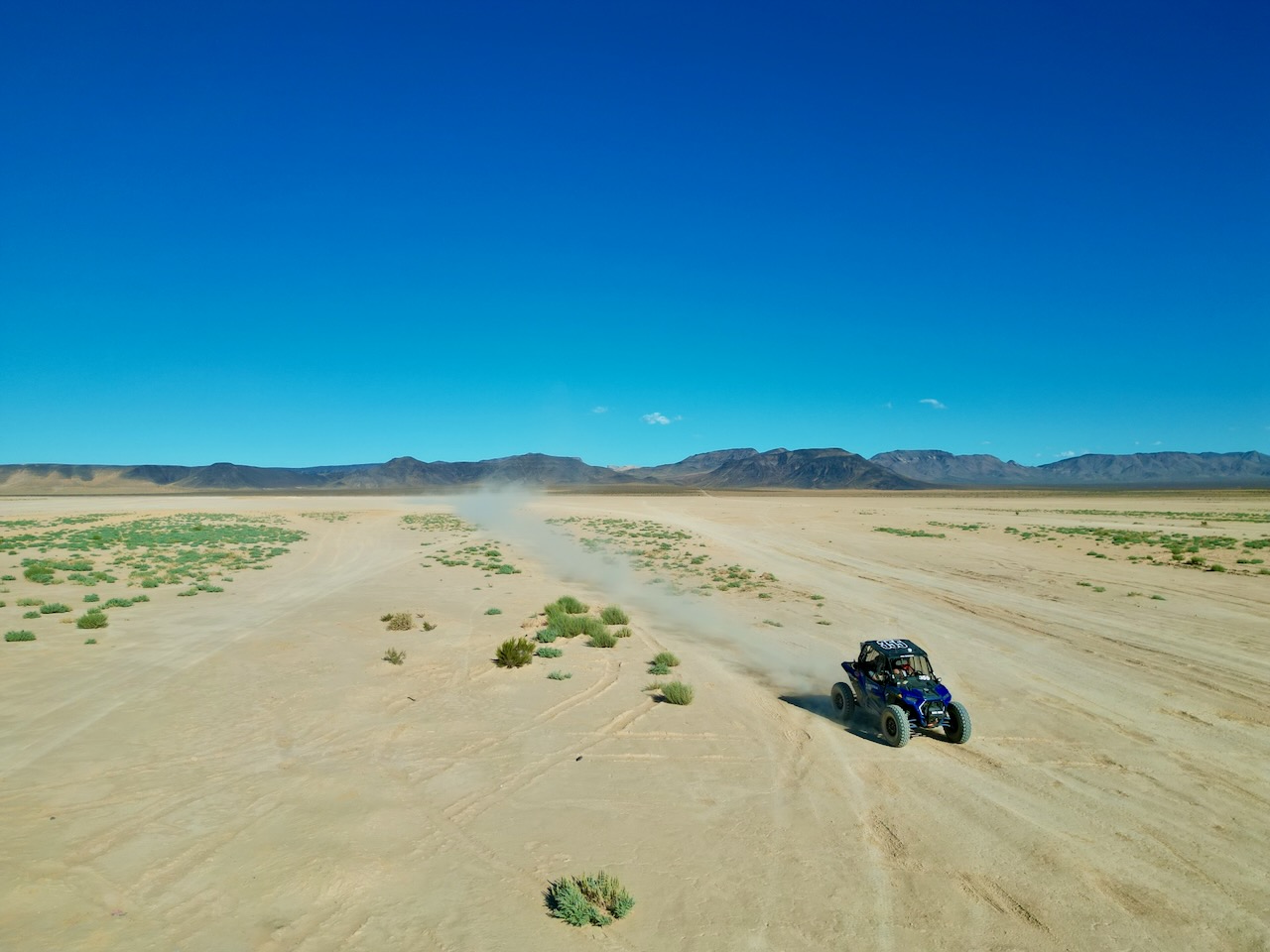
The goal was simple: take #355 somewhere lower than our Colorado workshop, create a safe and repeatable test course, and tune the car one deliberate run at a time. The dry lakebed outside Jean, Nevada, gave us exactly the canvas we needed.
Chasing the Right Air-Fuel Balance
Lower elevation. High-density-altitude challenge.
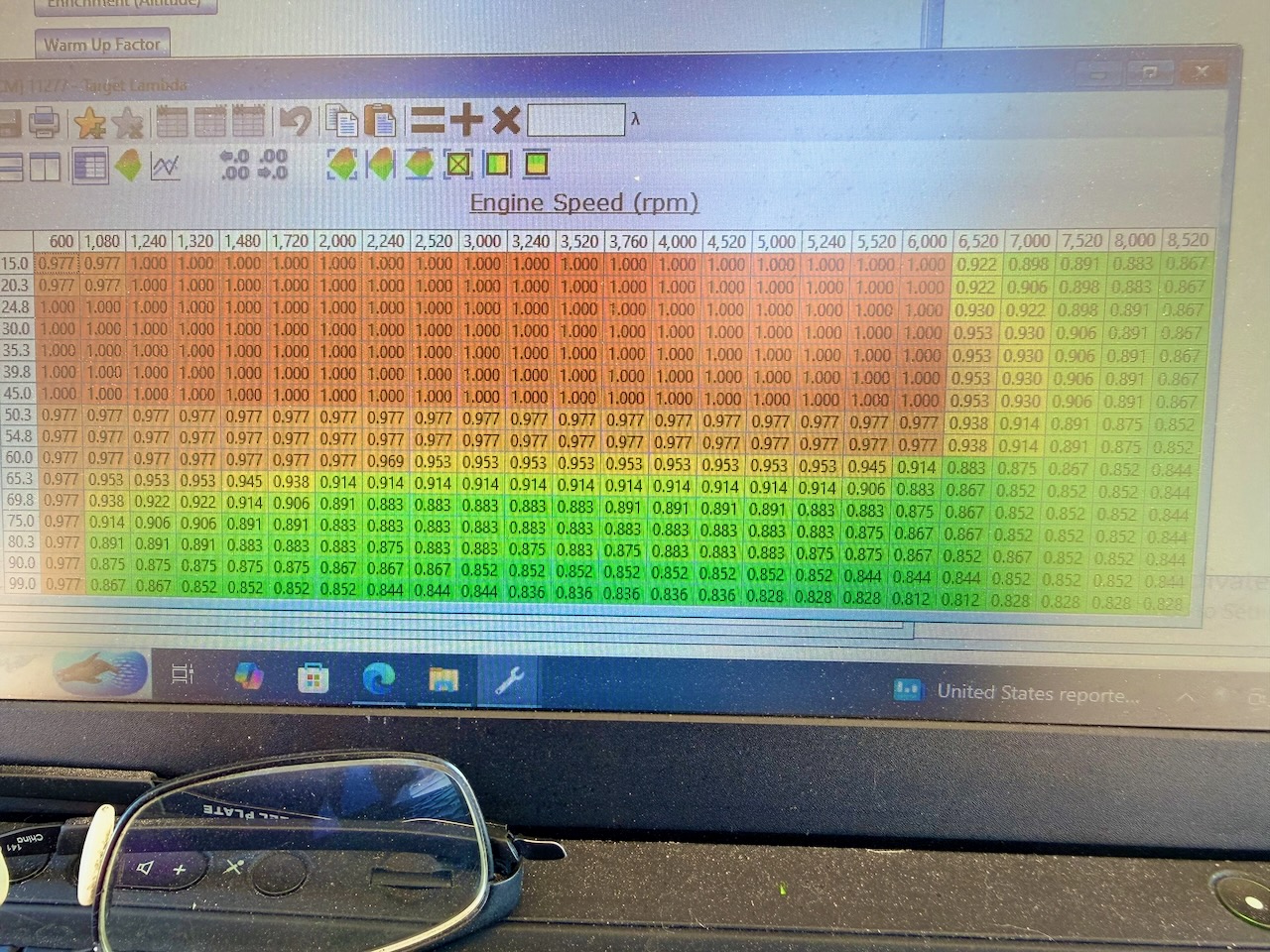
Jean sits at roughly 2,700 feet—far below our home elevation in Colorado—but desert heat had other plans. On test day, the temperature pushed the density altitude above 6,000 feet. That made the session a valuable real-world exercise in adjusting lambda: the relationship between fuel and air that tells us whether the engine is running at the mixture it needs.
We built a repeatable test sequence around four throttle positions: 25, 50, 75, and 100 percent. From a standstill, the drivers accelerated through each target and carried the car to full speed. The dry lakebed’s flat, unobstructed surface let us compare runs with confidence instead of guessing around terrain changes.
Run. Read. Refine. Repeat.
Hundreds of parameters, one better calibration.
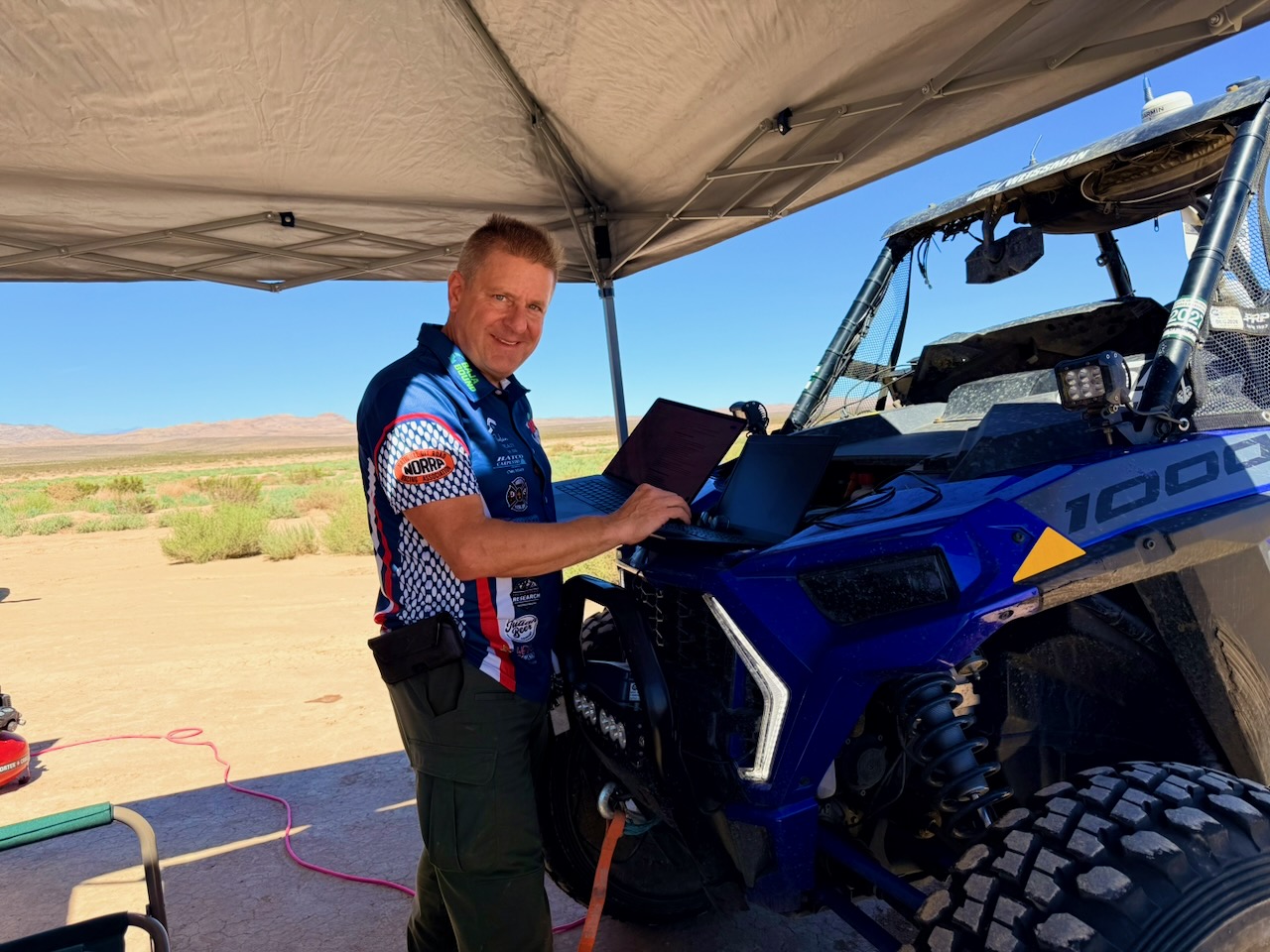
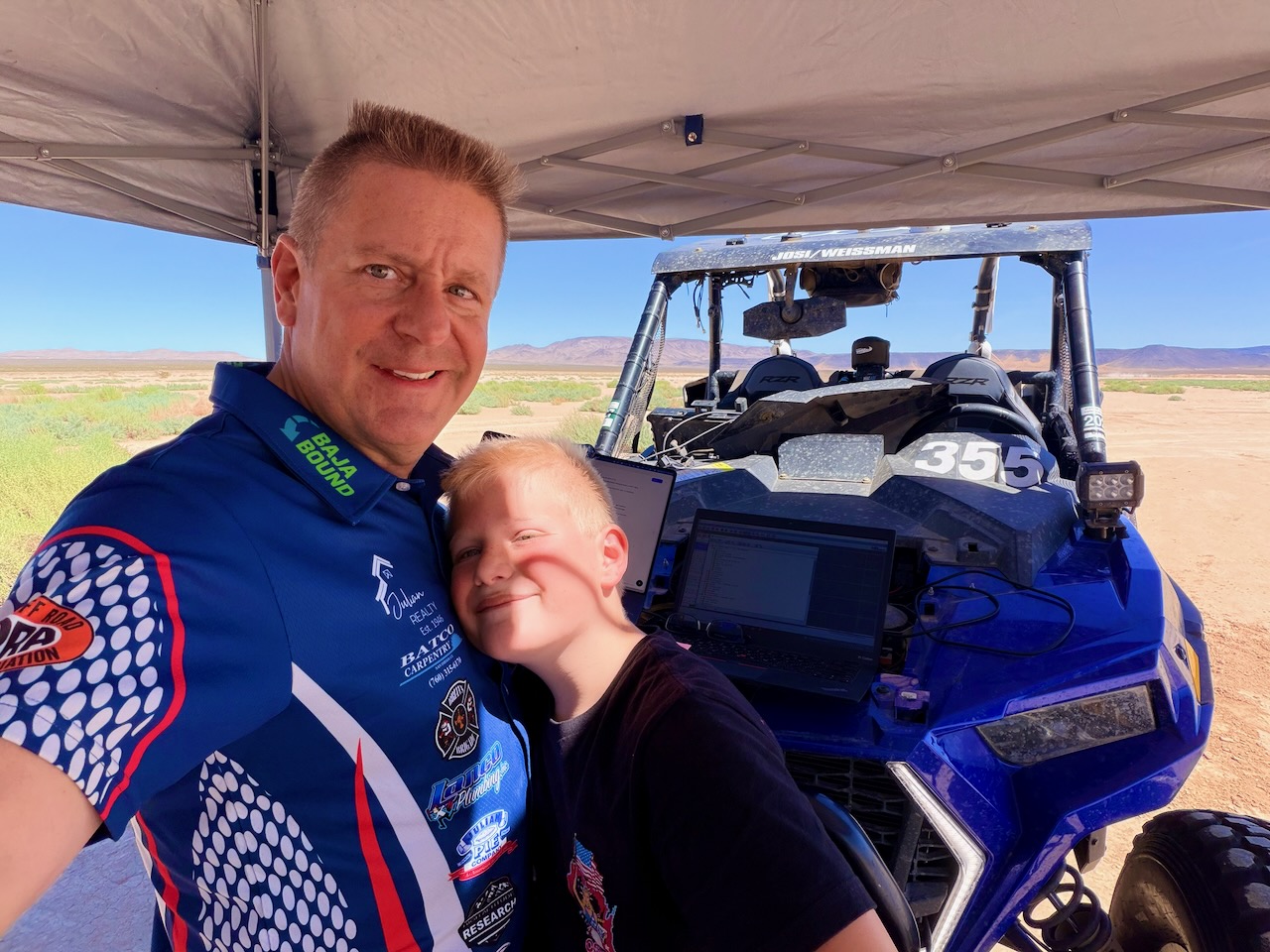
Every pass generated hundreds of engine-computer parameters. After each run, the car returned to the tent, where we downloaded the ECU logs and studied what happened under load. We adjusted the fuel table, flashed the revised calibration back to the ECU, and headed onto the lakebed to do it all again.
It is careful, repetitive work—but each cycle replaces assumptions with evidence. Small changes become measurable improvements, and the engine’s behavior becomes more consistent across the full throttle range.
Passing It Forward
Teaching the next generation.
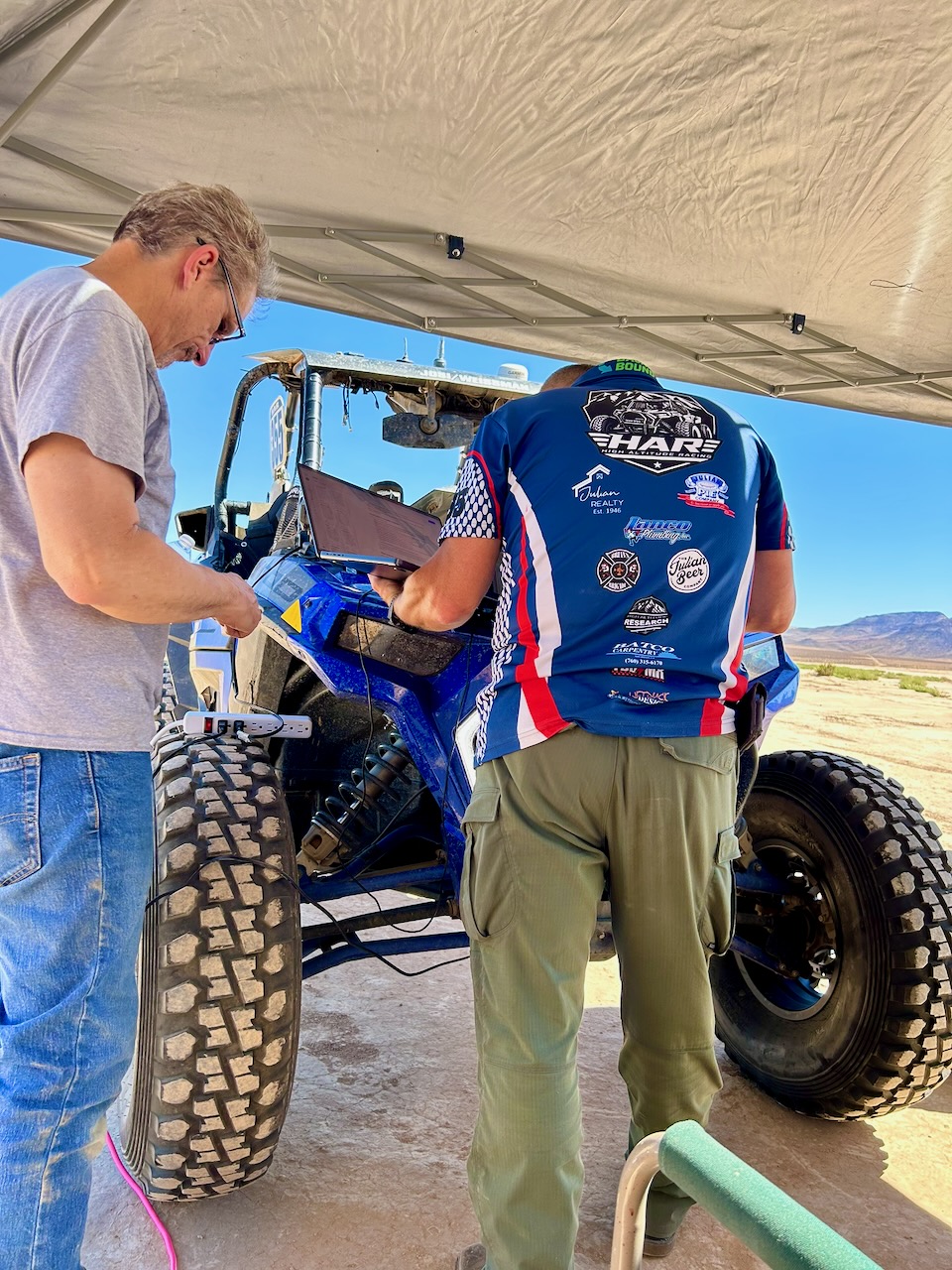
A successful test day is about more than finding speed. While the engine work continued, the team brought the next generation of young racers into the process—showing them how a car is prepared, how data informs decisions, and why patient setup work matters long before anyone reaches the starting line.
From Calibration to Control
Predictable at speed.
Once the engine calibration was in a good place, we moved to a road section with whoops ranging from mild to severe. Suspension settings and tire pressures were adjusted to keep the car composed, eliminate bucking, and find the highest sustainable speed without sacrificing predictability or control.
The session also gave both drivers time to learn the car’s responses and build familiarity with the clutch and engine feel. By the end of the day, #355 was faster, more settled, and better understood—a very successful tuning session by every measure.
Testing also exposed the next problem worth solving: the CVT belt needs additional cooling. That lesson now feeds directly into the next round of development.