Build Back Smarter
A rebuild designed for the rebuilds ahead.
Part 1 ended with a clean engine, a known root cause, and every reusable component measured against its wear limit. Part 2 begins with a simple goal: assemble an engine that is not only strong now, but kinder to the block the next time it comes apart.
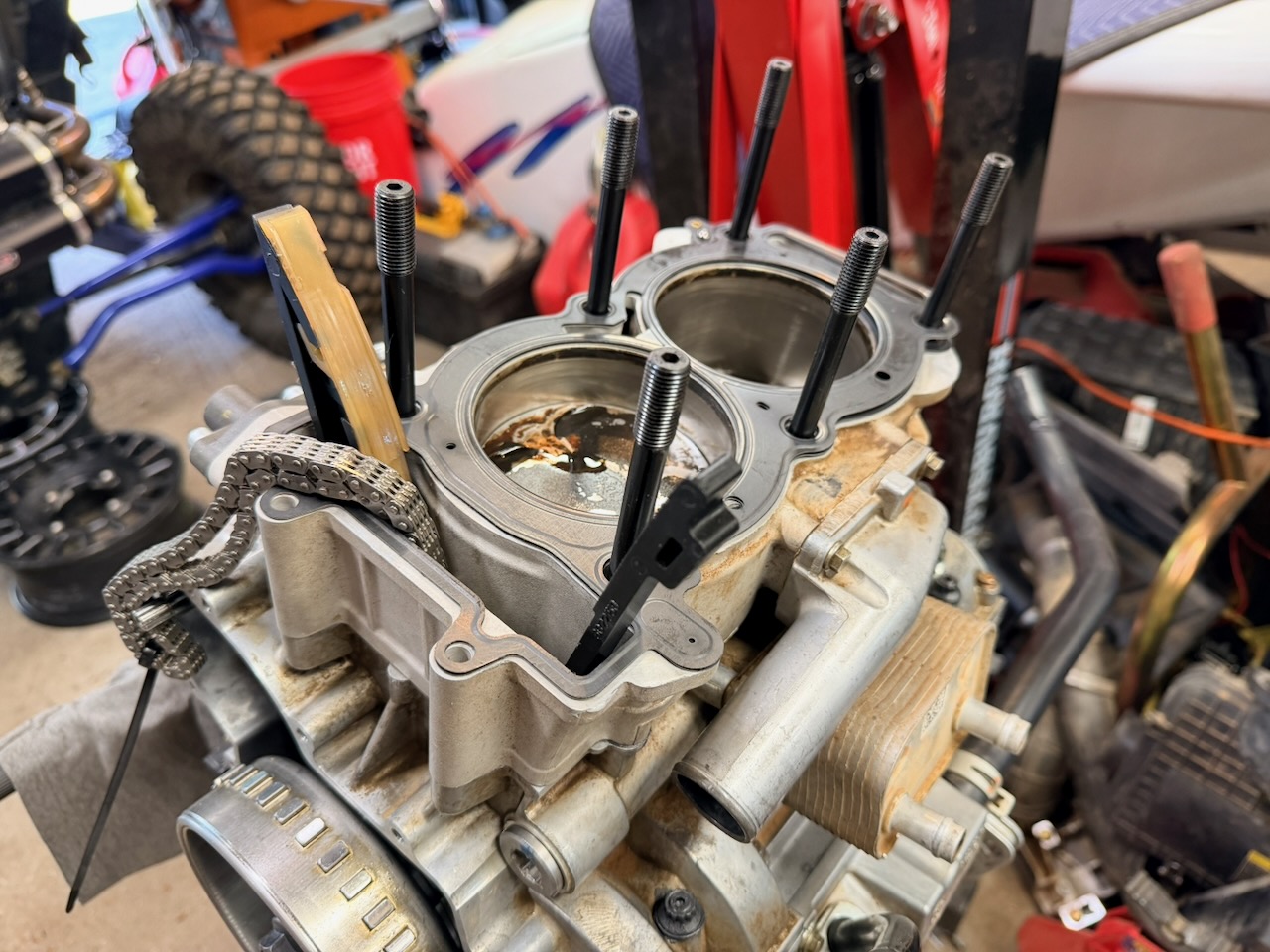
Polaris ProStar engines were never designed around repeated race rebuilds. Their one-time-use bottom-end and cylinder-head bolts ask the aluminum block threads to endure another full installation every time. After enough cycles, those threads can begin to wear—eventually leaving a Heli-Coil repair as the only way forward.
For this build, we switched to ARP Racing studs at both the top and bottom. The studs remain in the block, protecting the aluminum threads while nuts handle future torque cycles. They cost more up front, but they preserve the block and make far better economic sense over the life of a race engine.
A Stronger Foundation
Studs that save the block.
The ARP conversion changes where the wear happens. Instead of repeatedly threading bolts into aluminum, the permanent studs provide a durable steel interface and far more repeatable clamping. It is a small change in appearance with a big long-term payoff.
It also reflects the way we approach #355: improve the system every time it is open, especially when the evidence points to a better solution.
Bottom End
Clearances, rings, and careful assembly.
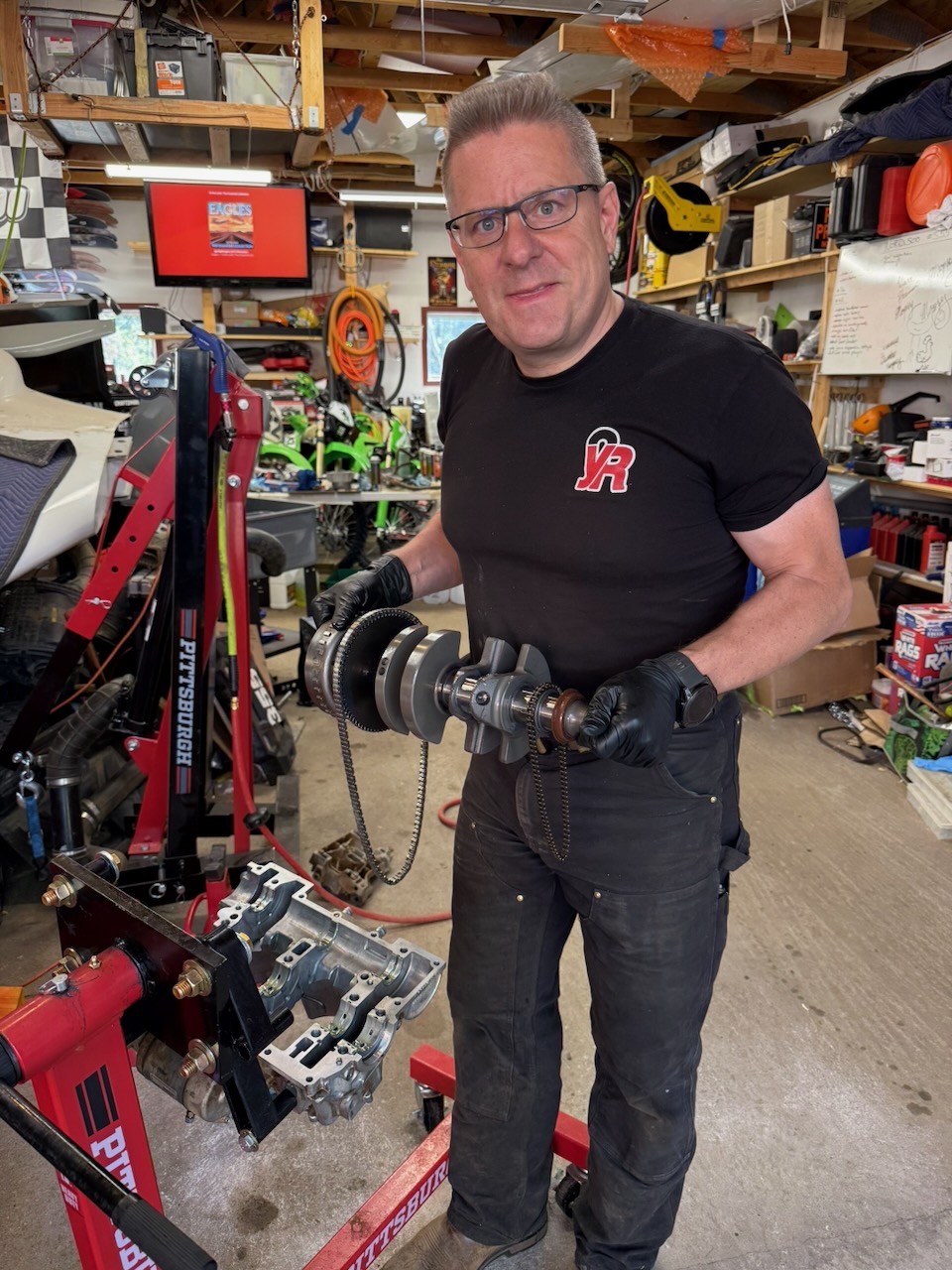
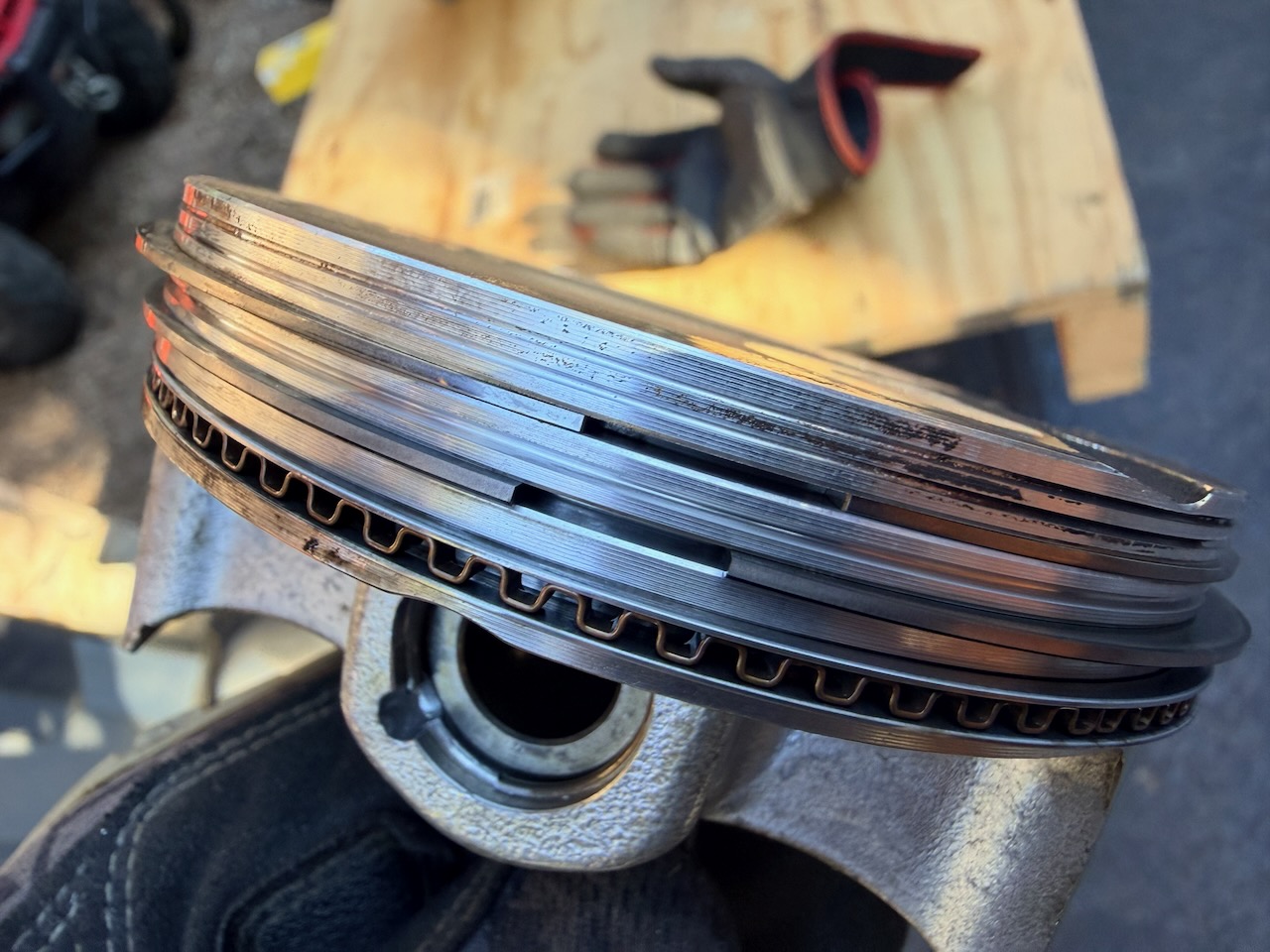
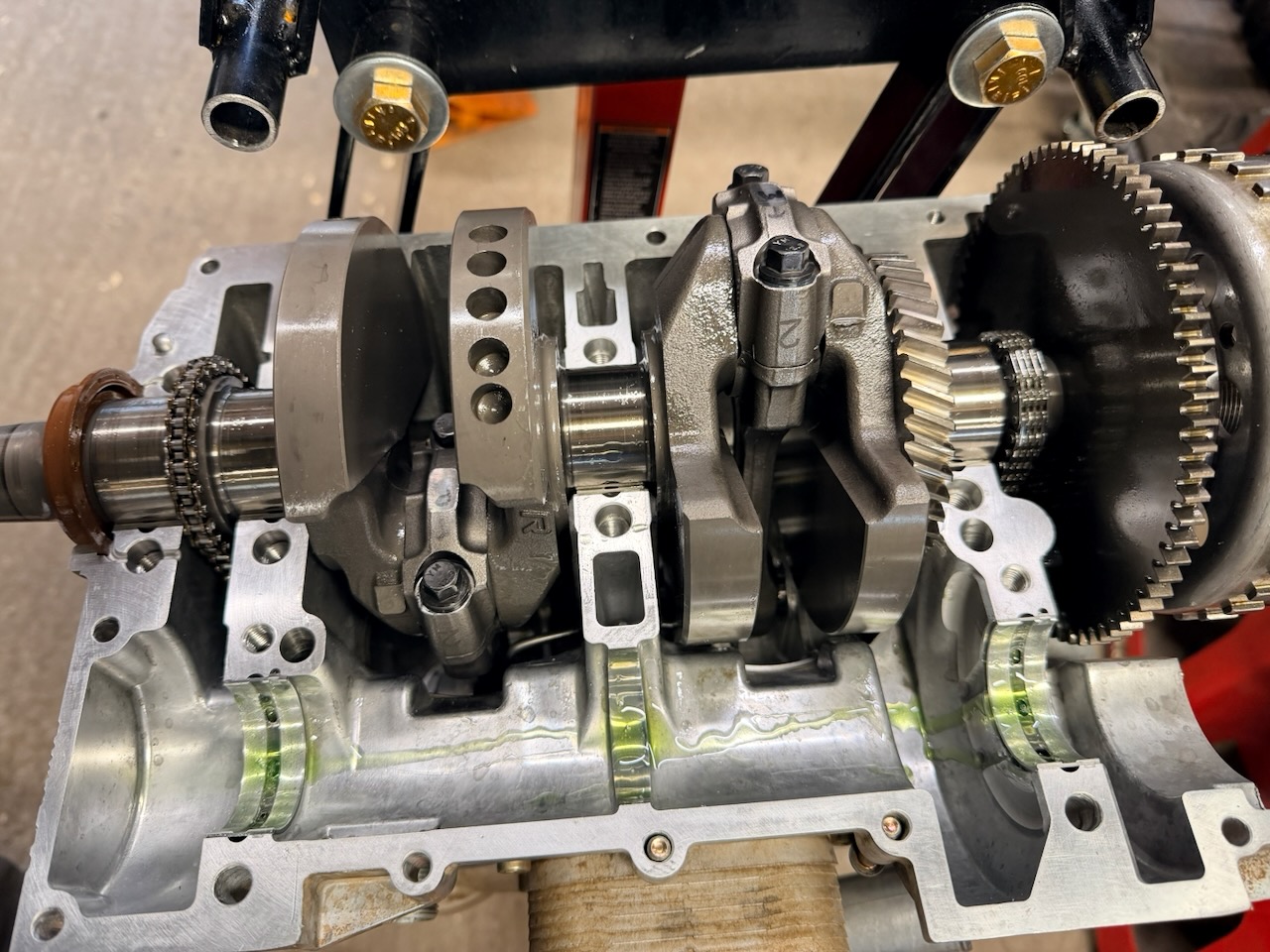
The crankshaft, pistons, and bottom end went together with deliberate checks at every step. Lucas Oil Assembly Lube protected critical surfaces during those first rotations before engine oil could establish full pressure.
Protecting the Oil Supply
Clean pickup. Clean pan. Clean start.
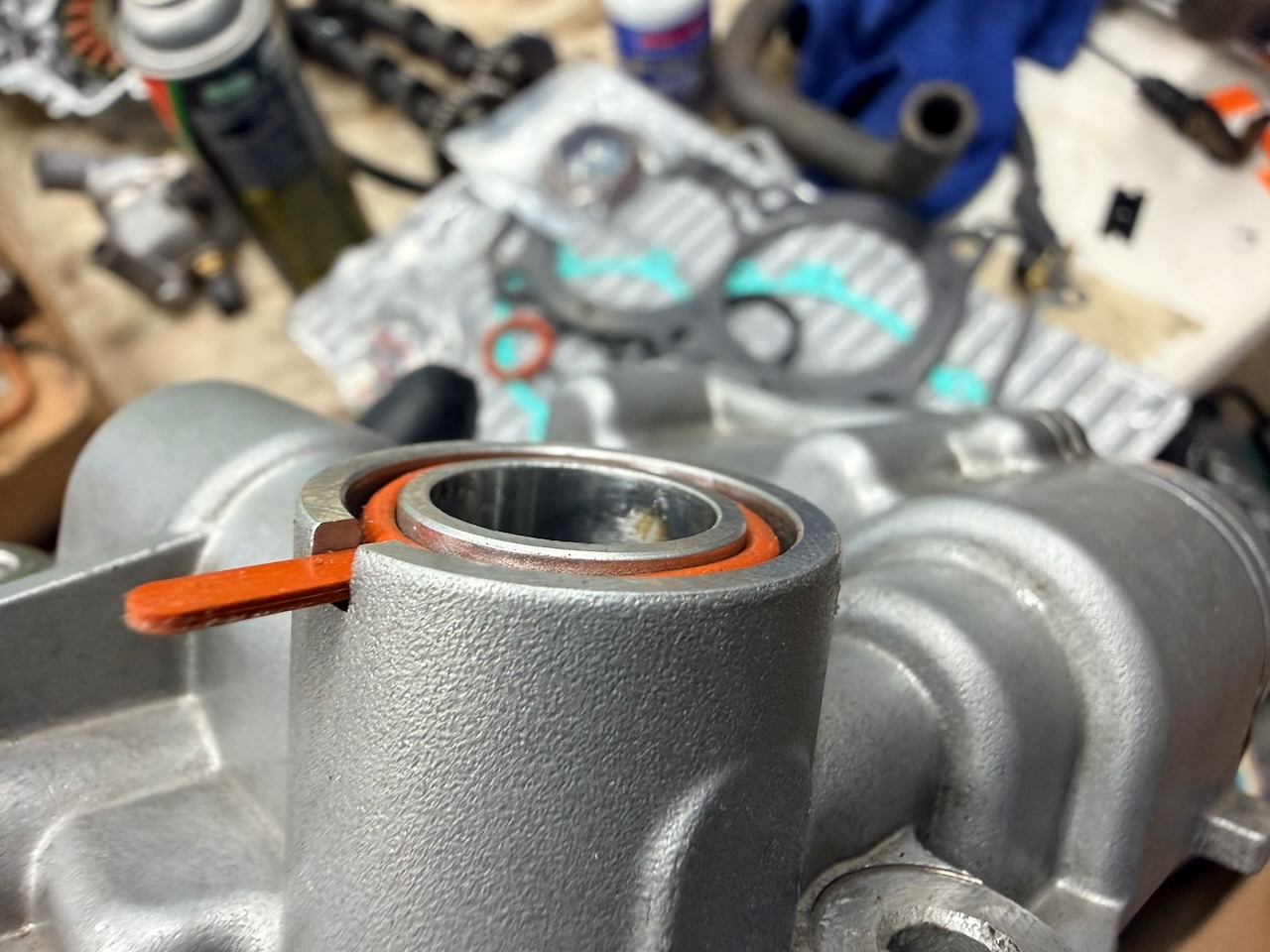
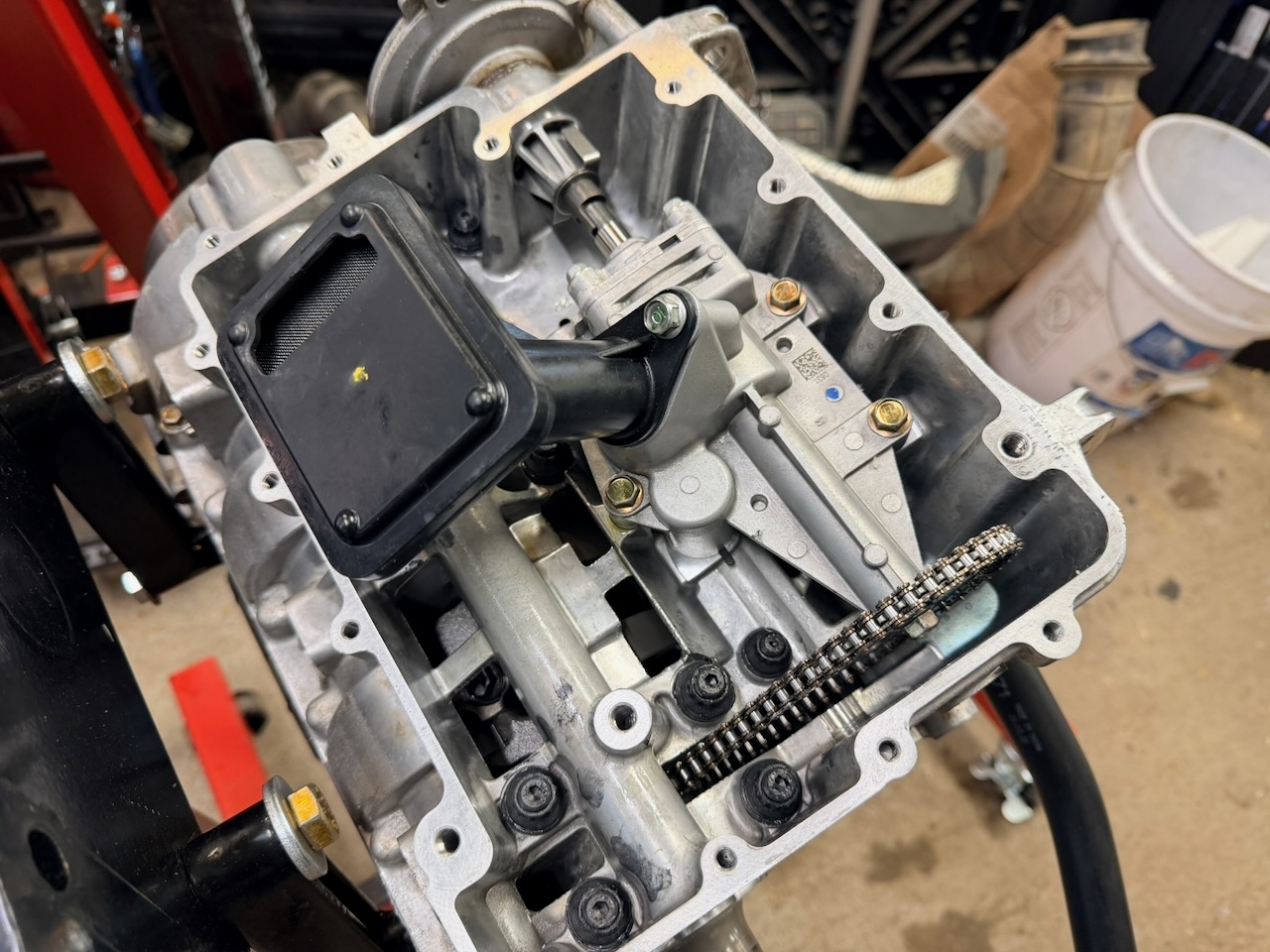
A fresh build only stays fresh if oil can move freely. The pickup and pan were inspected and cleaned before final installation, removing any chance that debris from the previous failure could make a return trip through the new engine.
That care pairs with generous assembly lube on critical contact surfaces—insurance for the brief but important window between the first crank and stable oil pressure.
Upgraded for Rebuild #3
New parts where they matter.
- Timing chain
- High-flow valves
- Camshafts
- ARP top and bottom studs
- Hot Cams shim-under-bucket tappet conversion kit
- Pistons
- Gaskets
The New Valvetrain
Airflow, control, and confidence.
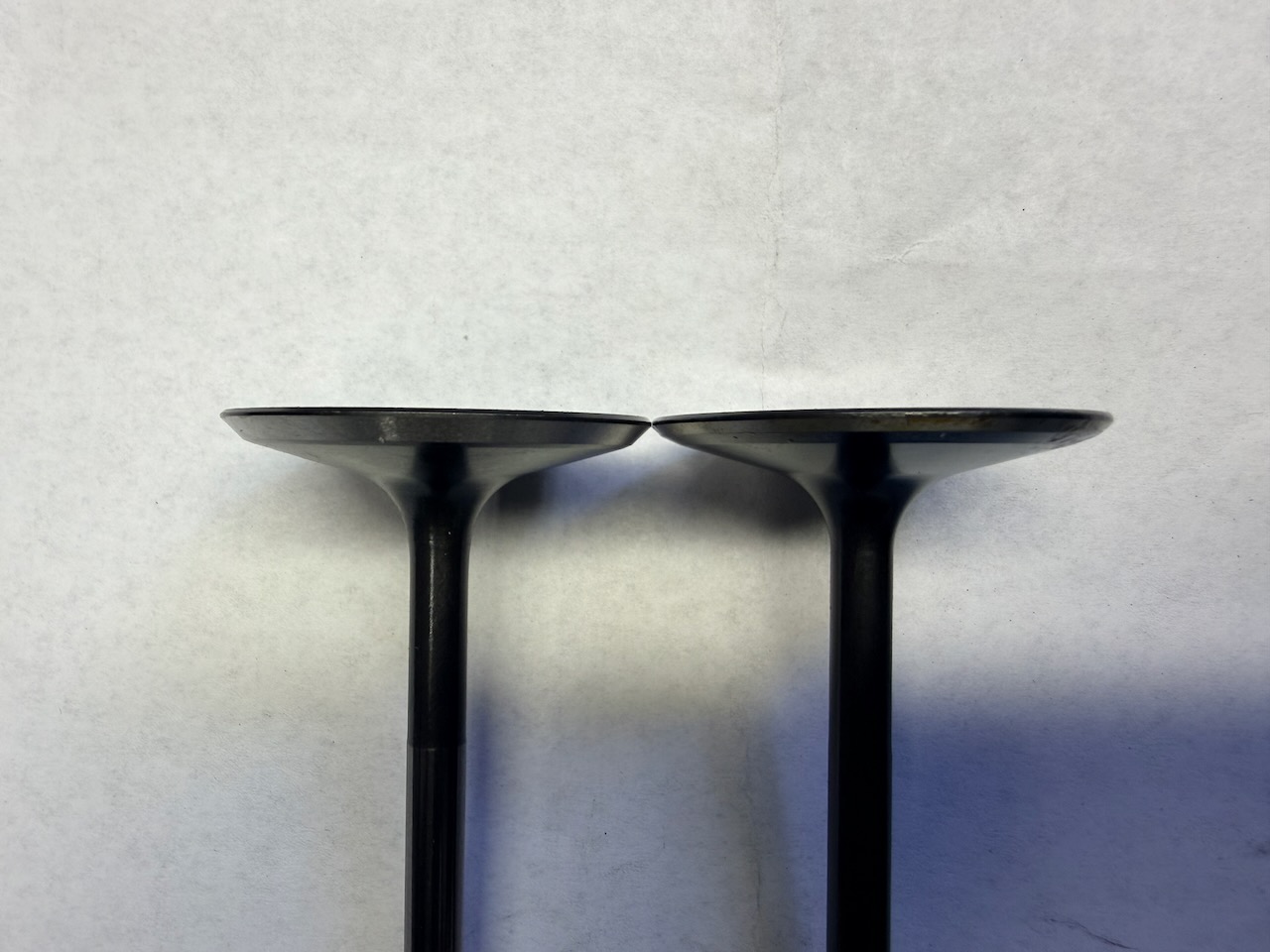
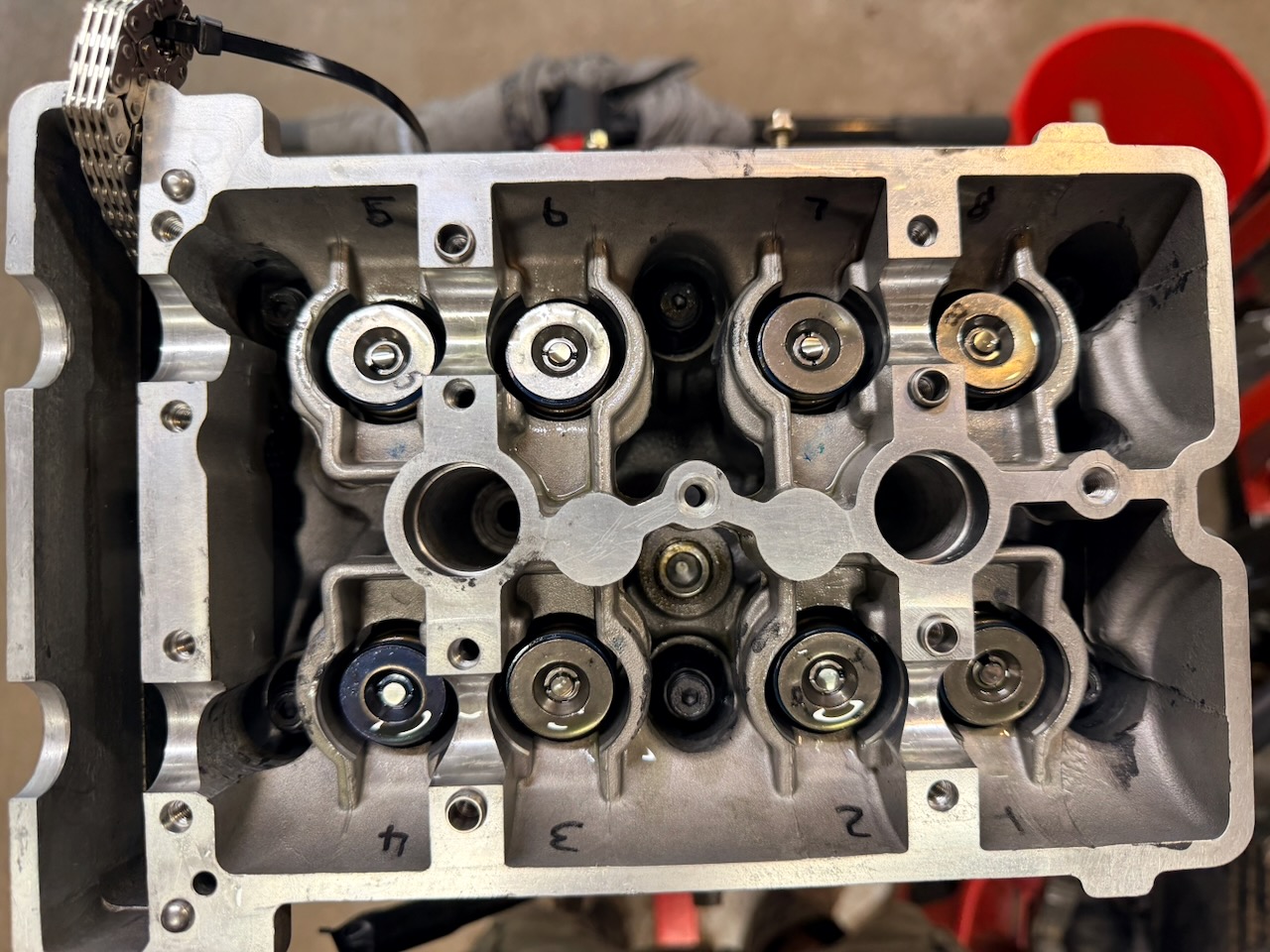
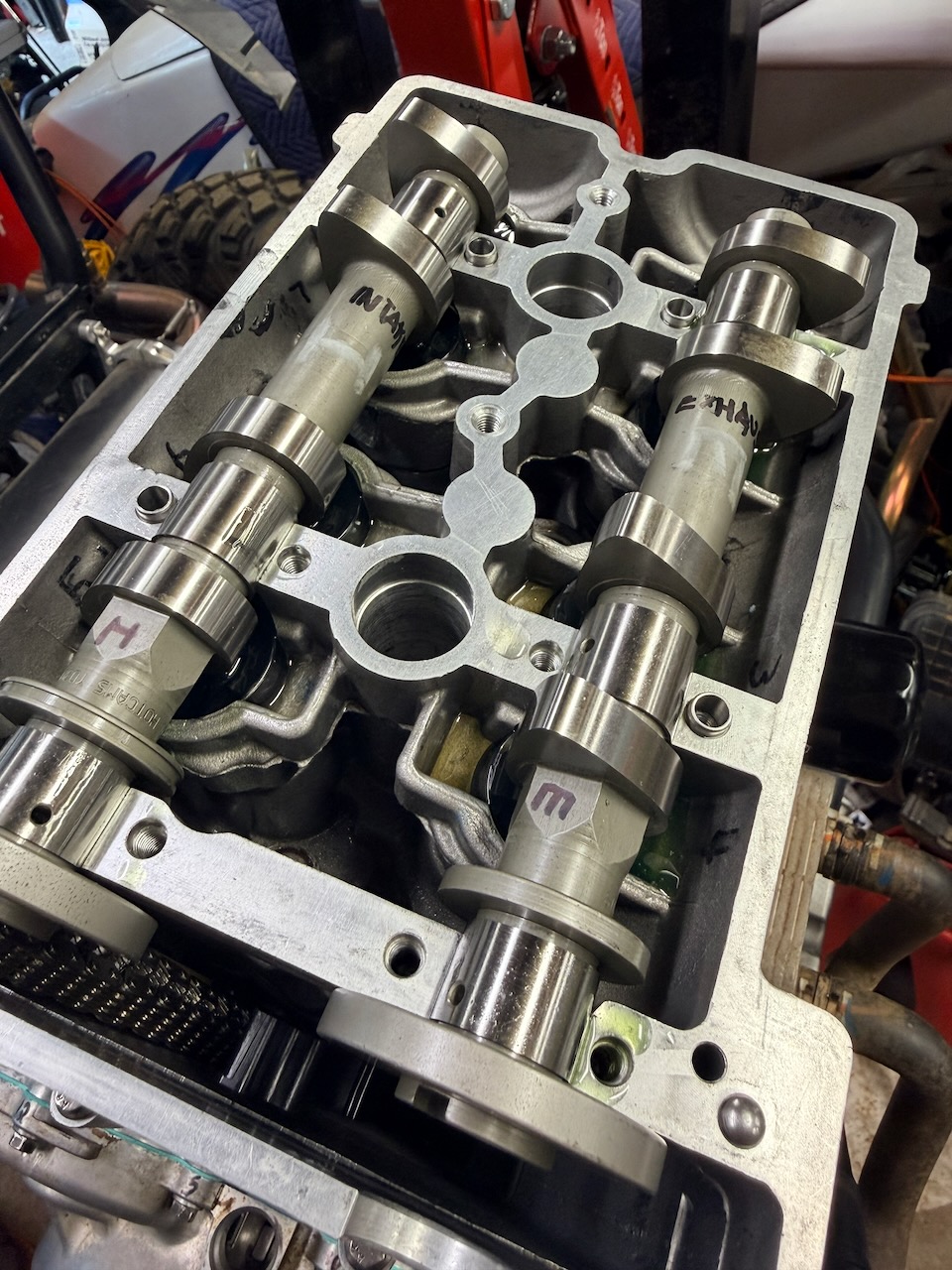
High-flow valves, new camshafts, a fresh timing chain, and the Hot Cams tappet conversion address both performance and the failure path uncovered in Part 1. New parts alone are not enough; their relationship, clearances, and installation sequence make the system work.

Experience Meets the Manual
Never trust memory with a torque wrench.
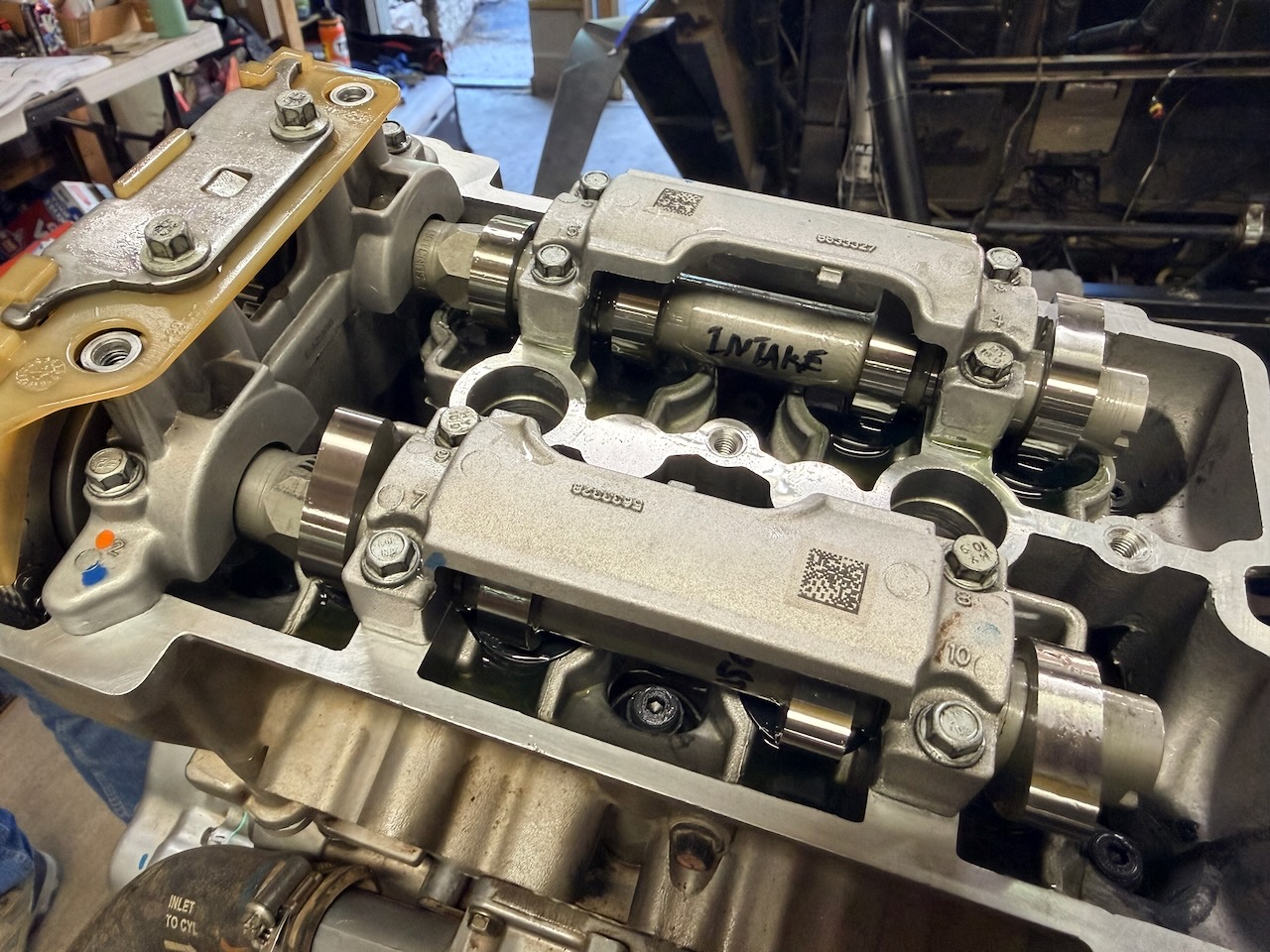
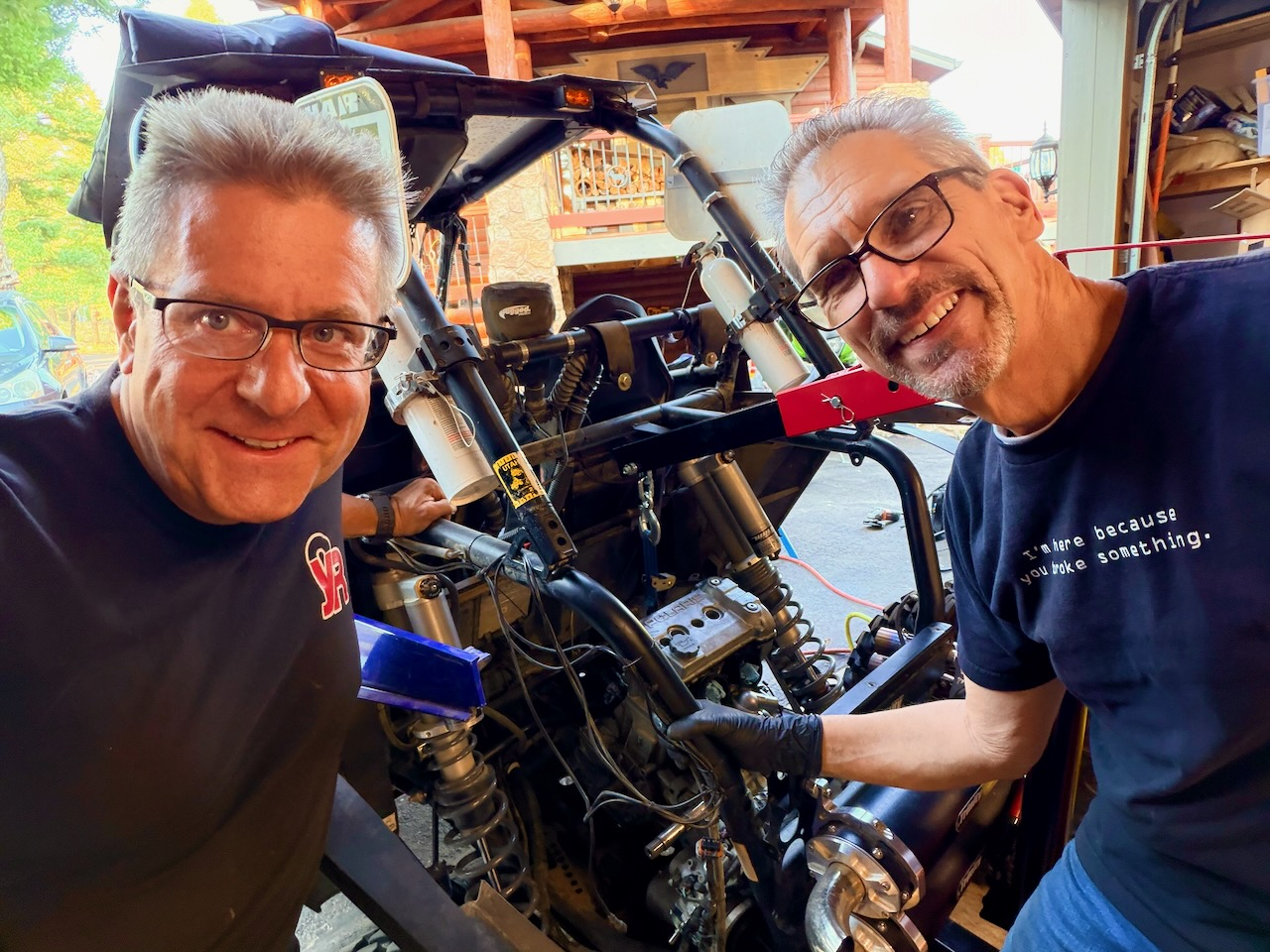
We have rebuilt Polaris ProStar engines enough times that we can nearly do the job blindfolded. Nearly is not good enough.
The Polaris service manual stays open for every torque value and tightening sequence. These specifications are famously—shall we say—touchy. Familiarity makes the work flow smoothly; the manual makes sure confidence never turns into assumption.
Ready for First Fire
From the stand back into #355.
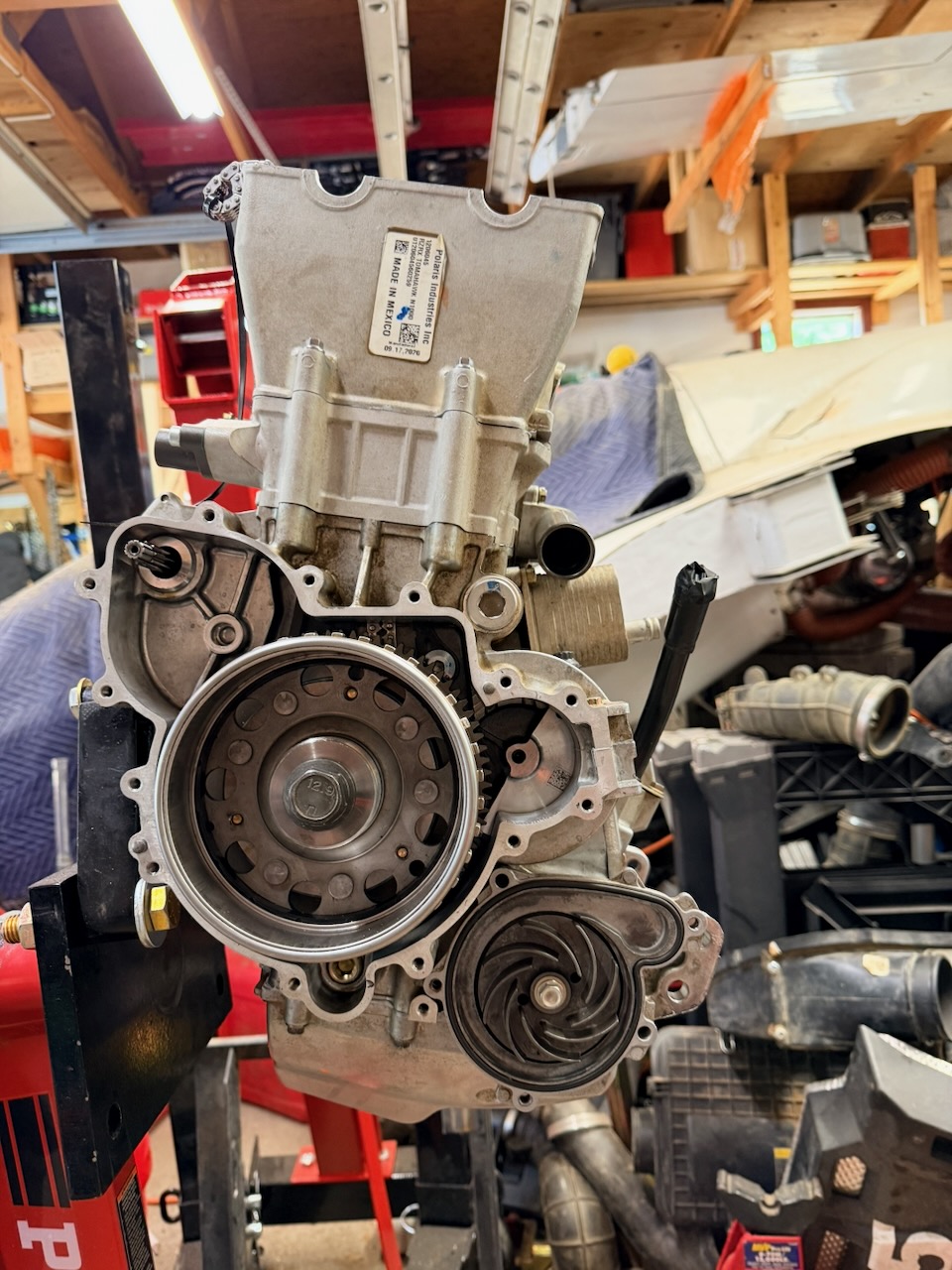
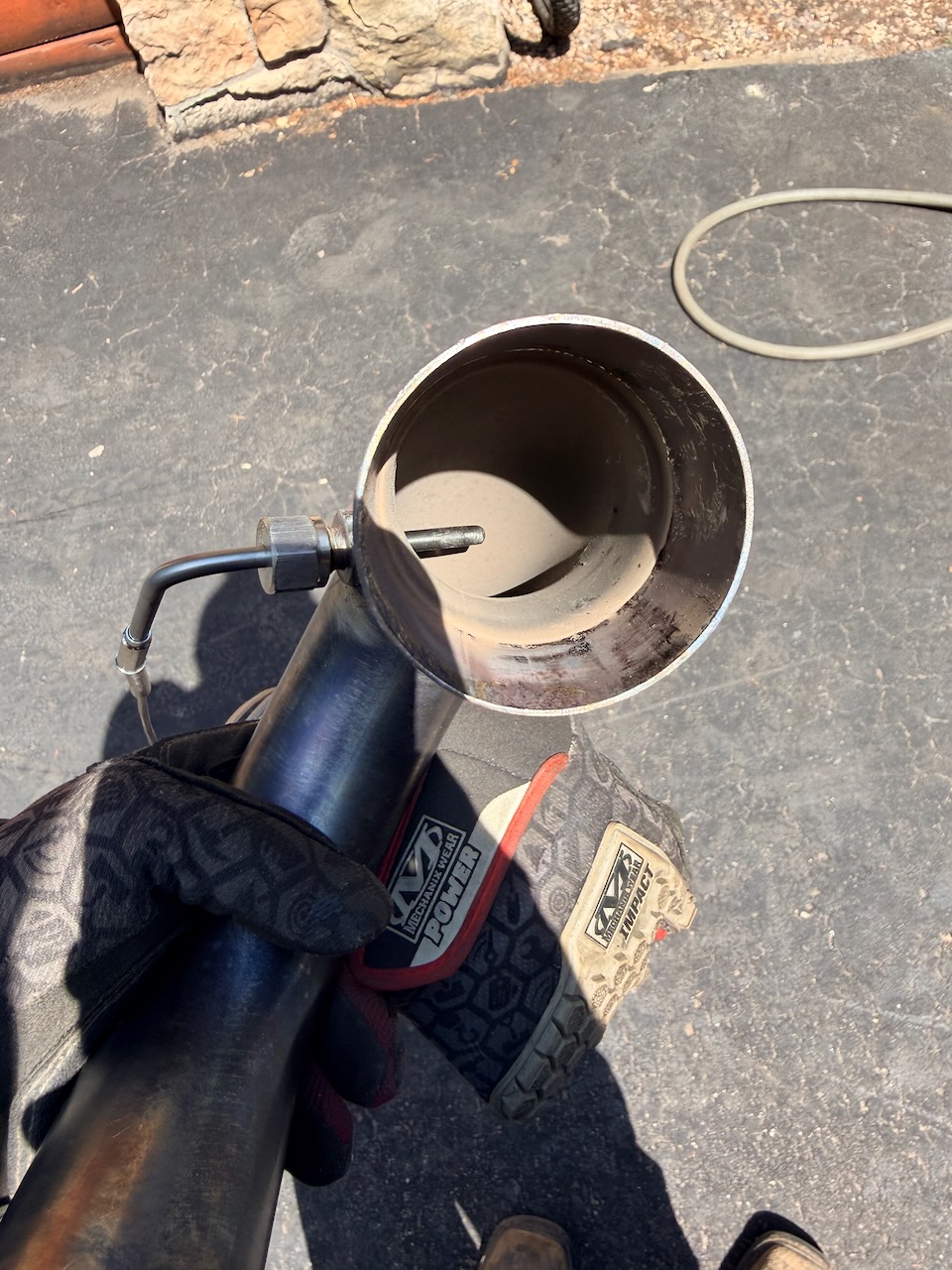
With the engine sealed, the final preparation moved from assembly to installation. The team checked instrumentation, including the exhaust-gas-temperature probe, and made sure the systems around the engine were ready to support a safe first start.
First Start
It fired on the first try.
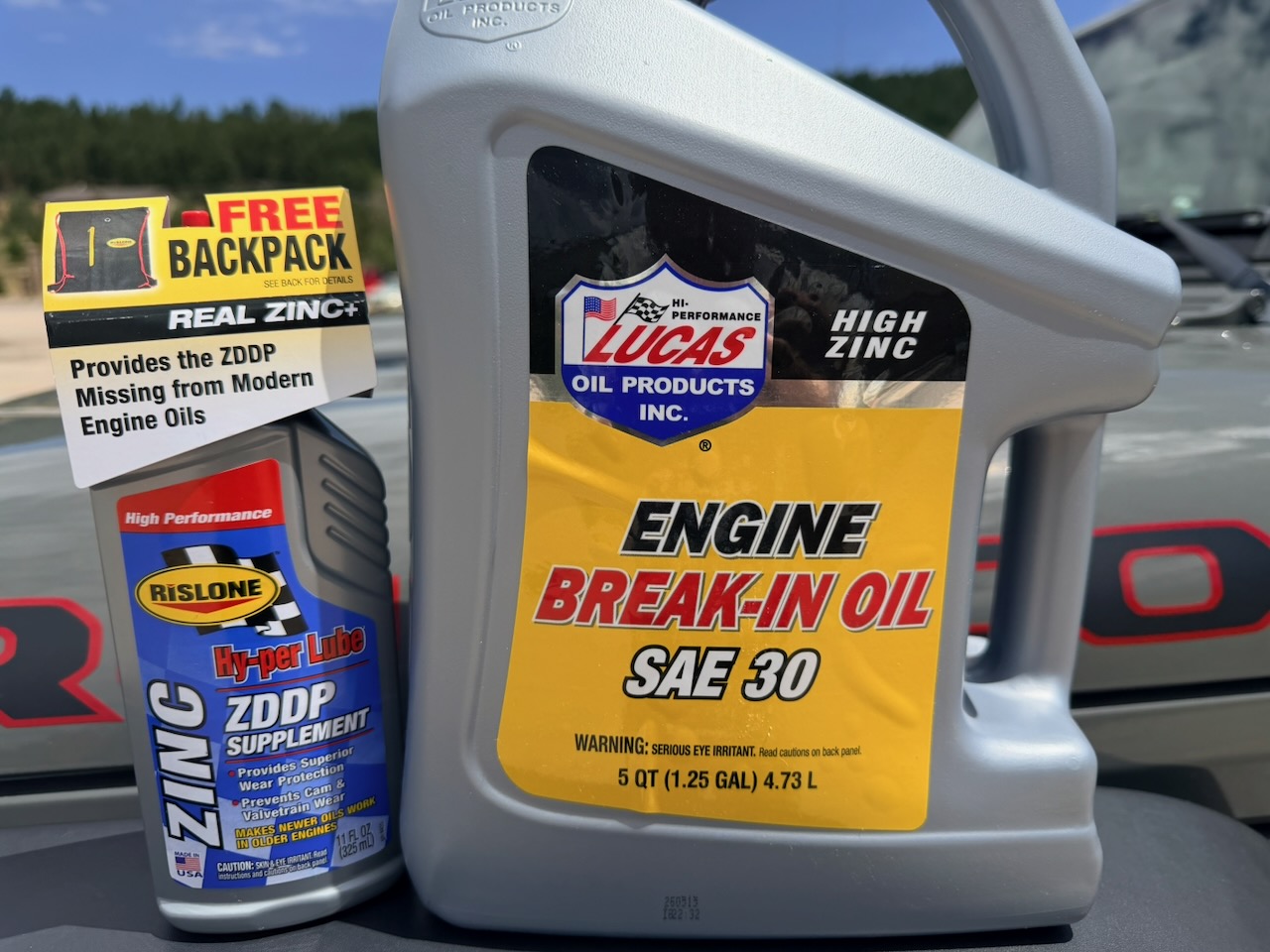
The engine started immediately, settled into a healthy rhythm, and made strong power. For break-in, we chose a dedicated straight-mineral oil from Lucas Oil, supported by additional zinc and copper friction modifiers to protect the fresh contact surfaces as they bed together.
After completing the initial break-in schedule in Colorado, we moved the car to Nevada for fuel tuning and shock adjustments. That next test would put the rebuilt engine under controlled load and begin turning shop work into race-ready confidence.
The engine runs well. The power is there. More importantly, every choice in this build—from the ARP studs to the upgraded valvetrain—gives car #355 a brighter future.
Good things are ahead for #355 and the entire High Altitude Racing team.