Ensenada · Prep Day 2
Race prep has a way of turning ordinary hardware into essential race equipment. On Day 2, the team’s biggest mission was getting more cool air into #355’s hard-working CVT. The unlikely hero? A bilge blower designed for a boat, now pressed into hard labor for the NORRA 500.
The Heat Is On
The clutch was better. The temperatures were not.
Our recent clutch upgrade gave #355 a stronger, more responsive setup—but Baja heat, long pulls, and relentless race pace still had the CVT running hotter than we wanted. With the start clock getting louder, improving airflow moved straight to the top of the list.
The existing filtered intake was doing its job, so the goal was not to reinvent the system. We needed to help it breathe: draw more air through the filter, force that air down the cooling duct, and give the belt and clutches a better chance to shed heat.
From Bilge to Baja
A blower gets a new job description.
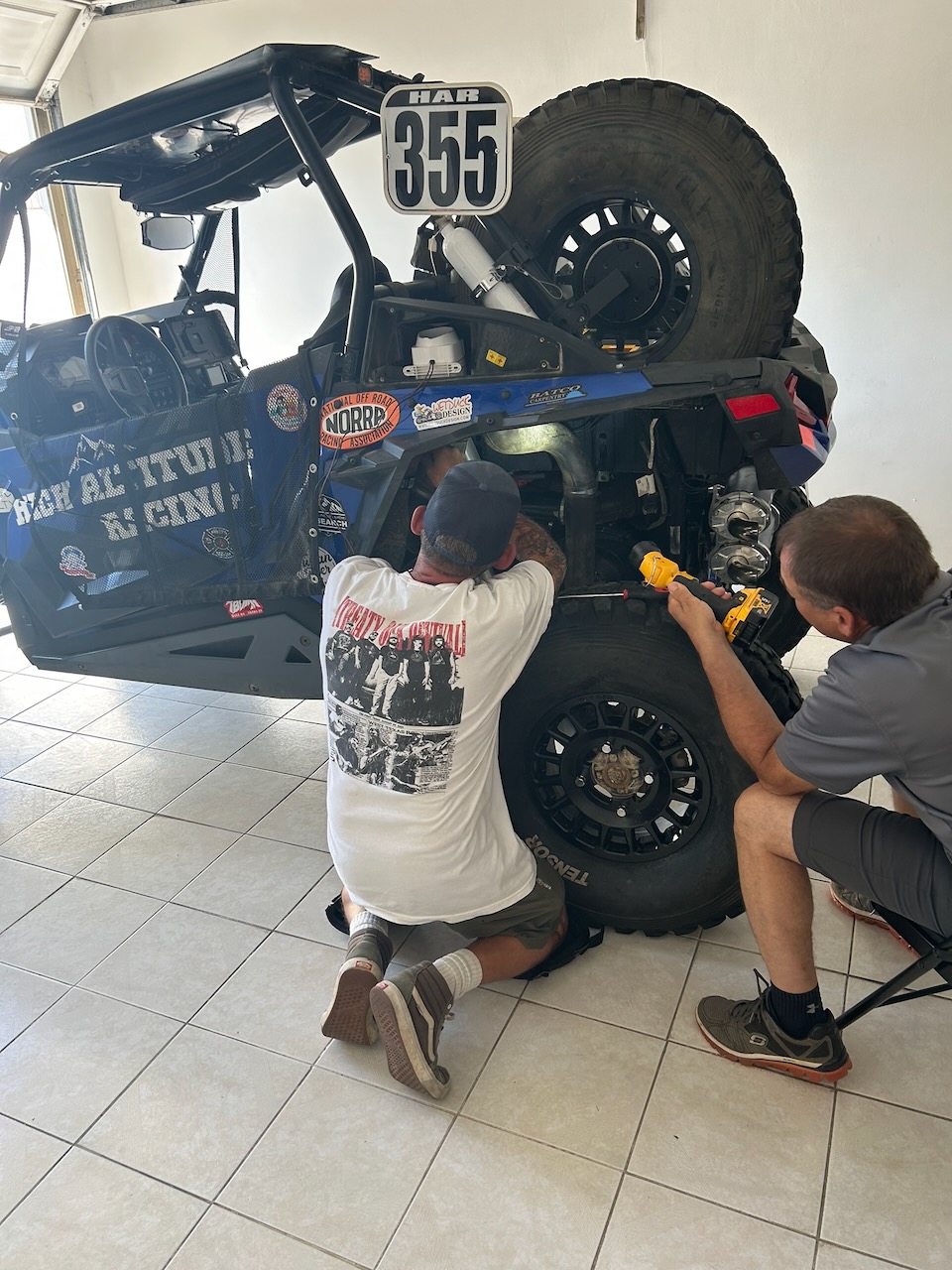
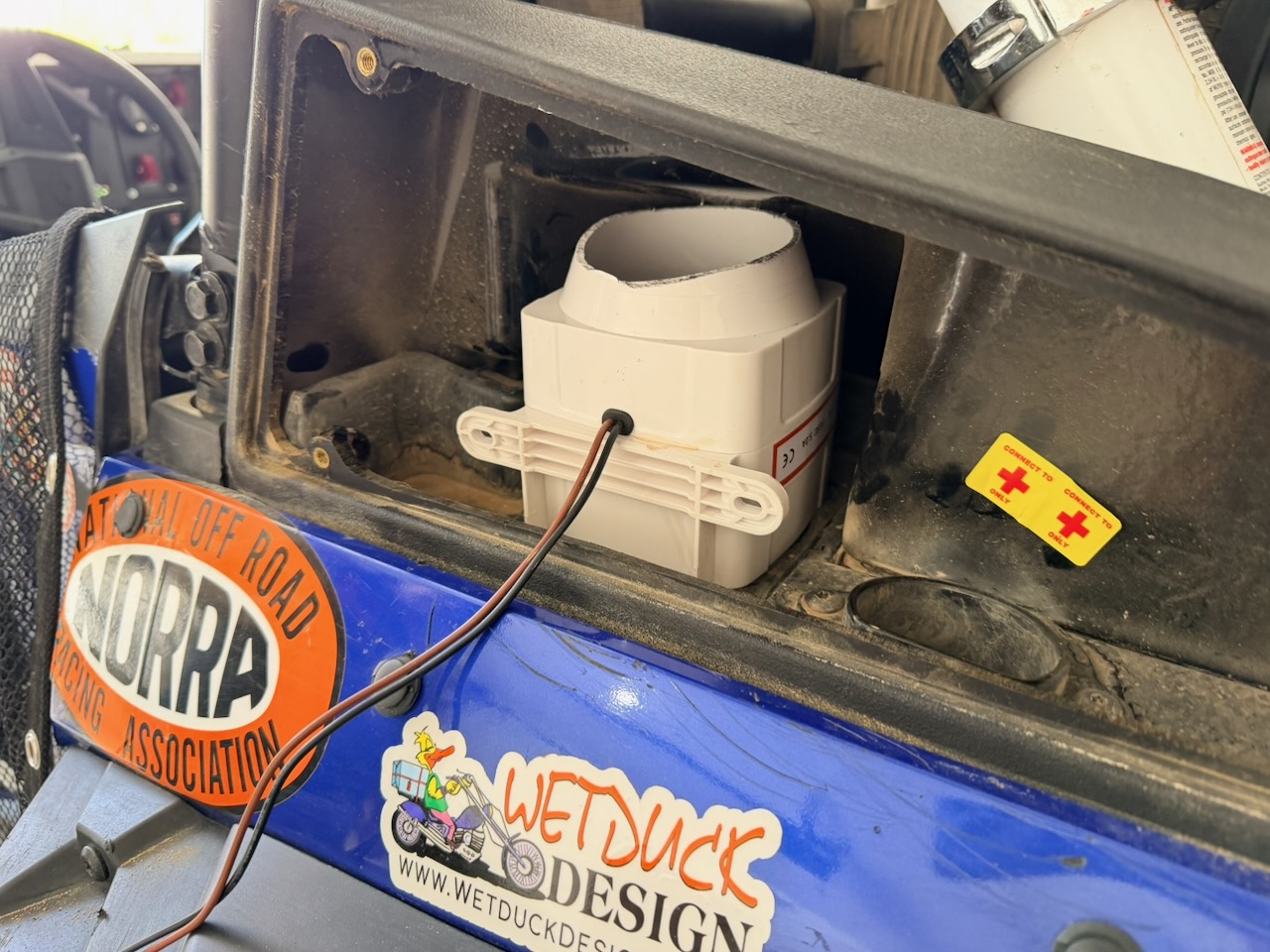
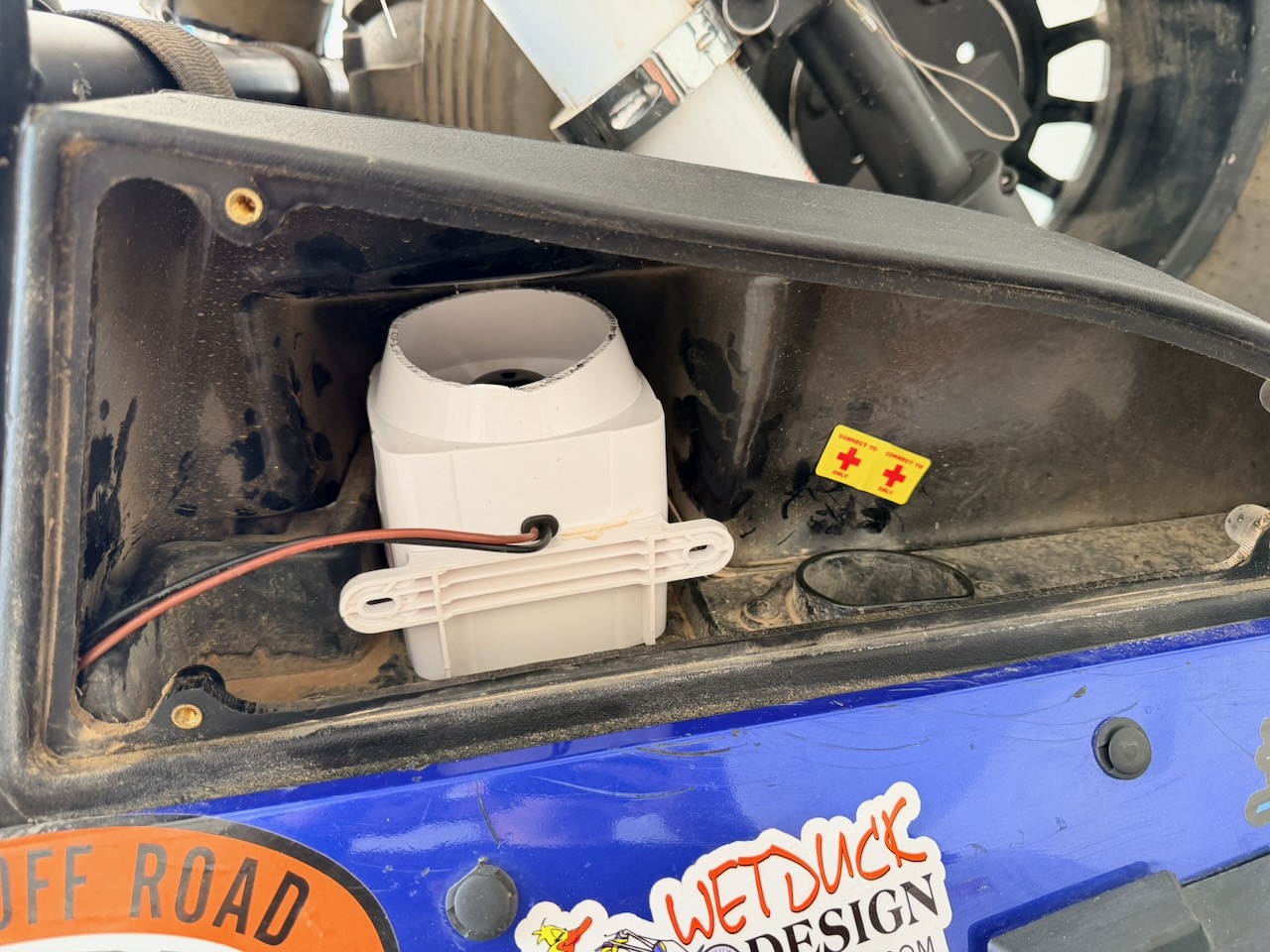
A bilge blower normally spends its life moving air through the enclosed spaces of a boat. Ours was about to trade calm water for dust, rocks, heat, and hundreds of Baja miles. Mounted after the filter and tied into the CVT intake plumbing, it would actively force fresh air toward the belt and clutches whenever the system needed help.
Of course, race cars rarely offer a convenient empty space exactly where a new part belongs. The blower needed modification, careful positioning, secure attachment, and just enough persuasion to become part of #355.
Teamwork in Tight Quarters
Coaxed, shoehorned, and secured.
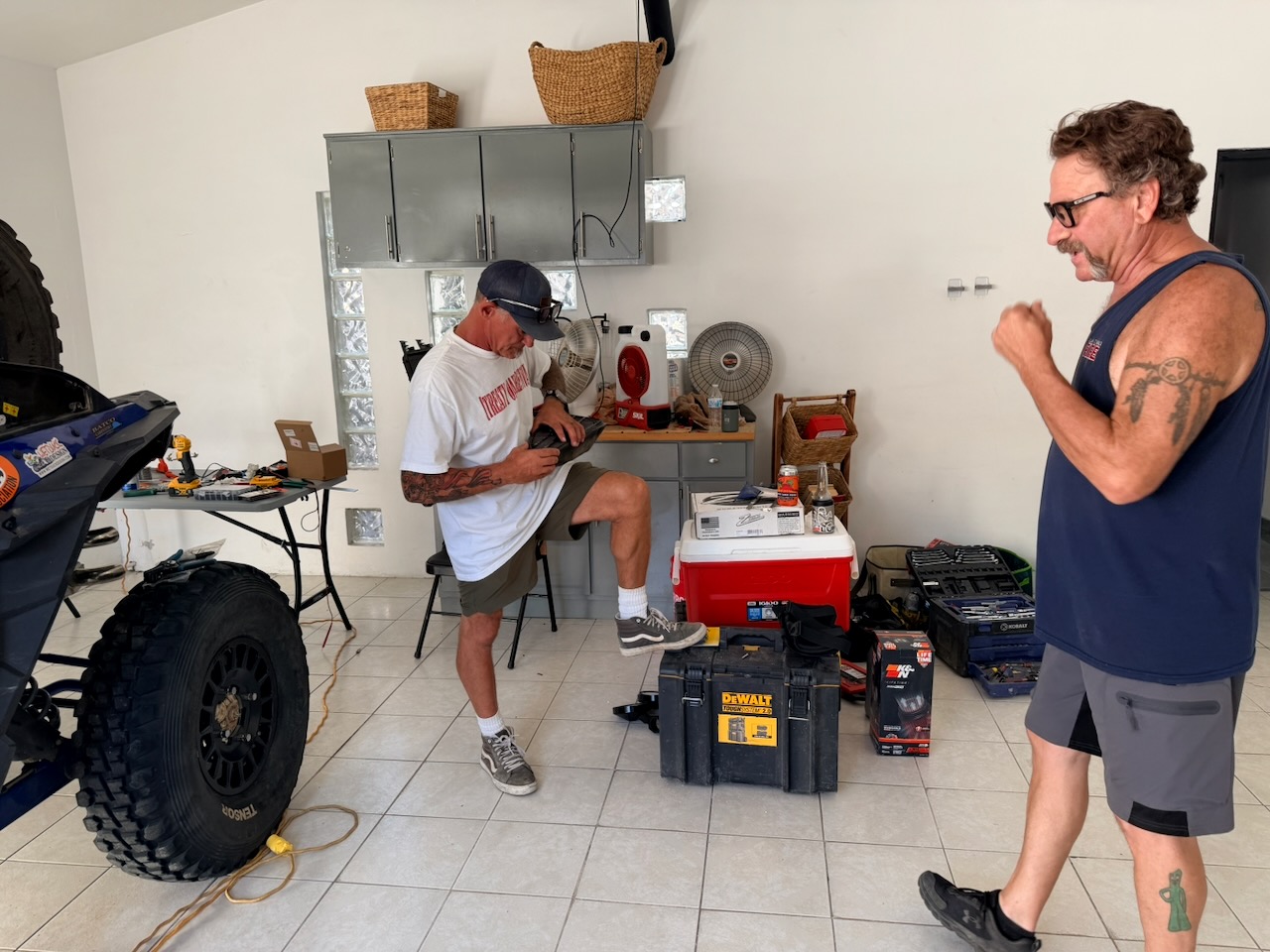
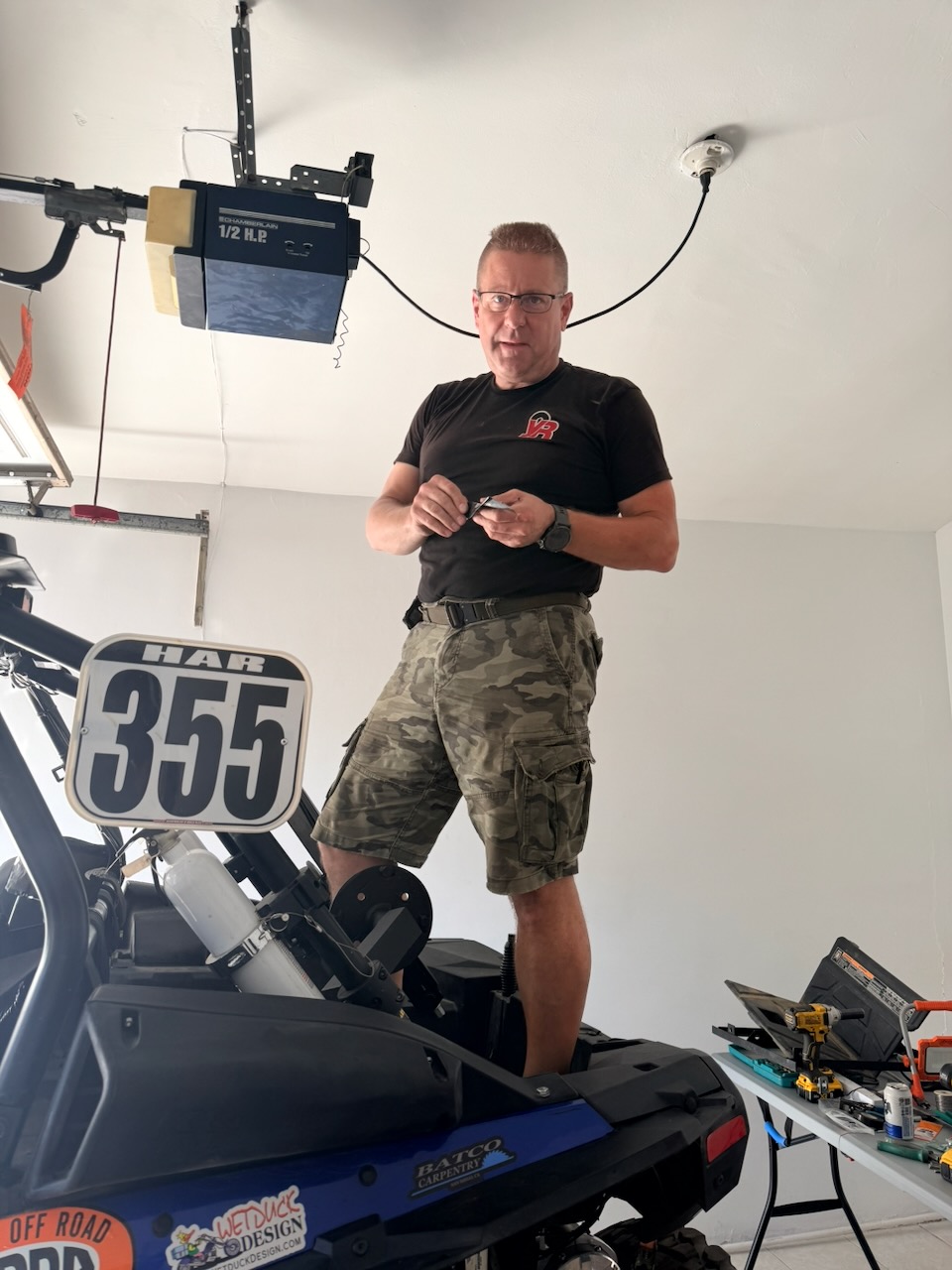
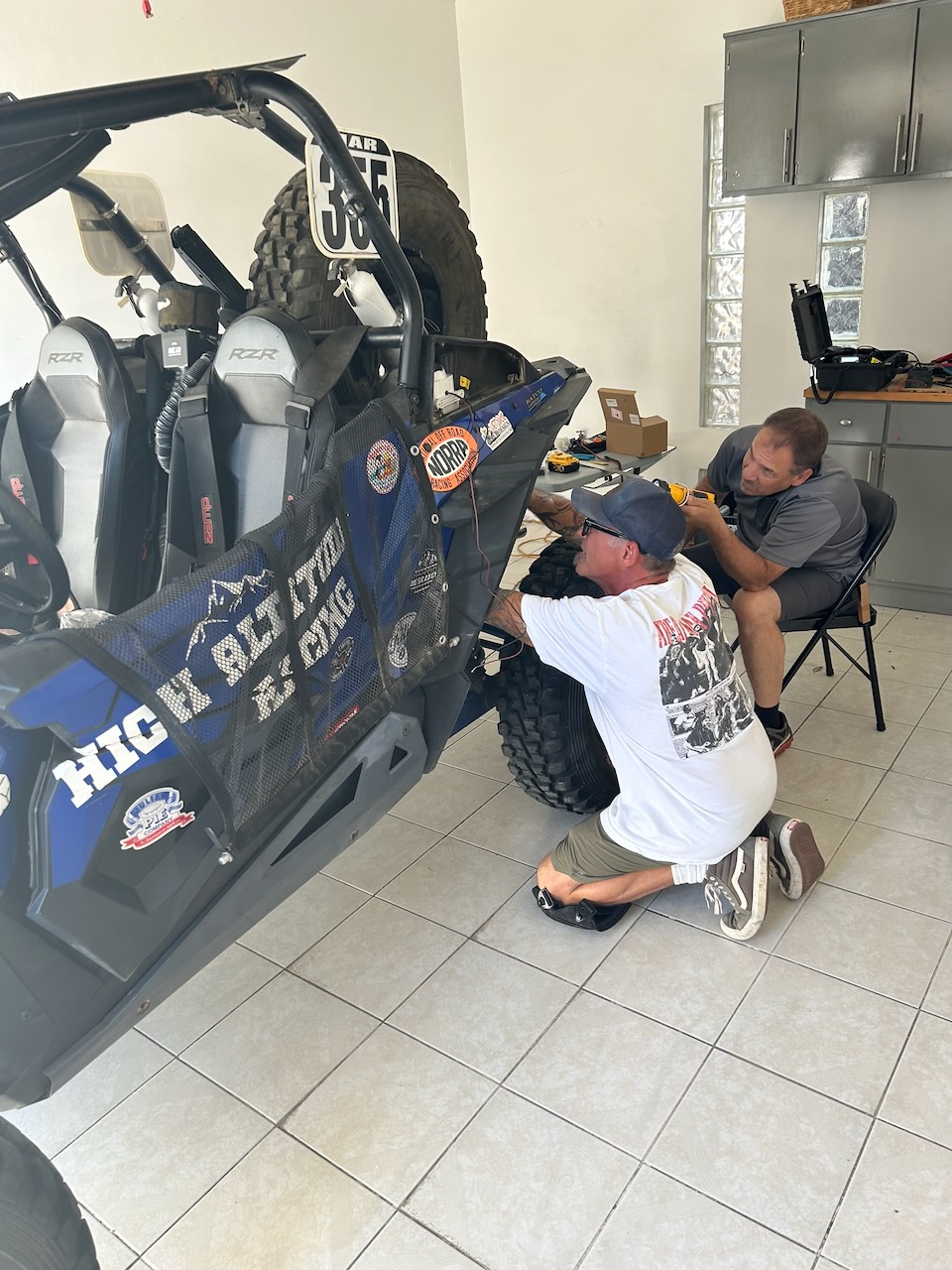
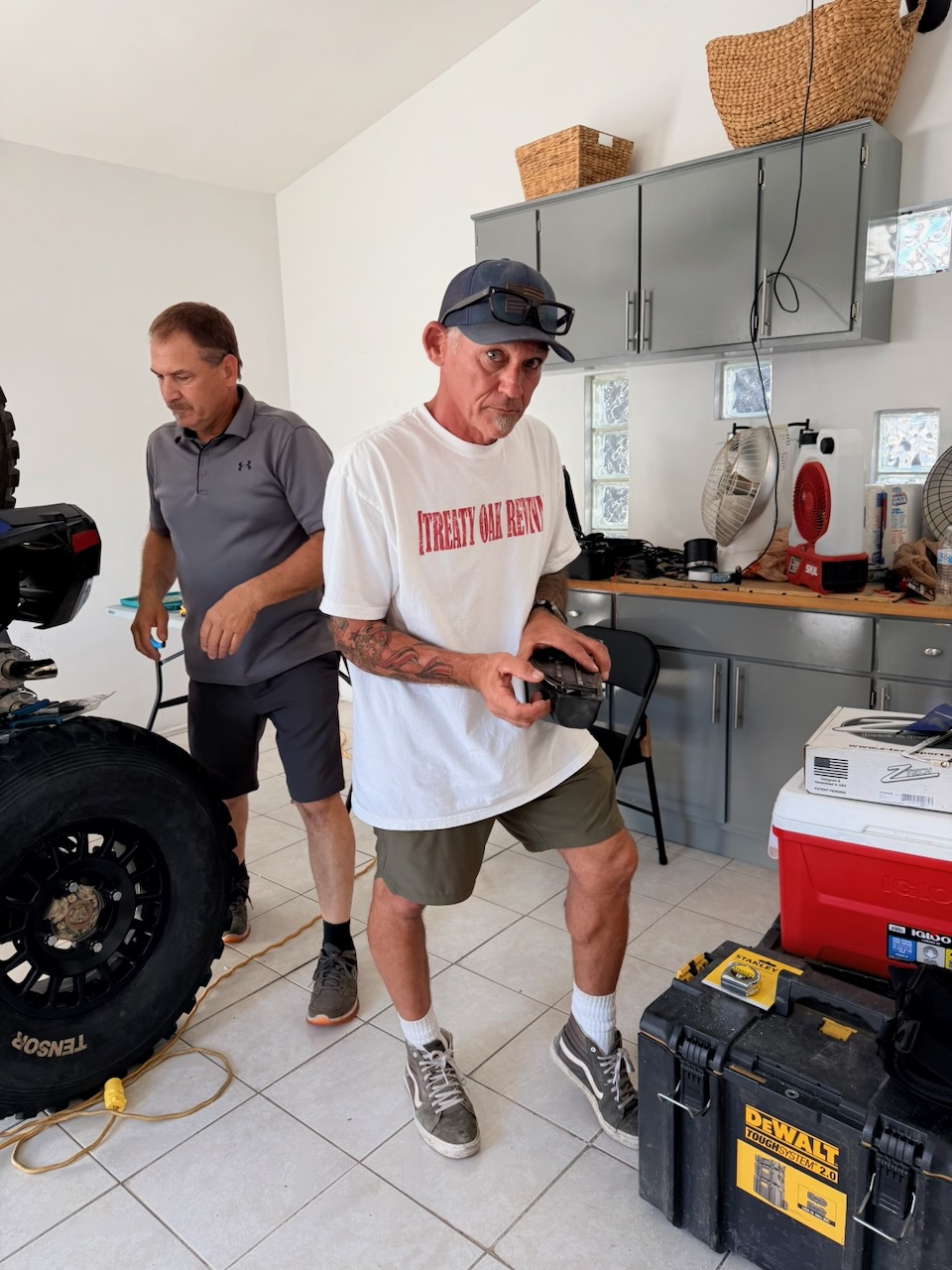
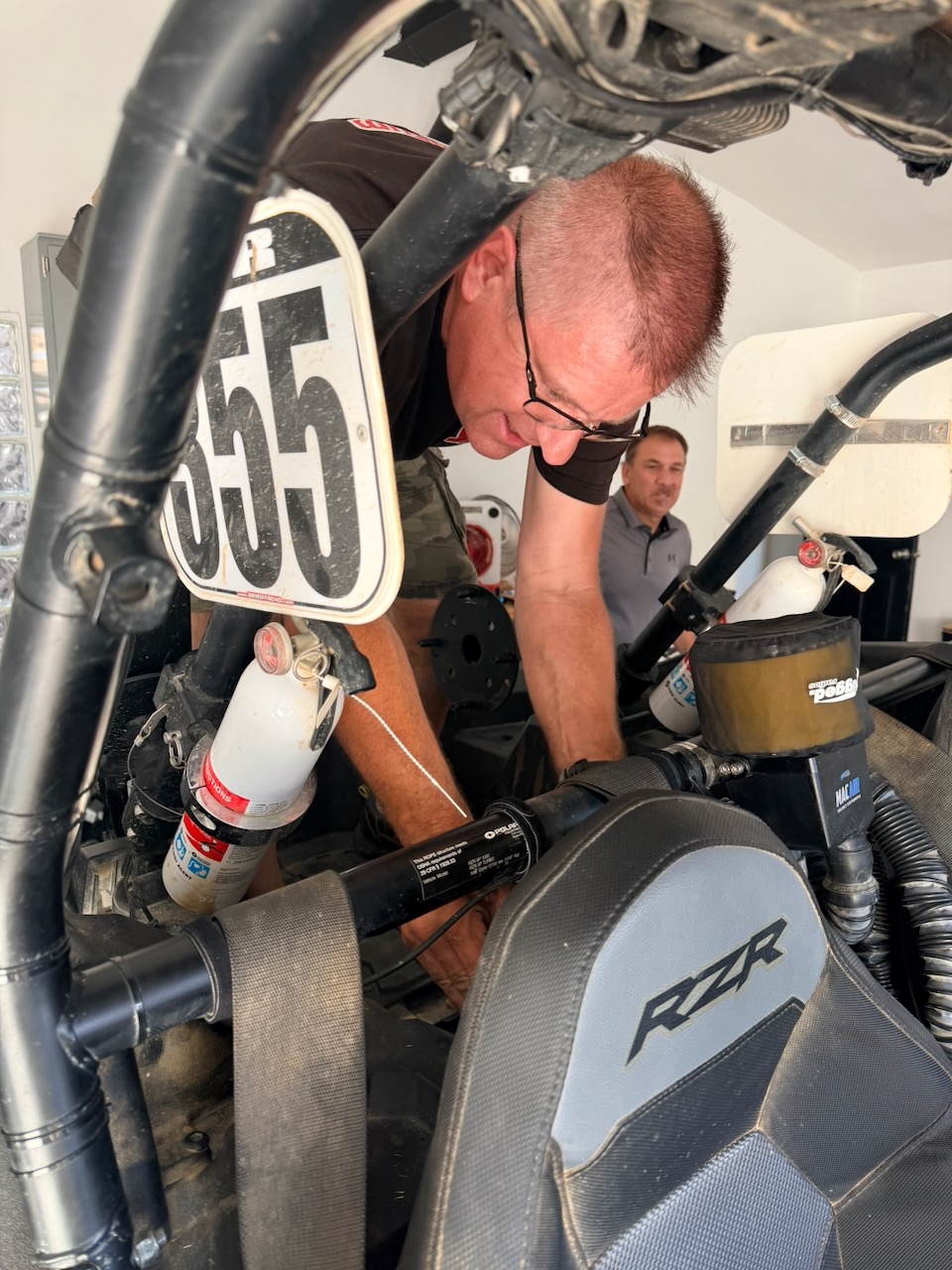
Chris, Lance, and Brian jumped into the job, working through the awkward angles and crowded plumbing one adjustment at a time. “Bolt-on” is a wonderfully optimistic phrase in racing; the real process involved hands in tight spaces, improvised leverage, patient rerouting, and plenty of opinions from around the car.
Eventually, the blower settled into position. The finished installation pulls filtered air, adds positive airflow to the front CVT cooling intake, and sends it through the existing pipework. Compact, practical, and ready for a much harsher life than its designers probably imagined.
Parallel Pit Work
Radios, sensors, and the wiring that connects it all.
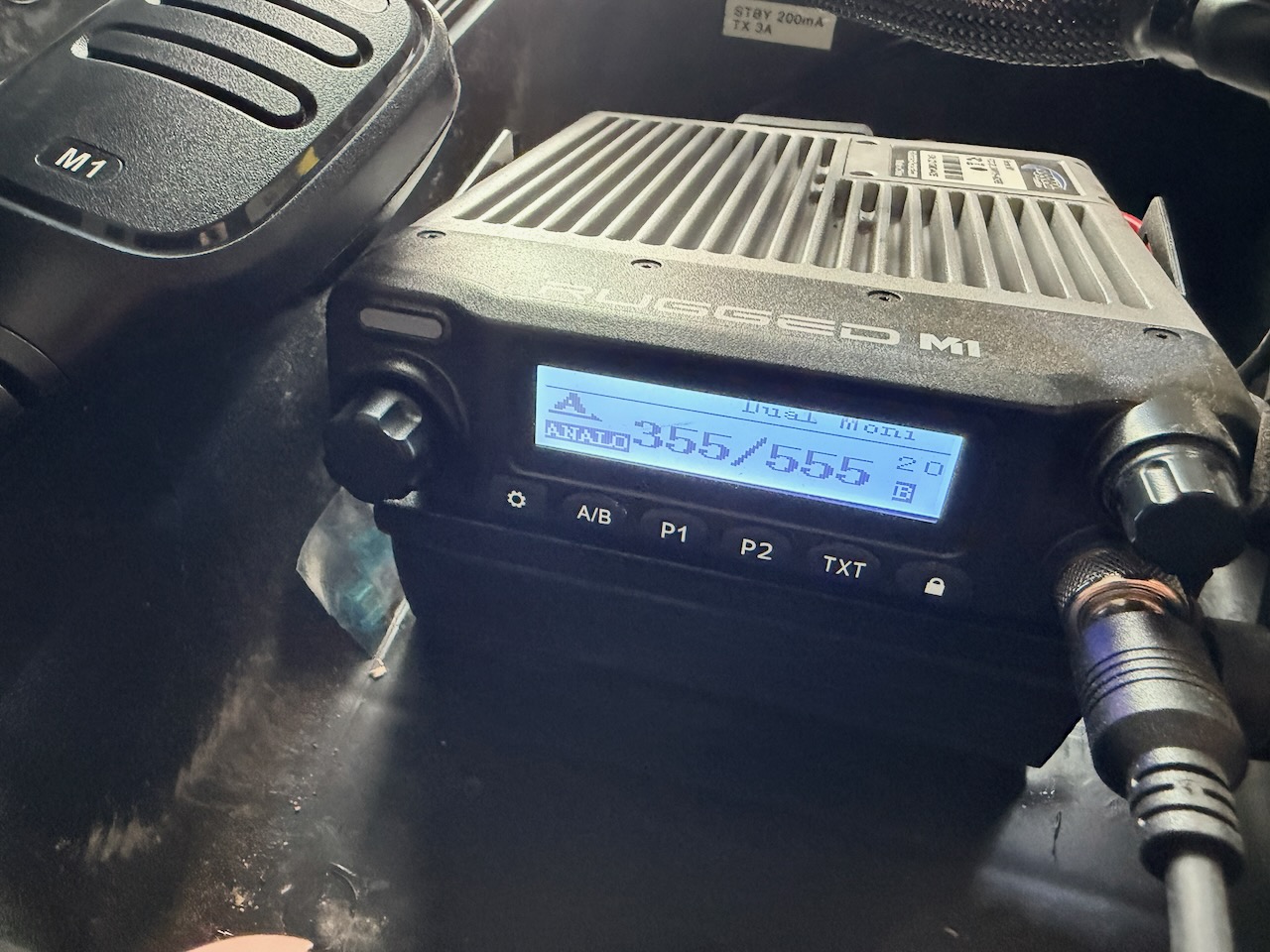
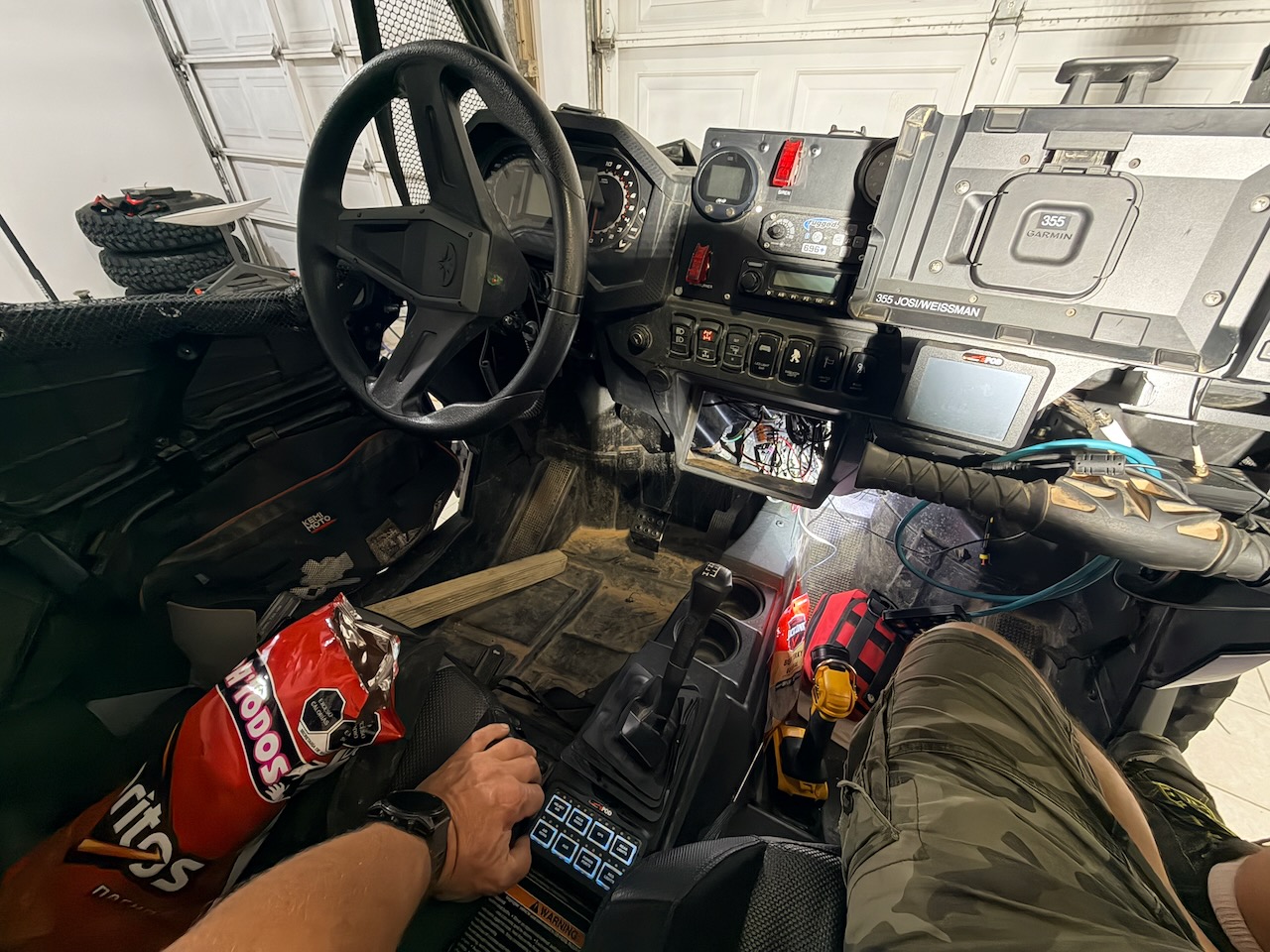
While the cooling crew wrestled with ducts and clamps, the rest of the compound kept moving. Race radios needed programming and verification so car-to-car and team communications would be ready when the noise, distance, and terrain started working against us.
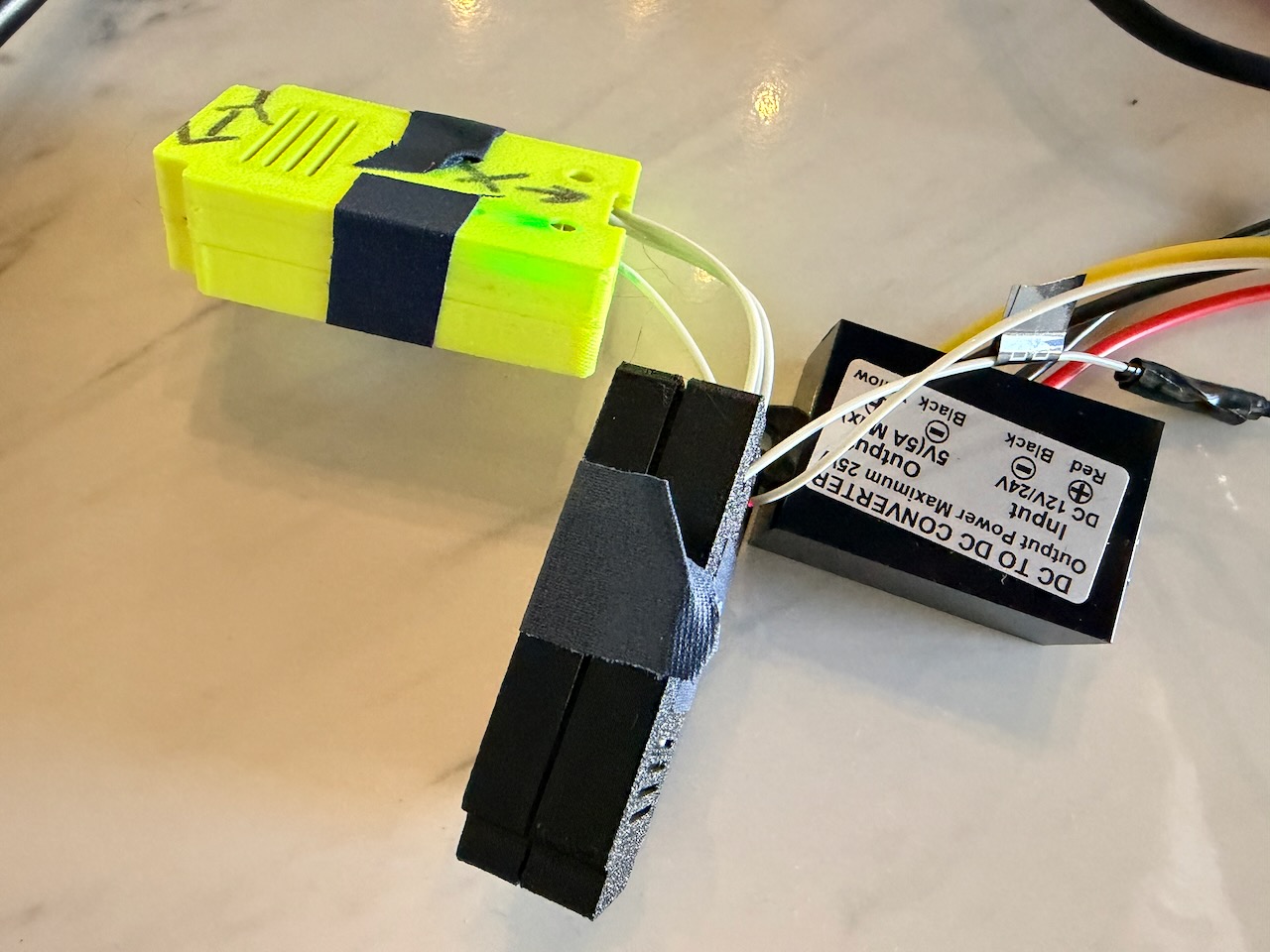
The telemetry system also received its final attention. Our accelerometer and gyroscope package—and the inertial unit that turns the movement of the car into meaningful data—had to be mounted securely, wired cleanly, and placed where it could do its job without becoming another victim of Baja vibration.

Ready for What Comes Next
One blower, one duck, and a team having a ball.
By the end of Day 2, #355 had stronger CVT airflow, programmed radios, a mounted motion-sensor package, and fewer loose ends between the team and the start line. Rebecca’s Crochet Animal Kingdom duck took in the entire scene from a safe perch, offering cheerful commentary but very little mechanical assistance.
That is race prep in Ensenada: solve the hot problem, fit the impossible part, clean up the wires, laugh with your teammates, and keep moving. Tomorrow, the focus shifts from preparation to putting car #355—and all that new hardware—to work.